


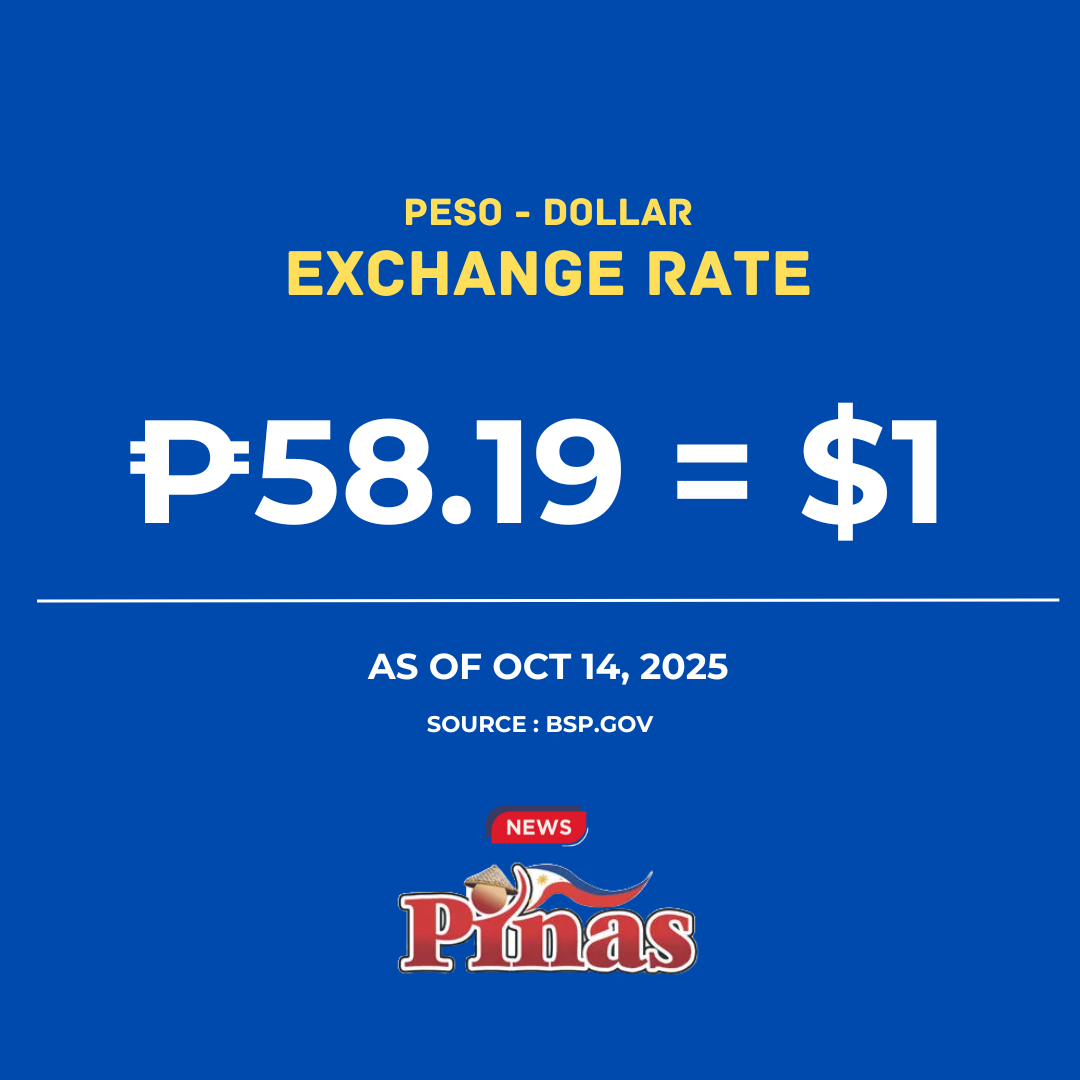
The Philippine peso continued to face pressure this week, sliding to ₱58.19 against the U.S. dollar as of October 14, 2025, based on the latest Bangko Sentral ng Pilipinas (BSP) Reference Exchange Rate Bulletin.
The peso’s movement reflects a broader global trend, with major currencies reacting to the U.S. dollar’s strength amid inflation concerns and shifting global trade dynamics.
Here’s a closer look at what’s happening with the top 15 currencies and what it means for Filipinos at home and abroad.
1. U.S. Dollar (USD) — ₱58.19
The dollar remains dominant, holding firm as investors seek safety amid market uncertainty. For OFWs and exporters, that’s good news — every dollar sent home now converts to more pesos. But for importers and travelers, it means higher costs.
2. Japanese Yen (JPY) — ₱0.38
Once a safe haven, the yen remains weak as Japan continues its ultra-loose monetary policy. For travelers to Japan, it’s a big advantage — the peso stretches further than it has in years.
3. British Pound (GBP) — ₱77.62
The pound stays strong, boosted by the UK’s stable financial markets. However, it’s an expensive currency for Filipinos planning to visit or study in London.
4. Hong Kong Dollar (HKD) — ₱7.48
Still pegged closely to the U.S. dollar, the HKD remains stable. With many Filipinos working in Hong Kong, this stability helps keep remittance values steady.
5. Swiss Franc (CHF) — ₱72.41
Known as one of the world’s safest currencies, the Swiss franc continues to perform well. Its strength reflects global caution — when uncertainty rises, investors turn to Switzerland.
6. Canadian Dollar (CAD) — ₱41.47
The Canadian dollar remains moderately strong, supported by energy exports. For Filipino immigrants and workers in Canada, this means good remittance power back home.
7. Singapore Dollar (SGD) — ₱44.82
The Singapore dollar continues to gain ground, reflecting the city-state’s resilient economy. For Filipinos in Singapore, their remittances remain highly valuable in peso terms.
8. Australian Dollar (AUD) — ₱37.91
The Australian dollar dipped slightly, pressured by China’s slower demand for minerals. Still, it remains one of the more stable currencies in the Asia-Pacific region.
9. Bahraini Dinar (BHD) — ₱154.37
One of the world’s strongest currencies, the Bahraini Dinar continues to rise. For Filipinos working in the Middle East, particularly in Bahrain, that’s a huge plus — remittances pack more punch.
10. Kuwaiti Dinar (KWD) — N/A
The Kuwaiti Dinar — typically the highest-valued currency globally — was not quoted in this bulletin, but it usually stays above ₱180 per unit.
11. Saudi Riyal (SAR) — ₱15.52
The riyal remains stable, tied closely to the U.S. dollar. With millions of OFWs in Saudi Arabia, this reliability ensures consistent value in remittances.
12. Brunei Dollar (BND) — ₱44.65
Mirroring Singapore’s economy, the Brunei dollar remains steady and strong. This benefits Filipino professionals and workers stationed there under skilled employment programs.
13. Indonesian Rupiah (IDR) — ₱0.0035
The rupiah continues to trade at a low value, reflecting Indonesia’s cautious growth approach. It’s a reminder of the peso’s relative strength among ASEAN peers.
14. Thai Baht (THB) — ₱1.79
The Thai baht has slightly weakened as tourism slows, though it remains regionally competitive. For Filipino travelers, Thailand remains one of the more affordable destinations.
15. UAE Dirham (AED) — ₱15.84
The dirham remains robust, also pegged to the U.S. dollar. With hundreds of thousands of Filipinos working in the UAE, this steady rate guarantees strong remittance value.
At a Glance:
-
BSP Buying Rate: ₱58.00 per U.S. dollar
-
BSP Selling Rate: ₱58.50 per U.S. dollar
-
BSP Reference Rate: ₱58.25
-
Gold Buying Price: $4,124.00
-
Silver Buying Price: $52.45
The Bigger Picture
The peso’s current position is part of a larger global shift — one driven by inflation fears, interest rate adjustments, and fluctuating oil prices.
While the strong dollar brings challenges for importers and travelers, it’s a blessing for OFWs, BPO workers, and exporters, who now see their earnings stretch further in pesos.
In short, the exchange rate tells more than just numbers — it’s a story of resilience, opportunity, and how every centavo connects to the world economy.