
The peso is moving.
The world is watching.
And today, February 27, 2026, the Bangko Sentral ng Pilipinas (BSP) released its latest reference exchange rates — numbers that quietly shape travel plans, remittances, imports, exports, and everyday prices.
At the heart of it all?
The Philippine peso versus the U.S. dollar.
🇵🇭 PHP vs 🇺🇸 U.S. Dollar
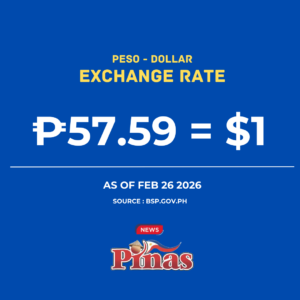
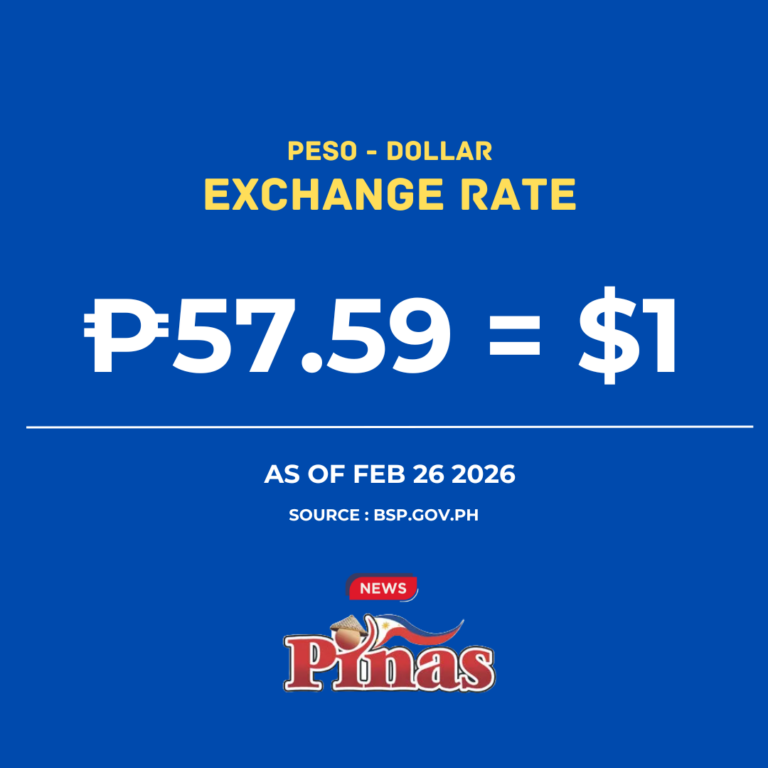
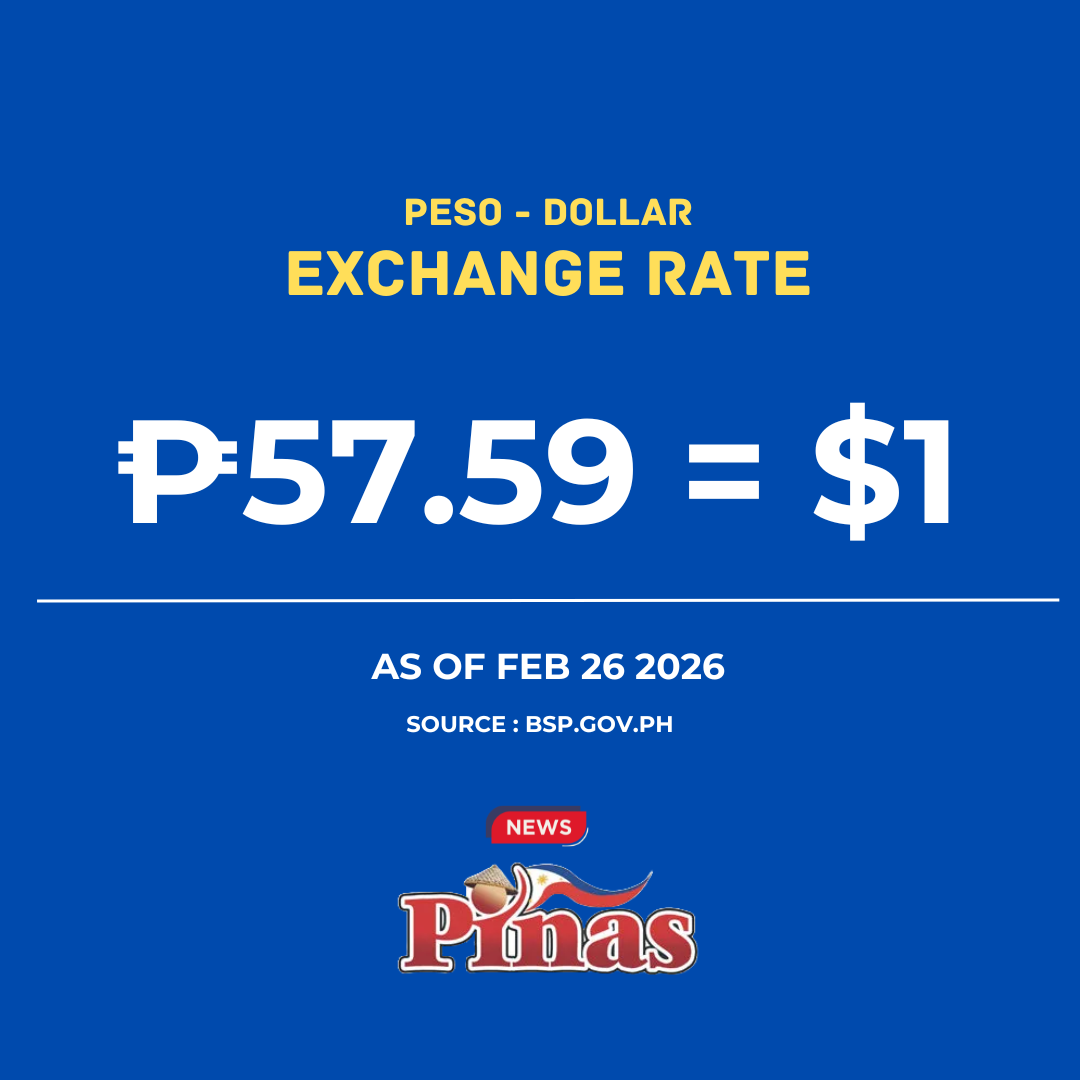
The BSP Reference Rate stands at ₱57.50 per $1
(PDS Closing Rate as of Feb. 25: ₱57.51)
• BSP Buying Rate: ₱57.25
• BSP Selling Rate: ₱57.75
The peso remains in the 57-level — steady, but still under pressure compared to stronger periods in previous years. For OFWs sending money home, this means more pesos per dollar. For importers, it means higher costs.
When the dollar moves, the world follows.
🌍 How the Peso Stacks Up vs Top 15 Currencies
Here’s where the peso stands against the world’s major currencies:
🇪🇺 Euro (EUR)
₱68.03 per €1
The euro remains significantly stronger than the peso. Europe-bound travelers and importers continue to feel the weight of a high exchange rate.
🇬🇧 British Pound (GBP)
₱78.11 per £1
The pound is trading near the ₱80 mark — one of the strongest currencies versus the peso. The UK remains expensive for Filipinos traveling or studying abroad.
🇯🇵 Japanese Yen (JPY)
₱0.3684 per ¥1
The yen remains weak compared to its historic highs. For Filipino tourists eyeing Japan, this offers a slight advantage.
🇨🇭 Swiss Franc (CHF)
₱74.58 per CHF 1
A traditionally strong currency, the Swiss franc continues to outpace most global currencies — and the peso feels that strength.
🇨🇦 Canadian Dollar (CAD)
₱42.12 per CAD 1
Canada remains a major destination for Filipino migrants. The peso trades at the 42 level — steady but reflective of global dollar strength.
🇸🇬 Singapore Dollar (SGD)
₱45.60 per SGD 1
For thousands of OFWs in Singapore, this rate matters daily. The Singapore dollar remains firm against the peso.
🇦🇺 Australian Dollar (AUD)
₱41.03 per AUD 1
Australia stays within the 41-peso range — relatively stable amid global currency swings.
🇸🇦 Saudi Riyal (SAR)
₱15.36 per SAR 1
With millions of Filipinos working in the Middle East, the riyal’s peg to the U.S. dollar keeps it aligned with dollar movements.
🇦🇪 UAE Dirham (AED)
₱15.68 per AED 1
Similar to the Saudi riyal, the dirham remains steady — good news for OFWs sending remittances home.
🇨🇳 Chinese Yuan (CNY)
₱8.40 per ¥1
China’s yuan continues to trade within expected levels, impacting trade flows between Manila and Beijing.
🇰🇷 Korean Won (KRW)
₱0.0404 per ₩1
The won remains relatively soft. Korea-bound remittances and trade remain sensitive to shifts in regional markets.
🇮🇳 Indian Rupee (INR)
₱0.6338 per ₹1
India’s growing economy keeps the rupee active in Asian currency movements.
🇲🇾 Malaysian Ringgit (MYR)
₱14.82 per MYR 1
The ringgit holds near the 15-peso level — closely watched in Southeast Asia trade.
🇹🇭 Thai Baht (THB)
₱1.86 per ฿1
The baht continues trading below ₱2 — steady but competitive within ASEAN.
🇧🇷 Brazilian Real (BRL)
₱11.24 per BRL 1
Emerging market currencies like Brazil’s real reflect broader global economic sentiment.
💰 Commodities Snapshot
• Gold Buying Price: $5,164.00
• Silver Buying Price: $88.15
• SDR Rate: $1.37337 per SDR
Gold remains elevated — a sign that global investors are still seeking safety amid economic uncertainty.
What This Means for Filipinos
When the peso weakens against the dollar and other major currencies:
✔ OFWs benefit when sending money home.
✖ Importers pay more for goods.
✖ Fuel and commodity prices may feel pressure.
✔ Exporters gain competitiveness.
Exchange rates may look like simple numbers on paper.
But behind every decimal point is a story —
a remittance sent,
a tuition paid,
a plane ticket booked,
a business adjusting to survive.
Today, February 27, 2026, the peso stands at ₱57.50 to the dollar.
And in the world of currencies — every centavo counts.