


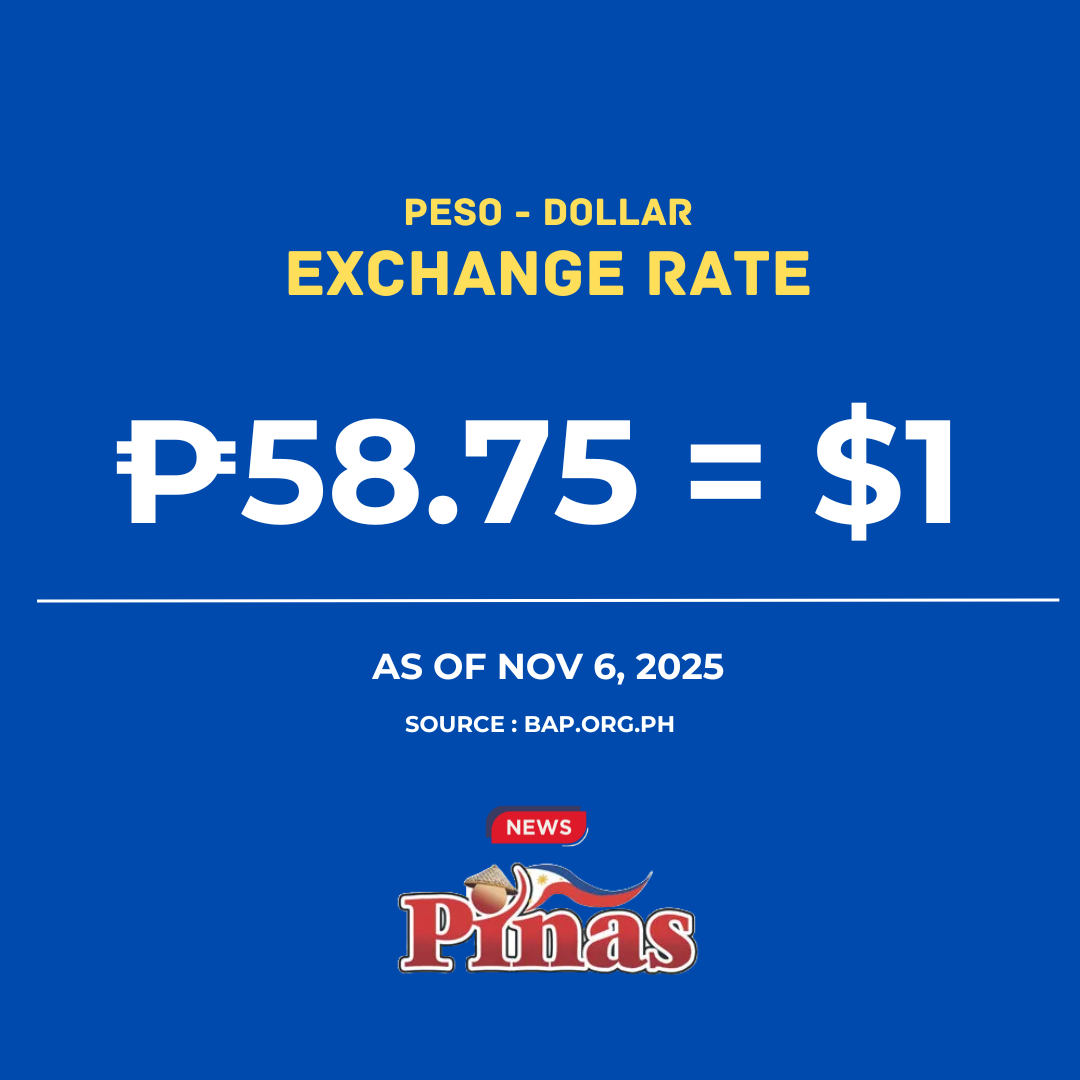
The Philippine peso is facing another tough week. According to the Bangko Sentral ng Pilipinas exchange rate bulletin as of November 6, 2025, the US dollar continues to strengthen — leaving overseas Filipinos anxious and importers worried.
The BSP sets today’s reference rate at ₱58.85 per $1, slightly weaker than yesterday. Every centavo drop affects the cost of food, fuel, and overseas loans. But for OFWs, a stronger dollar also means a little more peso for every remittance sent home.
Here’s what’s happening with the top 15 most-watched currencies — and why it matters:
💱 TOP 15 CURRENCIES VS PHILIPPINE PESO
(What it means for your wallet)
1️⃣ US Dollar (₱58.75)
Still king. Dollar strength continues — great for OFWs, tough on prices of imported goods.
2️⃣ Japanese Yen (₱0.38)
Still weak. Good news for Pinoys traveling to Japan and for tech companies importing equipment.
3️⃣ British Pound (₱76.68)
Stronger than ever — costly for UK-based students and workers paying rent or tuition.
4️⃣ Hong Kong Dollar (₱7.56)
Remittances from HK lift more pesos, helping families back home.
5️⃣ Swiss Franc (₱72.51)
A haven currency — high value reflects global economic uncertainty.
6️⃣ Canadian Dollar (₱41.65)
Slight climb — a good week for OFWs in Canada.
7️⃣ Singapore Dollar (₱44.96)
Still strong — Singapore-based Pinoys send home more pesos.
8️⃣ Australian Dollar (₱38.20)
Steady climb — better returns for migrants working Down Under.
9️⃣ Bahraini Dinar (₱155.85)
One of the world’s strongest currencies — huge boost for OFWs in the Middle East.
🔟 Kuwaiti Dinar (N/A)
Rates temporarily unavailable — often ranks #1 strongest worldwide.
11️⃣ Saudi Riyal (₱15.66)
Reliable strength — benefiting millions of OFWs in Saudi.
12️⃣ Brunei Dollar (₱44.79)
Moves closely with Singapore — strong remittance value.
13️⃣ Indonesian Rupiah (₱0.0035)
Very low unit value — but still important for ASEAN trade.
14️⃣ Thai Baht (₱1.81)
Stronger Baht means costlier travel to Thailand for tourists.
15️⃣ UAE Dirham (₱15.99)
High and steady — OFWs in Dubai are sending more peso power home.
🇵🇭 So… good or bad for Filipinos?
✅ Good for OFWs — Their families get more pesos per remittance
❌ Bad for consumers — Expect costlier rice, fuel, medicine, gadgets
⚠️ Uncertain months ahead — Global rates are volatile heading into the holidays
Every movement in foreign exchange is personal — it affects grocery budgets, school fees, and lives of millions of Filipinos here and abroad.
The world economy is shifting fast. And the peso is holding on.