
On January 7, 2026, the Bangko Sentral ng Pilipinas (BSP) released its latest Reference Exchange Rate Bulletin—and it tells a clear story about where the Philippine peso stands today against the world’s major currencies.
At the center of it all is the US dollar, still the strongest benchmark Filipinos watch daily. But beyond the greenback, movements across other global currencies reveal pressure points, strengths, and signals for travelers, OFWs, importers, and ordinary households.
Here’s what’s happening—simply explained.
The Peso vs the US Dollar: Still Under Pressure
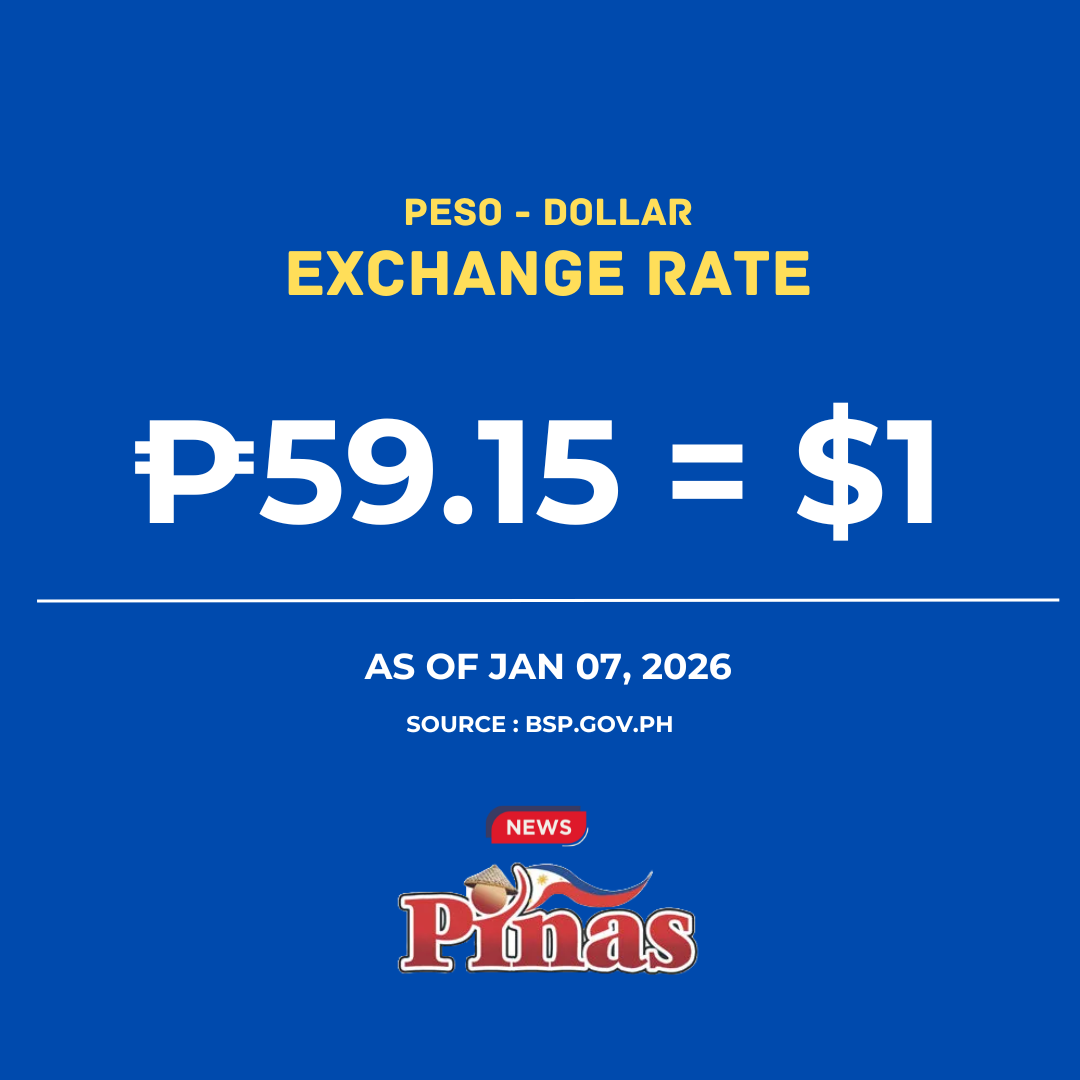
As of today,
₱59.15 = $1
This keeps the peso near the ₱59 level, a range that reflects continued global uncertainty, high interest rates abroad, and strong demand for dollars.
BSP rates today:
-
Buying rate: ₱58.95
-
Selling rate: ₱59.45
-
Reference rate: ₱59.20
In short: the dollar remains expensive, and every import—from fuel to food—feels it.
Peso vs the Top 15 Global Currencies (What It Means)
🇺🇸 United States Dollar (USD)
₱59.15 per $1
The global anchor. A strong dollar keeps pressure on the peso and raises import costs.
🇯🇵 Japanese Yen (JPY)
₱0.38 per ¥1
The yen remains weak. Good news for Filipino tourists in Japan—but less impactful for trade.
🇬🇧 British Pound (GBP)
₱79.87 per £1
Still one of the most expensive currencies. OFW remittances from the UK stretch far in pesos.
🇭🇰 Hong Kong Dollar (HKD)
₱7.60 per HK$1
Stable and predictable, mirroring US dollar movements.
🇨🇭 Swiss Franc (CHF)
₱74.37 per CHF
A strong safe-haven currency. Signals global investors still value stability.
🇨🇦 Canadian Dollar (CAD)
₱42.82 per C$1
Moderate strength. Favorable for OFWs sending money home from Canada.
🇸🇬 Singapore Dollar (SGD)
₱46.21 per S$1
Firm and steady. Reflects Singapore’s strong financial position.
🇦🇺 Australian Dollar (AUD)
₱39.84 per A$1
Softer than past years but still supportive for Filipino workers in Australia.
🇧🇭 Bahrain Dinar (BHD)
₱156.92 per BHD
One of the strongest currencies globally. Small value, huge peso impact.
🇸🇦 Saudi Riyal (SAR)
₱15.78 per SAR
Stable due to its peg to the US dollar. Important for millions of Filipino workers in the Middle East.
🇧🇳 Brunei Dollar (BND)
₱46.03 per B$1
Moves closely with the Singapore dollar. Solid and steady.
🇮🇩 Indonesian Rupiah (IDR)
₱0.0035 per IDR
Low value but crucial for regional trade comparisons.
🇹🇭 Thai Baht (THB)
₱1.90 per ฿1
A resilient regional currency, reflecting Thailand’s tourism recovery.
🇦🇪 UAE Dirham (AED)
₱16.11 per AED
Pegged to the dollar. A key currency for Filipino OFWs in the Gulf.
🇪🇺 Euro (EUR)
₱69.15 per €1
Still strong against the peso. European imports remain costly.
What This Means for Filipinos
Pause for a moment—and this becomes clear:
-
OFWs benefit when sending money from strong-currency countries
-
Travel abroad costs more, especially to the US and Europe
-
Imports remain expensive, affecting fuel, food, and utilities
-
Peso stability now depends heavily on global inflation and US policy
Gold and silver prices also signal uncertainty:
-
Gold buying: $4,491.65
-
Silver buying: $82.35
Investors are still looking for safety.
Bottom Line
As of January 7, 2026, the peso remains under pressure—but not in free fall. It is holding its ground in a world still shaped by strong dollars, cautious investors, and uneven recoveries.
For Filipinos, every centavo still matters.
And for now, the peso continues its quiet fight—day by day, rate by rate—against the world’s strongest currencies.