
MANILA, Philippines — March 3, 2026
The Philippine peso is holding its ground — but the pressure is still there.
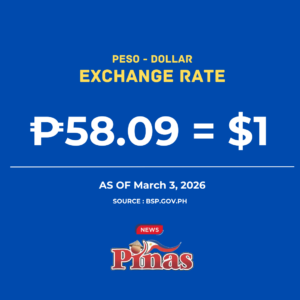
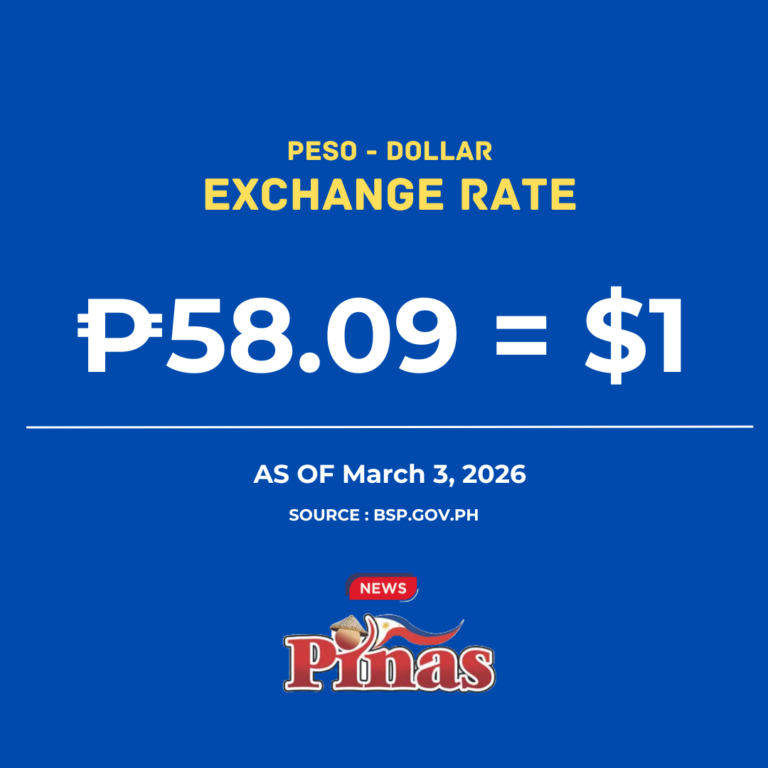
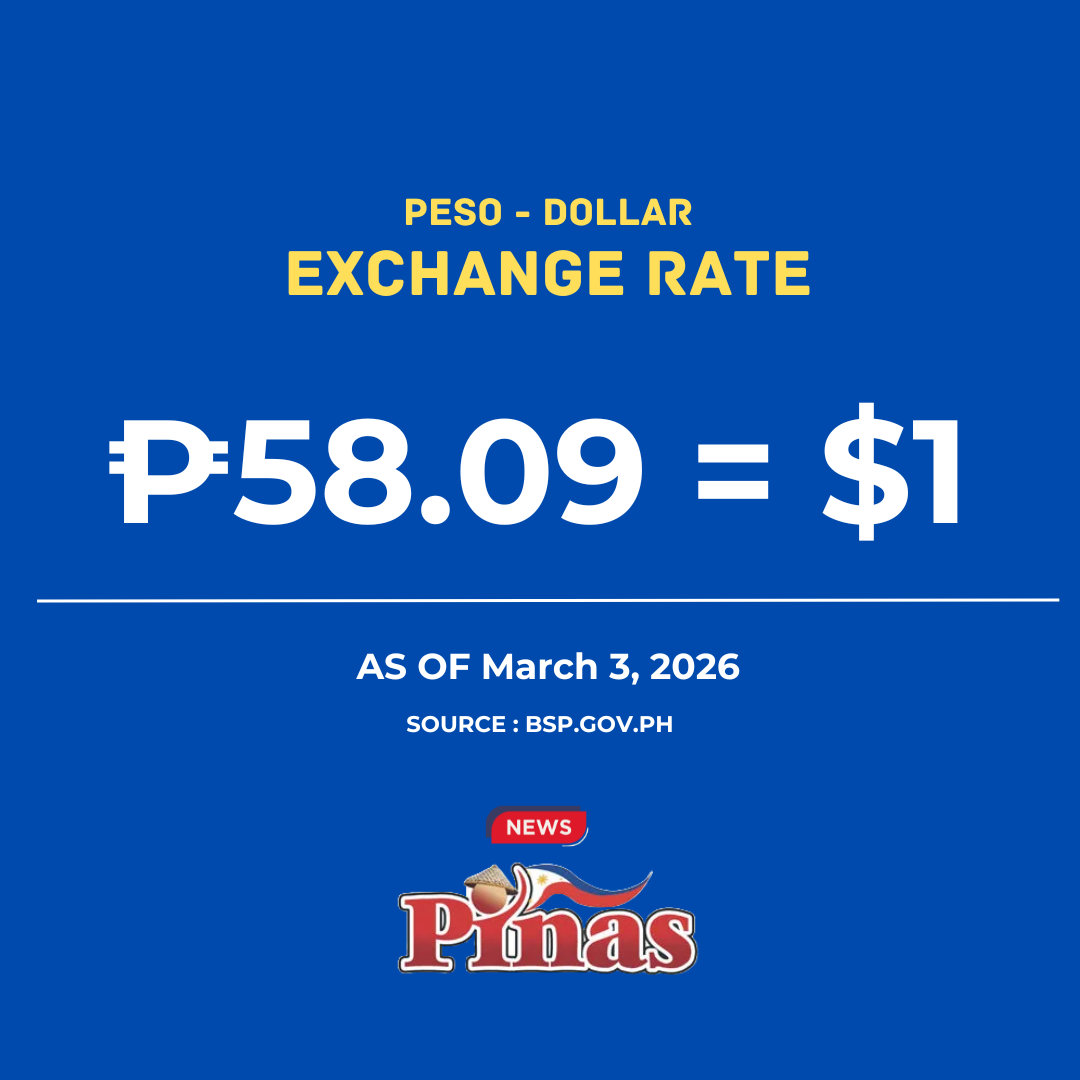
As of today, ₱58.093 per US dollar.
That’s the Bangko Sentral ng Pilipinas (BSP) reference exchange rate.
The trading band shows:
-
Buying Rate: ₱57.950
-
Selling Rate: ₱58.450
-
BSP Reference Rate: ₱58.200
-
PDS Closing Rate (March 2): ₱58.200
The peso remains in the 58-level — steady, but sensitive to global tensions, oil prices, and movements in the US dollar.
Now let’s break down how the peso stands against the world’s top currencies.
💵 Peso vs US Dollar (USD)
$1 = ₱58.093
The dollar remains firm. Any strengthening of the US economy or rising interest rates could push the peso weaker. For now, it’s stable — but cautious.
💷 Peso vs British Pound (GBP)
£1 = ₱77.9143
The pound continues to trade strong. At nearly ₱78 per pound, UK-linked imports and tuition payments remain costly for Filipinos.
💶 Peso vs Euro (EUR)
€1 = ₱67.9107
The euro stands near ₱68. Europe’s currency remains resilient despite global uncertainties.
💴 Peso vs Japanese Yen (JPY)
¥1 = ₱0.3692
The yen remains weak compared to pre-pandemic levels. This benefits Filipino importers of Japanese goods and travelers heading to Japan.
🇨🇭 Peso vs Swiss Franc (CHF)
₣1 = ₱74.5834
The Swiss franc, a traditional safe-haven currency, stays elevated — reflecting cautious global markets.
🇨🇦 Peso vs Canadian Dollar (CAD)
C$1 = ₱42.4781
The Canadian dollar remains steady, influenced largely by oil prices and North American economic data.
🇸🇬 Peso vs Singapore Dollar (SGD)
S$1 = ₱45.6311
The Singapore dollar remains strong, reflecting Singapore’s stable financial environment. OFWs in SG continue to benefit from a favorable conversion rate.
🇦🇺 Peso vs Australian Dollar (AUD)
A$1 = ₱41.1937
The Aussie dollar trades at ₱41.19, slightly softer compared to historical highs, influenced by commodity demand.
🇨🇳 Peso vs Chinese Yuan (CNY)
¥1 = ₱8.4122
China’s yuan holds steady at ₱8.41 — significant for Philippine trade, as China remains a major partner.
🇰🇷 Peso vs Korean Won (KRW)
₩1 = ₱0.0400
The Korean won remains relatively weak. Travel and imports from South Korea remain affordable for Filipinos.
🇸🇦 Peso vs Saudi Riyal (SAR)
1 SAR = ₱15.4832
Closely tied to the US dollar, the riyal remains stable — important for millions of OFWs in the Middle East.
🇦🇪 Peso vs UAE Dirham (AED)
1 AED = ₱15.8166
The dirham mirrors dollar strength. Remittances from the UAE remain strong contributors to peso liquidity.
🇹🇭 Peso vs Thai Baht (THB)
1 THB = ₱1.8525
Regional currencies like the baht remain competitive, reflecting ASEAN market movements.
🇲🇾 Peso vs Malaysian Ringgit (MYR)
1 MYR = ₱14.8045
The ringgit trades near ₱14.80, influenced by regional trade flows and commodity trends.
🇮🇳 Peso vs Indian Rupee (INR)
1 INR = ₱0.6345
The rupee remains steady as India continues to grow as an emerging economic powerhouse.
What’s Driving the Market?
Several factors are shaping today’s currency landscape:
-
Ongoing geopolitical tensions
-
US monetary policy signals
-
Oil price movements
-
Global risk appetite
-
Regional trade performance
Safe-haven currencies like the Swiss franc remain elevated.
Dollar-pegged currencies like the riyal and dirham remain firm.
Meanwhile, Asian currencies show mixed but stable movements.
Gold and Silver Snapshot
-
Gold Buying Price: $5,352.10
-
Silver Buying Price: $90.40
-
SDR Rate: $1.37057 per SDR
Precious metals remain strong — signaling continued investor caution worldwide.
The Bigger Picture
At ₱58.093 per dollar, the peso is steady — but not immune.
Every movement in global markets echoes in remittances, fuel prices, import costs, and daily expenses.
For now, the peso stands firm.
But the world is watching.
And so are the markets.