


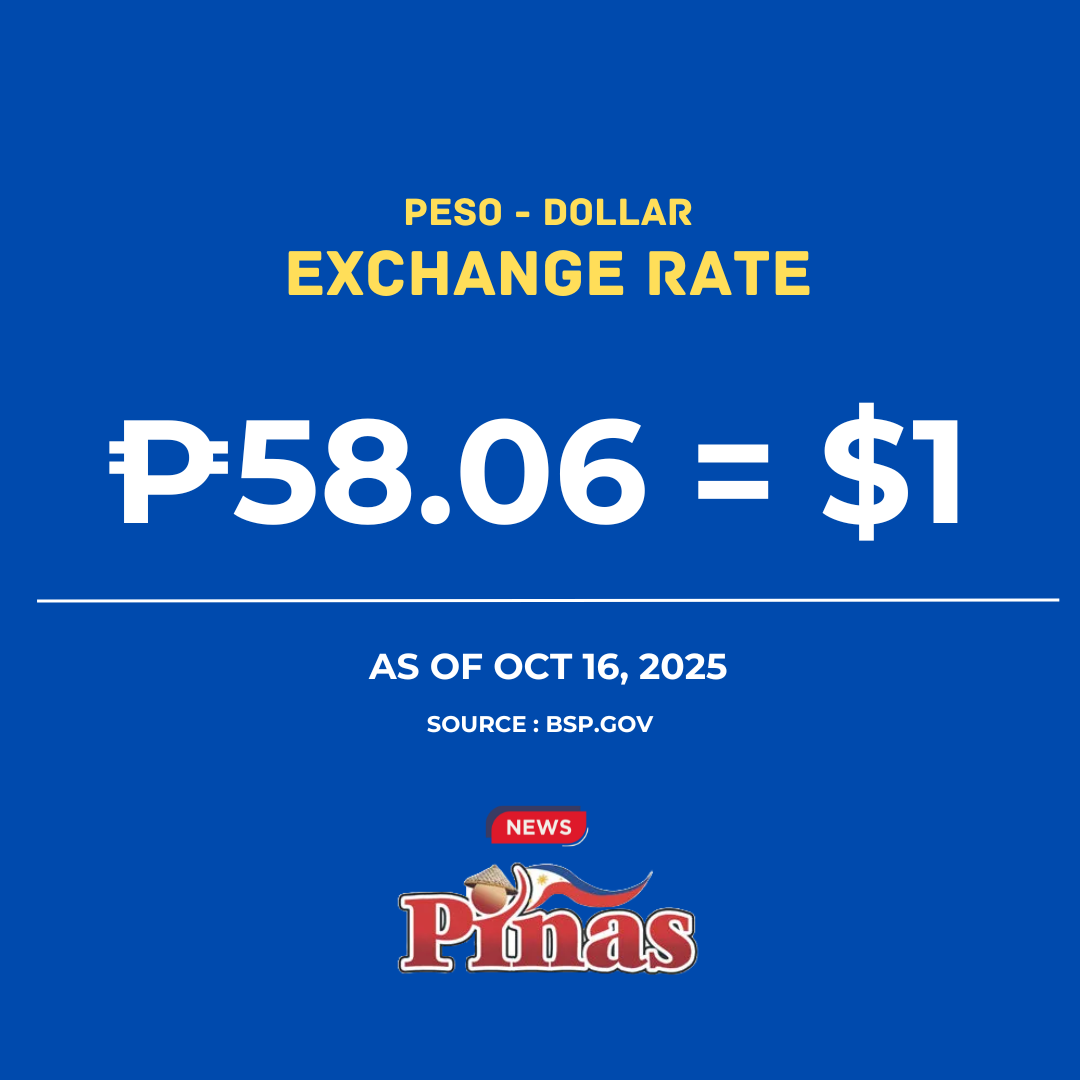
October 16, 2025 — Manila
The Bangko Sentral ng Pilipinas (BSP) released its latest Reference Exchange Rate Bulletin, showing that the Philippine peso traded at ₱58.07 per U.S. dollar — a slight dip compared to the previous week’s close. The peso’s movement reflects the ongoing strength of the U.S. dollar in global markets, driven by strong U.S. data and cautious investor sentiment.
Here’s what’s happening with the top 15 currencies as of October 16, 2025 — and what it means for global trade and Filipino consumers.
🇺🇸 1. U.S. Dollar (USD) — ₱58.07
The U.S. dollar remains the world’s anchor currency, holding firm amid interest rate decisions and strong U.S. economic performance. For the Philippines, this means higher import costs but potential gains for OFWs sending remittances back home.
🇯🇵 2. Japanese Yen (JPY) — ₱0.38
The yen continues to weaken, staying below the ₱0.40 mark. Japan’s ultra-loose monetary policy has kept its currency soft, favoring its export-driven economy but hurting purchasing power abroad.
🇬🇧 3. British Pound (GBP) — ₱77.80
The pound sterling remains one of the strongest major currencies. While the U.K. faces economic uncertainty post-Brexit, the pound’s value signals investor confidence in its financial sector and bond markets.
🇭🇰 4. Hong Kong Dollar (HKD) — ₱7.47
The Hong Kong dollar, pegged to the U.S. dollar, moves almost in sync with it. This stability benefits many Filipino OFWs in Hong Kong who rely on steady remittance rates.
🇨🇭 5. Swiss Franc (CHF) — ₱72.89
The Swiss franc continues to serve as a safe-haven currency. Investors flock to it during market uncertainty, keeping it strong against both the dollar and the euro.
🇨🇦 6. Canadian Dollar (CAD) — ₱41.35
The loonie is steady, supported by oil prices and a stable economy. For Filipinos in Canada, remittance values remain relatively strong.
🇸🇬 7. Singapore Dollar (SGD) — ₱44.81
The Singapore dollar holds firm, showing resilience as one of Asia’s strongest currencies. Its performance reflects Singapore’s robust trade and financial position — a steady advantage for OFWs based there.
🇦🇺 8. Australian Dollar (AUD) — ₱37.80
The Aussie dollar stays under pressure due to fluctuating commodity prices and China’s slower demand. Still, it remains a solid performer among Pacific currencies.
🇧🇭 9. Bahraini Dinar (BHD) — ₱154.04
The Bahraini dinar remains one of the world’s most valuable currencies, reflecting the strength of its oil-backed economy. For OFWs in Bahrain, this translates to strong remittance value.
🇰🇼 10. Kuwaiti Dinar (KWD) — N/A
Data for the Kuwaiti dinar was not available in this bulletin, but it traditionally remains the highest-valued currency globally, typically trading above ₱180 per dinar.
🇸🇦 11. Saudi Riyal (SAR) — ₱15.48
The Saudi riyal, closely tied to the U.S. dollar, remains stable. This benefits thousands of Filipino workers in Saudi Arabia, ensuring consistent remittance strength.
🇧🇳 12. Brunei Dollar (BND) — ₱44.64
The Brunei dollar mirrors the Singapore dollar due to their currency arrangement. Both remain strong, backed by solid regional trade and oil revenues.
🇮🇩 13. Indonesian Rupiah (IDR) — ₱0.0035
The rupiah stays weak against the peso, though Indonesia’s growing economy and export activity keep it relatively stable. It remains one of Southeast Asia’s lower-valued currencies.
🇹🇭 14. Thai Baht (THB) — ₱1.79
The Thai baht continues to show moderate strength, supported by tourism recovery and regional trade. It’s stable but sensitive to oil price movements and export performance.
🇦🇪 15. UAE Dirham (AED) — ₱15.81
The UAE dirham is pegged to the U.S. dollar, giving it similar strength. For Filipinos in Dubai and Abu Dhabi, this means stronger remittance power as the peso slightly weakens.
💱 At a Glance: Peso’s Standing
-
BSP Buying Rate (T/T): ₱57.80
-
BSP Selling Rate (T/T): ₱58.30
-
BSP Reference Rate: ₱58.05
-
Gold Buying Price: $4,215.30
-
Silver Buying Price: $53.10
🧭 What This Means
The peso’s current position near ₱58 per dollar signals a stable but cautious market, with investors watching global inflation trends and geopolitical shifts.
For everyday Filipinos, this could mean slightly higher prices for imported goods, but also stronger remittances from abroad — especially from the Middle East and Western countries where currencies remain dominant.
In short: the global currency race is tight, the dollar is steady, and the peso continues to hold its ground amid shifting tides.