


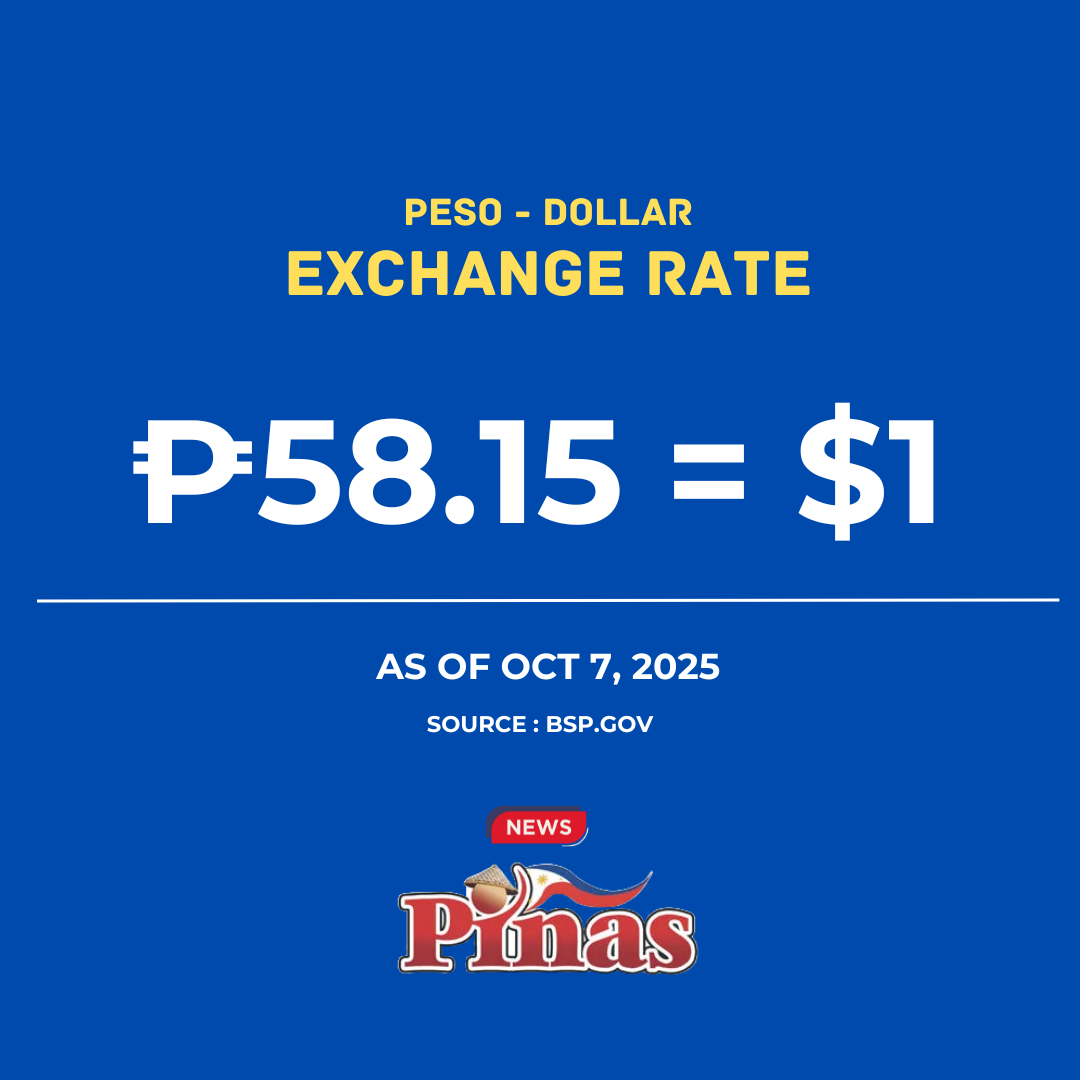
The Bangko Sentral ng Pilipinas (BSP) has just released its October 7, 2025 Reference Exchange Rate Bulletin. At the center of it all: the Philippine peso is trading at ₱58.35 to the US dollar.
For millions of Filipinos—especially OFWs, importers, and travelers—these numbers mean more than just data. They tell the story of how much our hard-earned money can buy abroad, and how global shifts affect every peso in our wallets.
Let’s break down the top 15 currencies and what they mean:
1. US Dollar (USD) – ₱58.16
The peso remains on the weaker side against the dollar, a sign of the greenback’s continued strength. This matters most for remittances—every dollar sent home stretches a bit further in pesos.
2. Japanese Yen (JPY) – ₱0.39
The yen remains low, making travel to Japan more affordable for Filipinos. But for exporters, it means Japanese goods can enter our markets at cheaper costs.
3. British Pound (GBP) – ₱78.40
Still one of the strongest currencies, the pound shows just how costly life in the UK is for OFWs. Every remittance packs more peso power.
4. Hong Kong Dollar (HKD) – ₱7.47
A major currency for OFWs in Hong Kong, steady at mid-range. Strong enough to help domestic workers send home decent support.
5. Swiss Franc (CHF) – ₱73.17
The franc remains a powerhouse, second only to the pound in value among major currencies. A sign of Switzerland’s financial stability.
6. Canadian Dollar (CAD) – ₱41.71
The loonie stays strong, benefiting the Filipino community in Canada as their remittances convert into solid peso value.
7. Singapore Dollar (SGD) – ₱45.03
Stable and strong, the SGD reflects Singapore’s steady economy. OFWs there continue to enjoy excellent conversion rates when sending money home.
8. Australian Dollar (AUD) – ₱38.46
The AUD remains solid, offering good peso returns for workers in Australia. It’s slightly weaker than the Canadian and Singapore dollars.
9. Bahraini Dinar (BHD) – ₱154.32
One of the world’s strongest currencies. OFWs in Bahrain enjoy maximum peso power for every dinar earned.
10. Kuwaiti Dinar (KWD) – N/A
No updated rate for today, but traditionally the Kuwaiti dinar is the strongest currency in the world, often topping ₱180.
11. Saudi Riyal (SAR) – ₱15.50
Important for the huge OFW community in Saudi Arabia. Stable, and every riyal still brings solid peso support to families back home.
12. Brunei Dollar (BND) – ₱44.86
Almost at par with the Singapore dollar, reflecting Brunei’s oil-backed economy.
13. Indonesian Rupiah (IDR) – ₱0.0035
The weakest among the top 15, showing how inflation and economic challenges continue to weigh down Indonesia’s currency.
14. Thai Baht (THB) – ₱1.79
Relatively steady, the baht remains stronger than some regional currencies, reflecting Thailand’s tourism-driven recovery.
15. UAE Dirham (AED) – ₱15.83
A lifeline for OFWs in Dubai and across the UAE. With the dirham pegged to the dollar, it guarantees strong peso conversion.
Bigger Picture
The peso is holding its ground in a tough global market, with the BSP reference rate at ₱58.35. Precious metals remain strong, too—gold is at $3,975.85 while silver trades at $48.50.
For ordinary Filipinos, these numbers aren’t just financial charts. They mean food on the table, tuition paid, and dreams built through every remittance and peso earned.