
October 28, 2025 | Manila, Philippines
The peso opened the week slightly weaker against the U.S. dollar, as global currencies continued to adjust to stronger U.S. economic signals and shifting market sentiment.
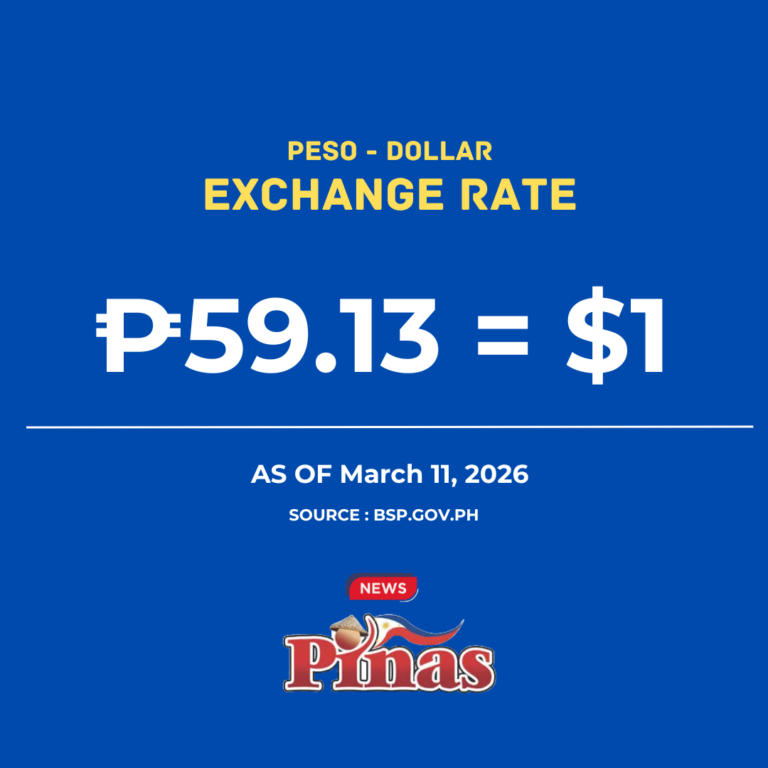
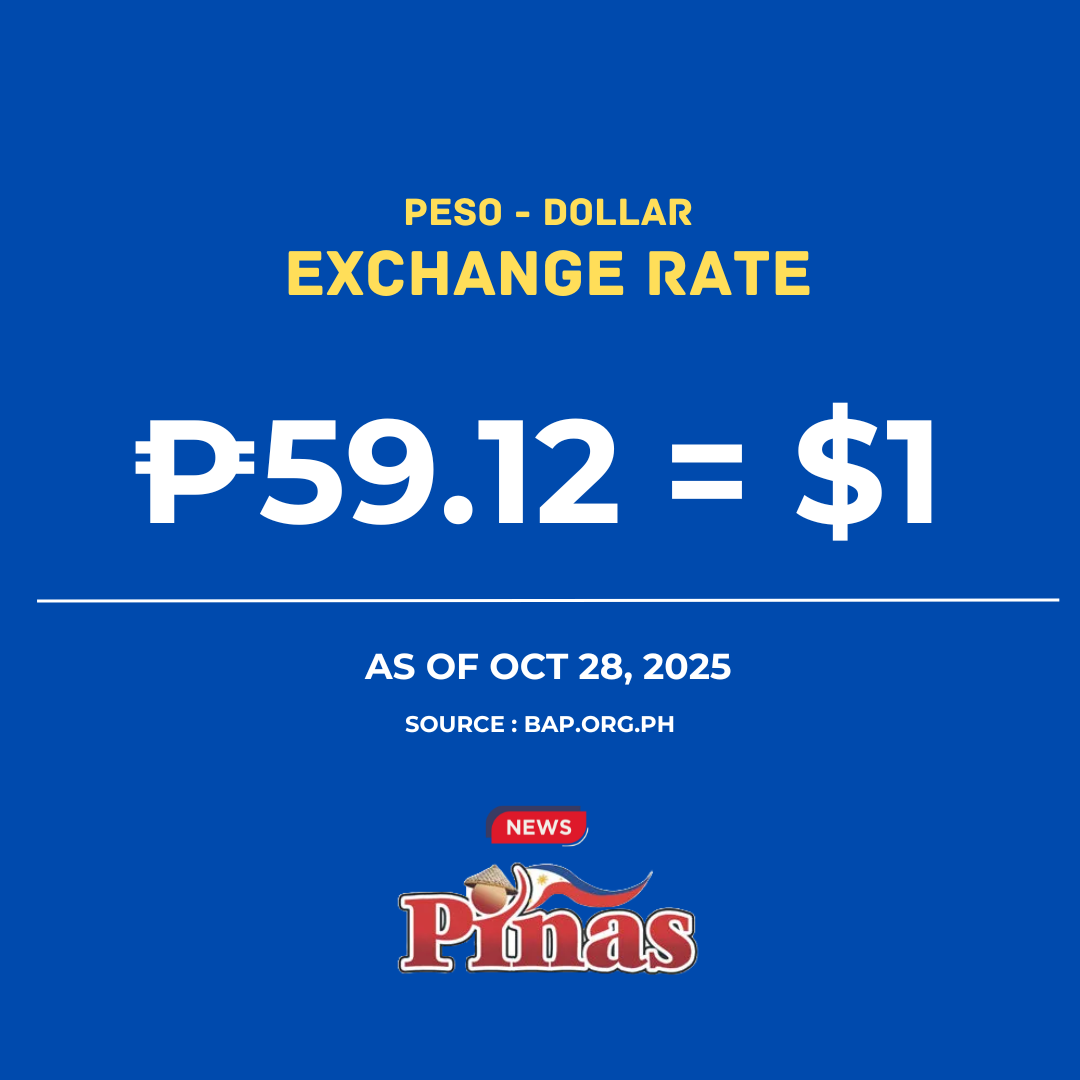
According to the Bankers Association of the Philippines (BAP), the peso opened at ₱58.90 per U.S. dollar on October 28, 2025, before closing at ₱59.13—a modest dip from ₱58.90 the previous day.
🔍 Inside the Numbers: What the BAP Spot USD/PHP Table Means
The BAP data shows how the peso traded throughout the day:
| Indicator | Today (Oct 28) | Previous (Oct 27) | Meaning |
|---|---|---|---|
| Open | ₱58.90 | ₱58.60 | Peso started weaker |
| High | ₱59.20 | ₱58.92 | Dollar reached its strongest level |
| Low | ₱58.90 | ₱58.50 | Peso traded within a tight range |
| Close | ₱59.13 | ₱58.90 | Peso slightly depreciated by day’s end |
Trading began at 9:00 AM, with an active day that saw over $1.75 billion worth of foreign exchange traded — higher than the previous day’s $1.6 billion.
The morning weighted average hit ₱59.098, while the afternoon average was ₱59.114, showing consistent movement throughout the day.
The official BSP reference rate closed at ₱58.90, reflecting the peso’s stable yet cautious performance amid global uncertainties.
🟢 In short: The peso weakened slightly but remained stable. The market’s increased activity shows ongoing demand for the U.S. dollar, driven by international trade and investor sentiment.
🌍 Global Currency Snapshot: The Top 15 Movers
The Bangko Sentral ng Pilipinas (BSP) also released its Financial Markets Reference Exchange Rate Bulletin for October 28, 2025, offering a look at how the world’s leading currencies stacked up against the peso.
Here’s how the top 15 currencies are performing — and what it means for the Philippines:
🇺🇸 1. U.S. Dollar (USD) – ₱58.687
The dollar remains king, strengthened by robust U.S. economic data and higher Treasury yields. Its continued dominance keeps pressure on Asian currencies, including the peso.
🇯🇵 2. Japanese Yen (JPY) – ₱0.3839
The yen remains weak as Japan maintains ultra-low interest rates, making imports from Japan more affordable but travel to Japan costlier for Filipinos.
🇬🇧 3. British Pound (GBP) – ₱78.3061
The pound strengthened slightly amid improved UK retail figures. Its rise reflects optimism despite inflation concerns in Europe.
🇭🇰 4. Hong Kong Dollar (HKD) – ₱7.5551
Tightly pegged to the U.S. dollar, the HKD mirrors the greenback’s strength, keeping Philippine imports from Hong Kong stable in price.
🇨🇭 5. Swiss Franc (CHF) – ₱73.7830
A traditional safe haven, the franc gained as investors sought stability amid global uncertainty.
🇨🇦 6. Canadian Dollar (CAD) – ₱41.9522
Oil price fluctuations pushed the Canadian dollar slightly higher, benefiting Filipino OFWs in Canada when remitting money home.
🇸🇬 7. Singapore Dollar (SGD) – ₱45.2657
The Singapore dollar remains strong, reflecting the city-state’s resilient economy. It continues to serve as one of Asia’s most stable currencies.
🇦🇺 8. Australian Dollar (AUD) – ₱38.4693
The AUD slipped due to weaker commodity exports, giving Filipinos more value when sending remittances from Australia.
🇧🇭 9. Bahraini Dinar (BHD) – ₱155.6891
The region’s oil wealth keeps the Bahraini dinar among the world’s strongest currencies—good news for OFWs in the Middle East.
🇸🇦 10. Saudi Riyal (SAR) – ₱15.6499
Still pegged to the U.S. dollar, the riyal remains steady, ensuring consistent remittance values for Filipinos in Saudi Arabia.
🇧🇳 11. Brunei Dollar (BND) – ₱45.0918
Closely aligned with Singapore’s dollar, it reflects the same regional strength, backed by Brunei’s oil-based economy.
🇮🇩 12. Indonesian Rupiah (IDR) – ₱0.0035
The rupiah remains one of the weakest in Asia, but Indonesia’s steady growth helps it stay stable against global headwinds.
🇹🇭 13. Thai Baht (THB) – ₱1.7972
Tourism recovery boosted Thailand’s baht, a sign of economic rebound across Southeast Asia.
🇦🇪 14. UAE Dirham (AED) – ₱15.9788
A key currency for OFWs, the dirham remains firm, ensuring strong remittance values for Filipinos working in the UAE.
🇪🇺 15. Euro (EUR) – ₱68.3527
Despite political and inflationary pressures in Europe, the euro strengthened slightly, reflecting cautious optimism across EU markets.
💬 The Bigger Picture
Globally, the U.S. dollar’s strength continues to influence other major currencies, including the peso. With investors flocking to the dollar amid ongoing geopolitical tensions and higher U.S. interest rates, Asian currencies are feeling the squeeze.
Locally, however, analysts say the peso remains stable thanks to steady remittance inflows, robust foreign reserves, and resilient domestic spending.
As the BSP continues to monitor these trends, the peso’s movement this week reflects one message clearly:
In a world of shifting currencies, the Philippine peso may bend—but it doesn’t break.