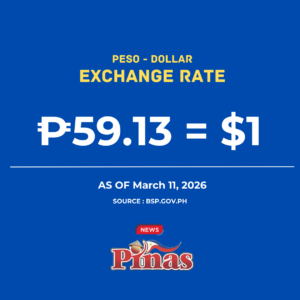

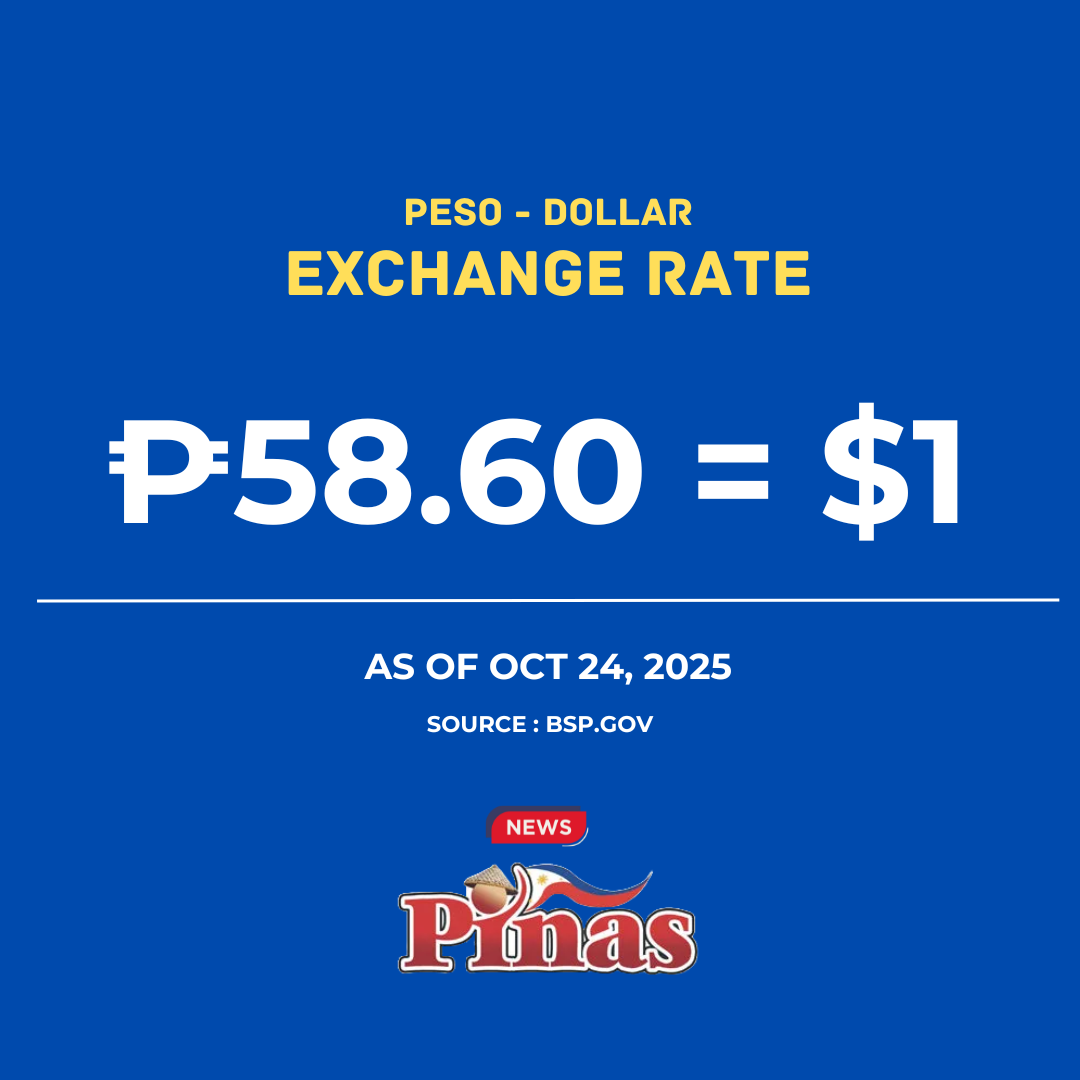
The Bangko Sentral ng Pilipinas (BSP) released its October 24, 2025 reference exchange rate bulletin, and the latest figures show the Philippine peso trading at ₱58.60 per U.S. dollar. It’s a sign that the peso remains under pressure as the greenback continues its global dominance amid geopolitical tensions and economic uncertainty.
Here’s a closer, simpler look at what’s happening with the top 15 global currencies — and what it means for Filipinos and the world economy.
💵 1. US Dollar (USD) – ₱58.60
The U.S. dollar remains the world’s powerhouse, holding firm despite market volatility. Investors are still seeking safety in the dollar, keeping it strong against most currencies, including the peso.
💴 2. Japanese Yen (JPY) – ₱0.38
The yen continues to struggle at multi-year lows, as Japan maintains ultra-low interest rates while other economies tighten policies. This makes the yen one of Asia’s weakest performers for 2025.
💷 3. British Pound (GBP) – ₱78.13
The pound is holding strong as the UK economy shows modest recovery signs after inflation spikes earlier this year. Still, global uncertainty keeps the pound’s rally in check.
💲 4. Hong Kong Dollar (HKD) – ₱7.54
The Hong Kong dollar remains tightly pegged to the U.S. dollar, showing little movement. Its stability reflects confidence in Hong Kong’s financial system amid global shifts.
💶 5. Swiss Franc (CHF) – ₱73.68
Known as a “safe haven” currency, the Swiss franc continues to rise slightly as investors seek shelter from global tensions.
🇨🇦 6. Canadian Dollar (CAD) – ₱41.89
Oil prices and trade trends drive the Canadian dollar’s strength. A firmer global oil market is helping the loonie regain footing.
🇸🇬 7. Singapore Dollar (SGD) – ₱45.14
The Singapore dollar remains one of Asia’s most stable currencies, supported by strong fiscal management and resilient trade activity.
🇦🇺 8. Australian Dollar (AUD) – ₱38.15
The Aussie dollar faces pressure from China’s slower growth, which affects commodity demand. Traders remain cautious about its near-term outlook.
🇧🇭 9. Bahraini Dinar (BHD) – ₱155.48
One of the strongest currencies in the world, the Bahraini dinar remains stable, backed by oil wealth and a firm peg to the U.S. dollar.
🇸🇦 10. Saudi Riyal (SAR) – ₱15.63
Oil stability helps the Saudi riyal maintain its strength. Its peg to the dollar keeps it largely unaffected by daily market swings.
🇧🇳 11. Brunei Dollar (BND) – ₱44.97
The Brunei dollar moves in tandem with Singapore’s currency. Its economic stability and oil reserves support its solid performance.
🇮🇩 12. Indonesian Rupiah (IDR) – ₱0.0035
The rupiah stays weak but stable, with investors closely watching Indonesia’s economic policies and inflation levels.
🇹🇭 13. Thai Baht (THB) – ₱1.78
Tourism is slowly reviving Thailand’s economy, but global oil prices and exports continue to pressure the baht’s growth.
🇦🇪 14. UAE Dirham (AED) – ₱15.96
The dirham remains solidly tied to the U.S. dollar, maintaining its value and giving confidence to overseas Filipino workers in the UAE.
💶 15. Euro (EUR) – ₱68.08
The euro remains resilient but cautious, as Europe faces economic headwinds from energy prices and slow growth.
🇵🇭 What It Means for Filipinos
For OFWs and businesses, a strong dollar means higher remittance value — every dollar sent home converts to more pesos. However, for importers and travelers, the weaker peso makes foreign goods and trips more expensive.
The BSP’s reference rate at ₱58.60 per dollar reflects a delicate balance — the peso remains relatively steady, but the global currency market is shifting fast.
⚖️ In Summary
-
Dollar stays king amid global uncertainty.
-
Asian currencies remain under mild pressure.
-
Peso holds steady but faces external risks from oil prices and U.S. policy moves.
The world’s currencies are in constant motion — and the next few months will test how long the peso can keep its footing in a stormy global market.