


The Bangko Sentral ng Pilipinas (BSP) has released its latest Reference Exchange Rate Bulletin, and it paints a clear picture:
the Philippine Peso is feeling the weight of stronger global currencies as markets react to shifting economic winds.
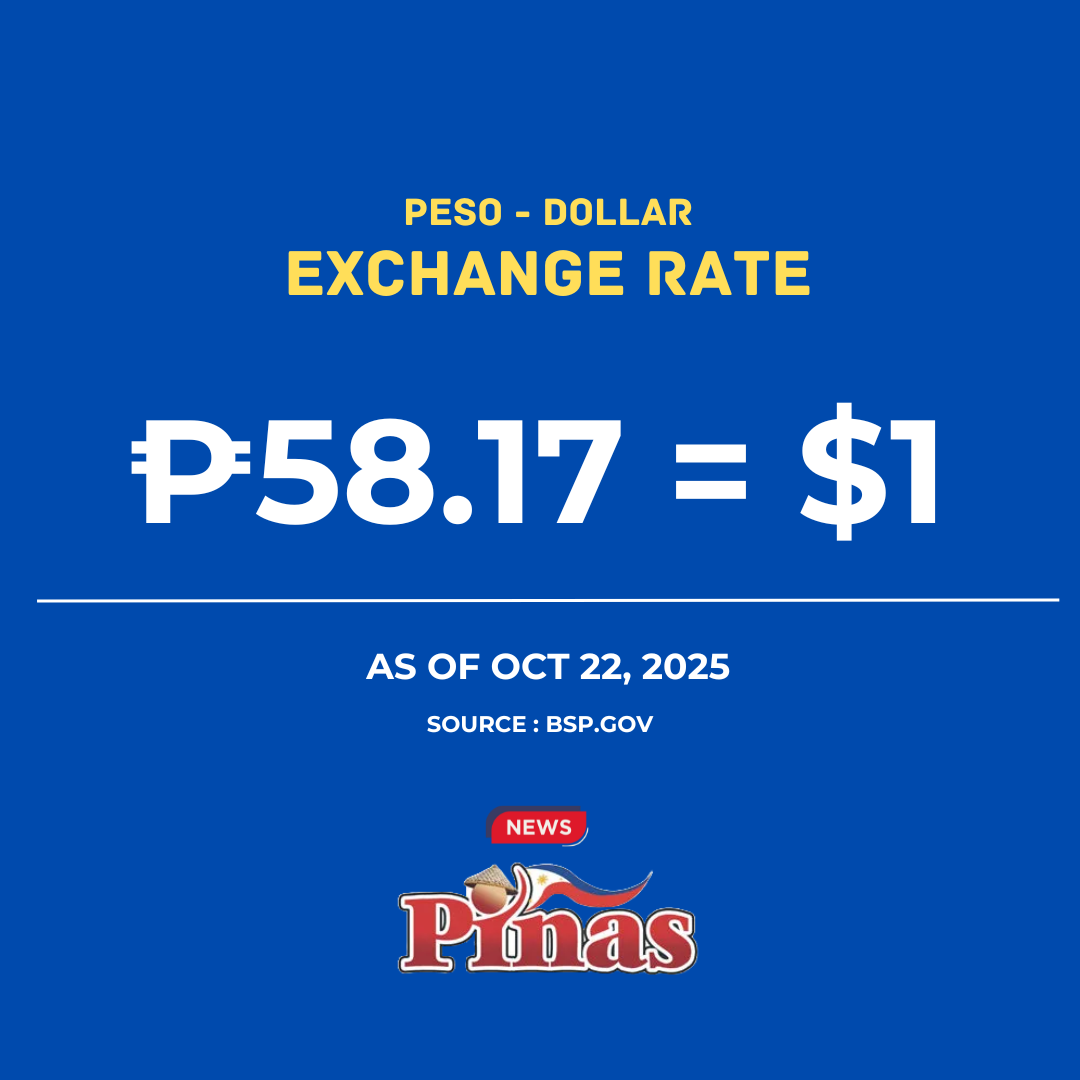
As of October 22, 2025, the Peso stands at ₱58.18 per US dollar, slightly weaker than last week’s ₱58.00 buying rate. This subtle dip signals how external factors — from US inflation data to regional trade tensions — are influencing the country’s currency landscape.
Let’s break down what’s happening among the top 15 most-traded currencies and how they’re moving against the Peso:
1. US Dollar (USD) – ₱58.17
The dollar remains dominant, as strong US jobs data and stable consumer confidence boost investor trust.
For Filipinos, this means higher costs for imports and overseas tuition, but stronger remittances for OFWs paid in USD.
2. Japanese Yen (JPY) – ₱0.38
The Yen continues to weaken, hurt by Japan’s ultra-low interest rates. Travelers heading to Japan will enjoy cheaper expenses,
but exporters might see reduced returns when converting earnings back to pesos.
3. British Pound (GBP) – ₱77.78
The Pound stays strong, driven by the UK’s positive growth outlook. It’s now one of the most expensive major currencies against the Peso.
This makes studying or traveling to the UK pricier for Filipinos.
4. Hong Kong Dollar (HKD) – ₱7.49
The HKD remains stable, tightly pegged to the US dollar. Filipino workers and businesses in Hong Kong won’t feel much change in exchange rates.
5. Swiss Franc (CHF) – ₱73.11
A classic “safe haven” currency, the Swiss Franc rises as global investors seek stability amid market uncertainty.
This reflects growing caution in global finance circles.
6. Canadian Dollar (CAD) – ₱41.49
The Canadian dollar dips slightly, pressured by falling oil prices. Still, it remains relatively strong compared to early 2025 levels.
7. Singapore Dollar (SGD) – ₱44.83
Singapore’s currency continues to gain ground, reflecting its strong economy and stable inflation rates.
Filipino professionals in Singapore can expect steady remittance values.
8. Australian Dollar (AUD) – ₱37.75
The Aussie dollar has slipped as China’s demand for raw materials slows. However, its decline may favor Filipino students in Australia with slightly lower living costs.
9. Bahraini Dinar (BHD) – ₱154.33
The Bahraini Dinar remains one of the world’s strongest currencies. For OFWs in Bahrain, their earnings continue to hold impressive peso value.
10. Kuwaiti Dinar (KWD) – N/A
No updated conversion data was released for Kuwait this week, but historically, the Kuwaiti Dinar is the highest-valued currency in the world — often exceeding ₱180 per dinar.
11. Saudi Riyal (SAR) – ₱15.51
The Riyal remains steady, supported by oil revenues. For the millions of Filipinos working in Saudi Arabia,
this means stable remittances and predictable exchange value.
12. Brunei Dollar (BND) – ₱44.66
Like Singapore’s dollar, the Brunei Dollar is holding firm thanks to its currency link to the SGD and steady energy exports.
13. Indonesian Rupiah (IDR) – ₱0.0035
The Rupiah remains weak, though stable, with Indonesia’s central bank keeping rates cautious to control inflation.
14. Thai Baht (THB) – ₱1.77
Thailand’s Baht is recovering, fueled by tourism’s comeback and stronger exports. It’s a modest but positive rebound for the region.
15. UAE Dirham (AED) – ₱15.84
The Dirham holds steady, closely tied to the US dollar. This means consistent remittance values for Filipinos in the UAE — still one of the most significant OFW hubs.
Big Picture: Peso at a Crossroads
Overall, the Peso remains under slight pressure, trading around ₱58.25 per dollar — a reflection of global dollar strength and investor caution in emerging markets.
The BSP’s official buying rate is pegged at ₱58.00, while the selling rate sits at ₱58.50, showing a narrow trading band that underscores stability despite external challenges.
Meanwhile, gold prices surged to $4,032 per ounce, and silver rose to $47.85, both signaling investors’ shift to safe assets amid currency volatility.
What This Means for Filipinos
-
OFWs benefit as their dollar remittances convert to more pesos.
-
Importers and businesses, however, face higher costs on foreign goods.
-
Travelers to strong-currency countries like the UK, Switzerland, and the US may feel the pinch.
-
Investors should monitor BSP announcements closely — especially if the peso continues to hover near the ₱58–₱59 range.
In short:
The Peso may be holding its ground, but the world’s currencies are moving fast — and the next few weeks could define where it stands as global markets brace for year-end volatility.