MANILA — The beaches are still stunning.
The sunsets still breathtaking.
The smiles still warm.
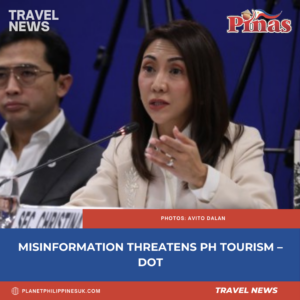
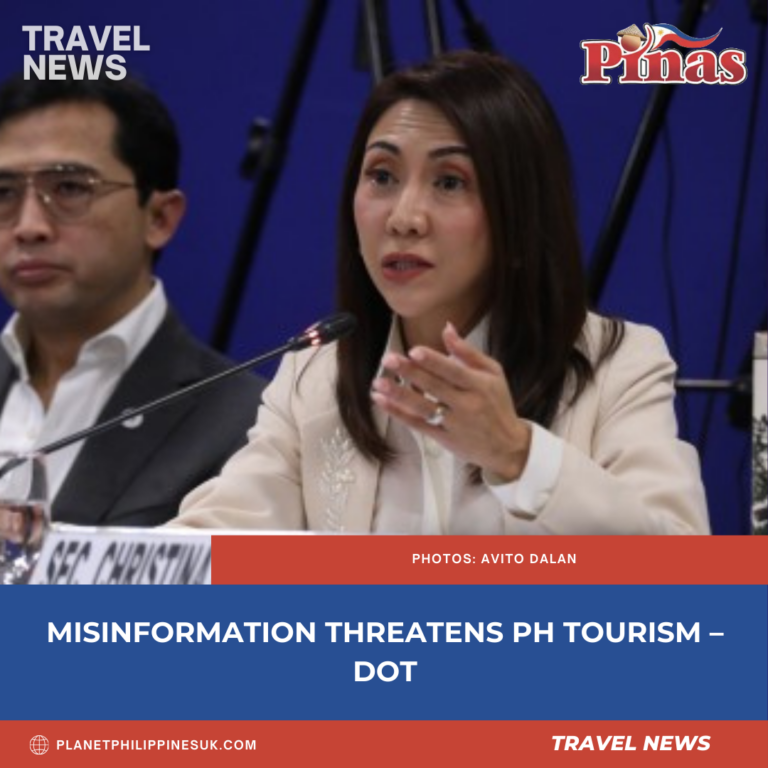
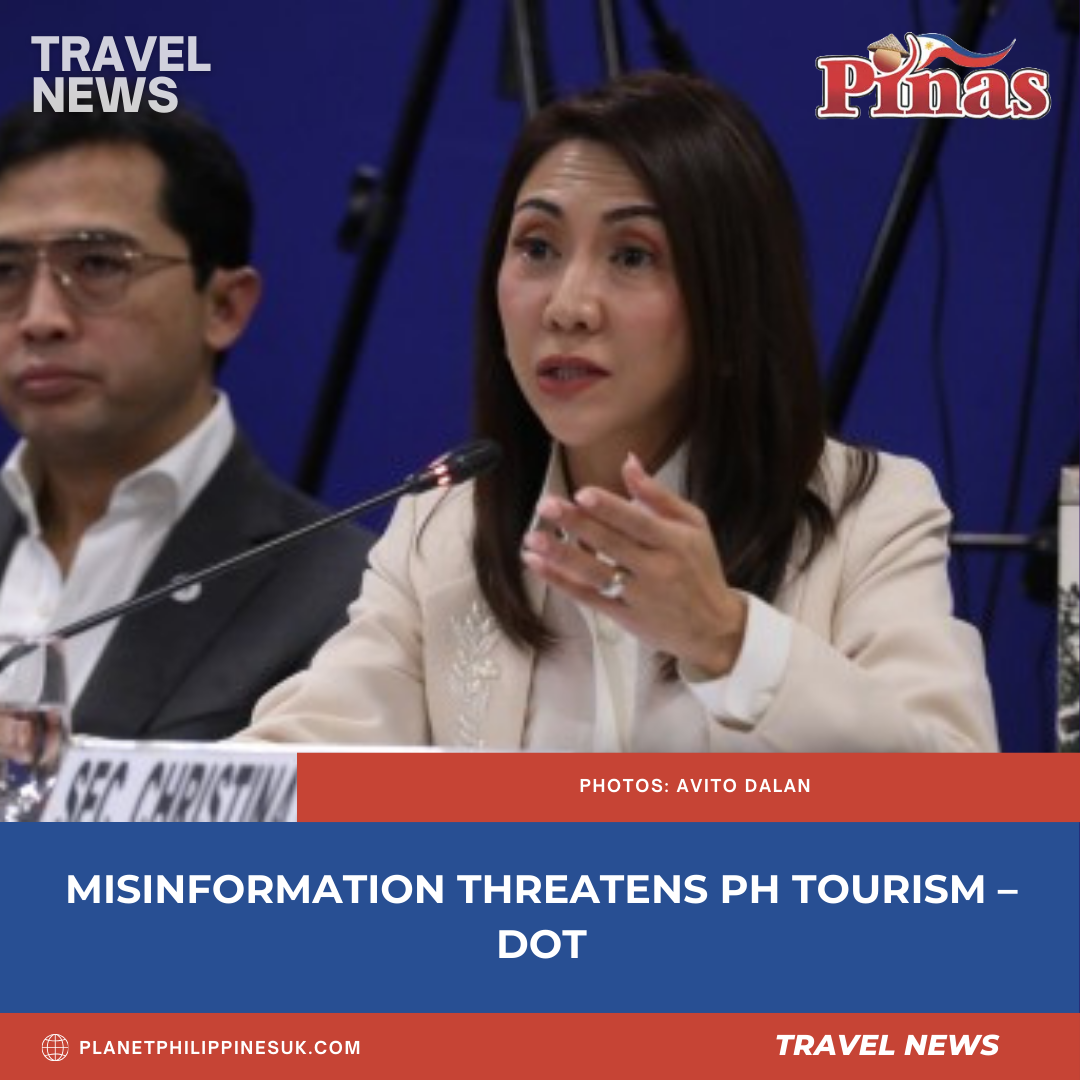
But according to Tourism Secretary Christina Frasco, something else is traveling faster than tourists these days.
Misinformation.
And it may be one of the biggest threats facing Philippine tourism.
“There’s So Much Misinformation”
Speaking at the Kapihan sa Manila Bay forum on Wednesday, Frasco addressed what she called a growing challenge — false claims painting the Philippines as unsafe for travelers.
“While already debunked, it was repeatedly carried and still posted nonetheless,” she said.
The frustration was clear.
Even when proven wrong, misleading reports continue to circulate online — shared, reposted, and believed.
“There’s so much misinformation out there about Philippine tourism and that poses as a big challenge,” Frasco added.
The Ranking That Sparked Alarm
In 2025, travel insurance company HelloSafe released a ranking that labeled the Philippines among the world’s most dangerous countries for travelers.
The claim spread quickly.
Headlines followed.
Concern grew.
But the Philippine government dismissed the ranking as false and misleading.
Still, in the digital age, damage can linger long after a claim is disproven.
One viral post can undo months of promotion.
One misleading headline can cancel countless bookings.
Safety and Trust
Frasco emphasized that the Department of Tourism (DOT) is not ignoring the issue.
The agency is working closely with the Department of the Interior and Local Government (DILG) and the Philippine National Police (PNP) to strengthen peace and order — especially in key tourist areas.
“As far as our source market is concerned, South Korea continues to be number one for the Philippines,” she said.
But even that strong relationship has faced challenges.
That’s why, she explained, ensuring tourism safety remains a top priority.
Because safety builds trust.
And trust brings travelers.
Beyond Misinformation
The fight doesn’t stop there.
Frasco said the DOT is also tackling other pressing concerns — from improving digital systems and connectivity to upgrading tourism infrastructure.
In a world where travelers research everything online before booking, perception matters just as much as reality.
And perception can be shaped in seconds.
Going on the Offensive
Despite the obstacles, the DOT is not retreating.
Instead, it’s going global.
A more aggressive marketing campaign is being rolled out in priority markets such as South Korea, the United States, Japan, and Australia.
The message is clear:
The Philippines is open.
The Philippines is ready.
And the Philippines is safe.
Tourism is more than an industry — it is livelihoods, families, communities.
From tour guides in Palawan to resort workers in Boracay, millions depend on the story the world believes about the country.
And right now, the government says that story must be protected — from falsehoods, from fear, and from the fast-moving tide of misinformation.