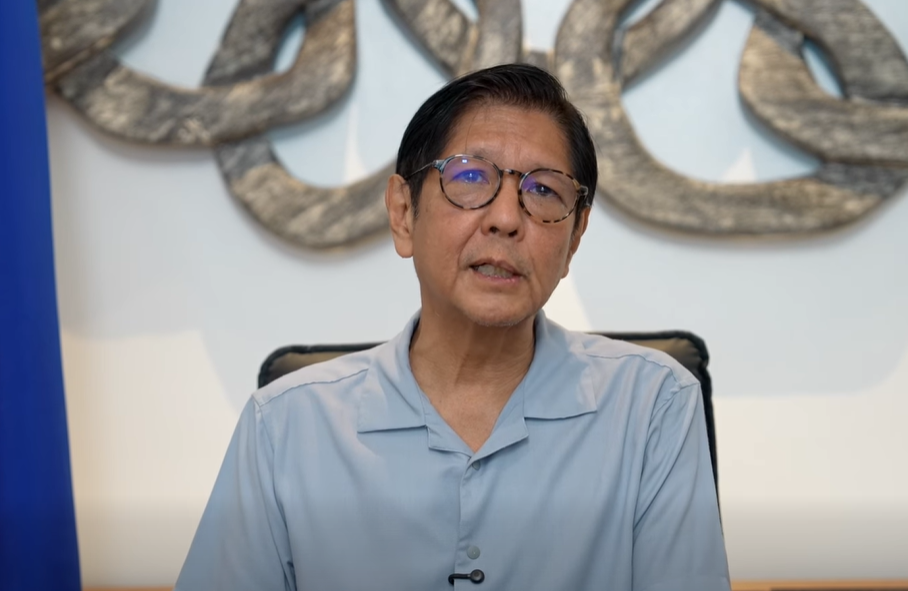
President Ferdinand Marcos Jr. made a renewed appeal on Monday — one that carried both urgency and frustration.
Once again, he called on local government units (LGUs) across the country to stop collecting so-called “pass-through fees” from vehicles transporting goods.
The President said he has received reports that despite a previous order, some barangays are still charging fees on trucks and deliveries passing through their areas.
And the impact, he stressed, is felt by every Filipino household.
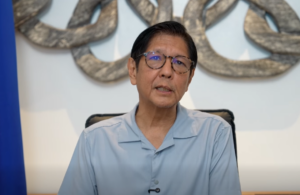
“Muli, nananawagan ako sa ating mga local government unit na siguruhing wala nang pass-through fee na sisingilin,” Marcos said in a video message.
“Nakarating sa akin na may ilang barangay na naniningil pa rito sa bawat sako ng palay at sasakyan.”
(Once again, I am calling on our local government units to ensure that no more pass-through fees are collected. It has come to my attention that some barangays are still charging fees for every sack of rice and every vehicle.)
The President’s message was simple — these charges must stop.
Because every extra fee along the road… eventually ends up in the price Filipinos pay at the market.
“Sana matigil na ninyo po ito dahil ang epekto lamang nito ay pinapamahal ang presyo ng ating mga bilihin,” he said.
A Rule Already in Place
Back in 2023, the government issued Executive Order No. 41, which clearly prohibits LGUs from collecting tolls or fees from vehicles carrying goods while passing through national roads.
The order also covers roads that were not built or funded by the LGUs themselves.
The reason behind the order was clear.
Unauthorized pass-through fees increase transportation and logistics costs — costs that businesses eventually pass on to consumers.
In other words, higher delivery costs mean higher prices for food and basic goods.
Reviewing Government Fees
Beyond the issue of road charges, the President also urged government agencies to take a closer look at their own policies.
He called on agencies to review requirements involving licenses, permits, clearances, and certifications.
Some of these, he said, may need to be temporarily suspended or have their fees reduced.
“Sa lahat ng ahensya ng pamahalaan, repasuhin ang mga patakaran ukol sa lisensya, permit, clearance, certification,” Marcos said.
“Tingnan ninyo kung alin dito ang puwedeng suspendihin o babaan ang singil upang makabawas sa mga iniintindi ng taong-bayan.”
For the President, the goal is simple — ease the financial pressure on ordinary Filipinos.
No Graduation Fees
Marcos also reminded public schools to follow a long-standing rule: students should not be charged graduation fees.
As the school year draws to a close, he stressed that families should not be burdened with extra costs during graduation season.
“Bawal pa rin ang mga bayarin o kontribusyon na sisingilin sa mga mag-aaral sa mga pampublikong paaralan,” he said.
Helping Farmers and Fisherfolk
In the same message, Marcos outlined steps the government is taking to soften the impact of rising oil prices, especially amid tensions in the Middle East.
Farmers and fisherfolk are among the most affected by rising fuel costs.
To help them cope, the Department of Agriculture will continue distributing P3,000 fuel subsidies to more than 26,000 farmers.
Meanwhile, the Bureau of Fisheries and Aquatic Resources (BFAR) will also provide P3,000 fuel subsidies to over 26,000 fishermen, with distribution set for March 19.
The assistance aims to ensure that farmers can continue planting and fishermen can continue sailing — despite rising fuel prices.
Lower Airport Charges
The government is also looking at ways to reduce travel costs.
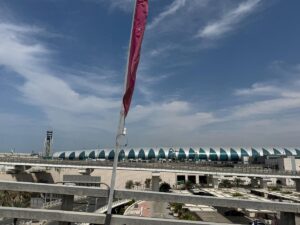
According to Marcos, the Civil Aviation Authority of the Philippines is expected to lower several airport charges, including passenger service fees, landing fees, and parking fees.
If implemented, these reductions could help airlines cut operational costs — and potentially lower airfares for passengers.
At the same time, the Civil Aeronautics Board is shortening the review period for fuel surcharges.
Instead of waiting a full month, reviews will now happen every 15 days, allowing airline fares to adjust faster when jet fuel prices change.
Free Rides for Commuters
Marcos also encouraged commuters to take advantage of free rides under the Love Bus Program, which currently operates in Metro Manila, Metro Cebu, and Metro Davao.
The program is meant to provide temporary relief for daily commuters facing rising transportation costs.
Addressing Fuel Price Volatility
Meanwhile, the President has also certified as urgent a proposed measure to amend the Biofuels Act of 2006.
In a letter sent to Congress on March 16, Marcos said the amendment aims to help cushion the country from the effects of volatile global oil prices and geopolitical tensions.
For the President, the message behind all these actions is clear.
Cut unnecessary fees.
Reduce government burdens.
And make sure the cost of living does not rise unnecessarily for ordinary Filipinos.