


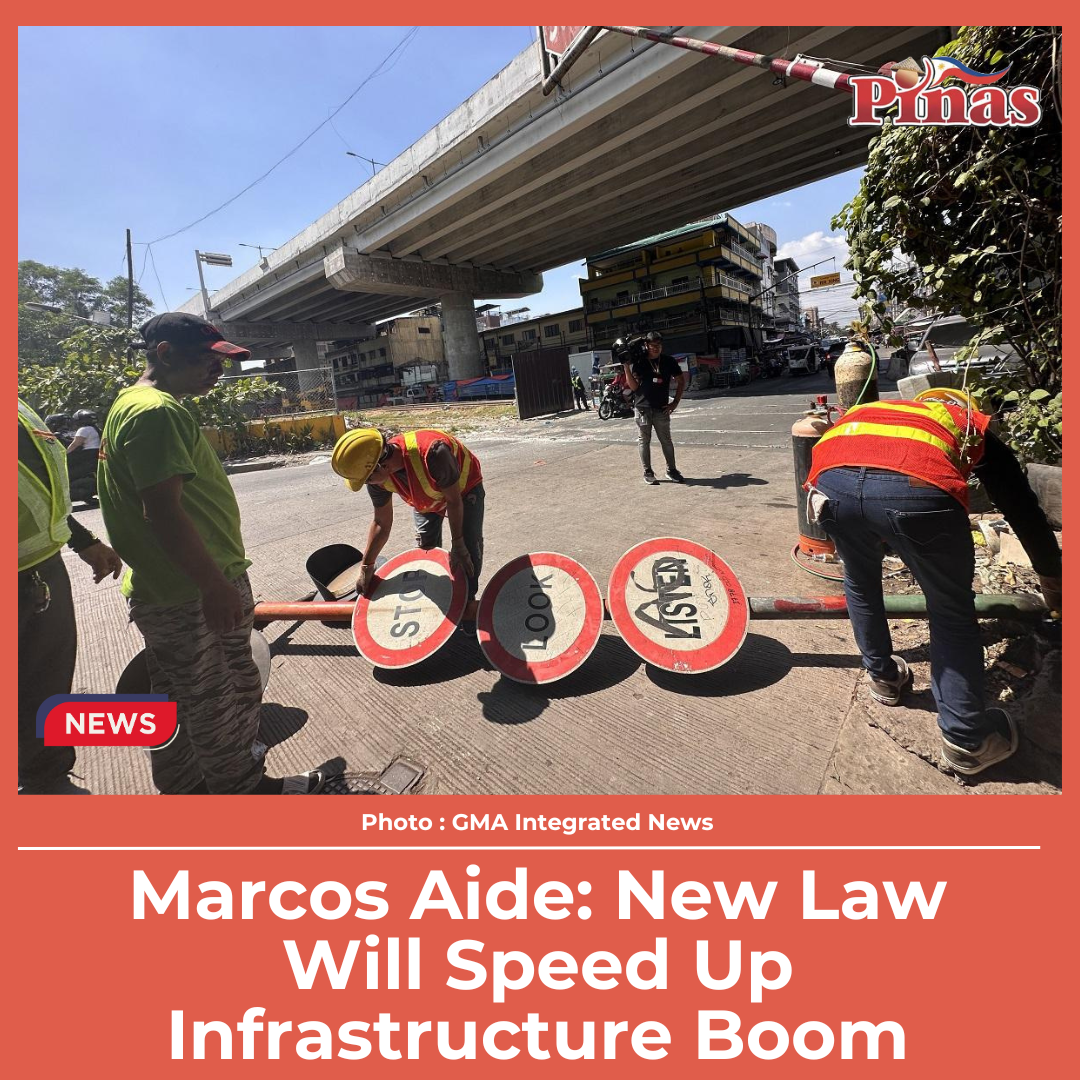
The government has taken a major step forward in fixing one of the biggest roadblocks to progress: delays in infrastructure projects.
On Friday, Special Assistant to the President for Investment and Economic Affairs (SAPIEA) Frederick Go welcomed the signing of the Accelerated and Reformed Right of Way (ARROW) Act—a new law that promises to make life easier for every Filipino.
Signed by President Ferdinand “Bongbong” Marcos Jr., the ARROW Act (Republic Act No. 12289) updates the old Right of Way Act and introduces a faster, fairer system for land acquisition.
“A win for the economy—and for the Filipino people”
Go was optimistic as he explained the benefits:
“The ARROW Act will speed up the delivery of projects, while ensuring fair compensation and transparency. This is a win for both the economy and the Filipino people. It will enable better access to essential services, boost investor confidence and, more importantly, fast-track projects that will deliver safer roads, shorter commutes, reliable electricity, clean water and increased opportunities.”
For decades, infrastructure projects have been slowed down by land disputes, property valuation conflicts, and complicated legal processes. According to Go, the ARROW Act directly addresses these pain points by putting in place a streamlined and transparent framework.
What the law covers
The ARROW Act will apply to national government projects, public services, and private entities authorized to exercise eminent domain.
It will impact critical sectors, including:
-
Power transmission and distribution
-
Water supply and wastewater systems
-
Petroleum pipelines
-
Airports and seaports
-
Telecommunications and broadband networks
-
Irrigation and other public utility services
A boost for commuters
Perhaps the most exciting news for commuters: the law clears the way for subway projects and other underground infrastructure. It authorizes government projects to go as deep as 18 meters below ground—a standard in other countries, but long delayed in the Philippines.
Property owners with affected underground structures will also receive fair compensation, ensuring development does not come at the cost of fairness.
What’s next?
Go confirmed that within 60 days, the government will release the implementing rules and regulations (IRR), crafted by an inter-agency committee in consultation with key stakeholders.
With the ARROW Act, the government hopes to remove years of delay and frustration—finally delivering the kind of projects that change everyday life: faster commutes, better services, and stronger opportunities for Filipinos.