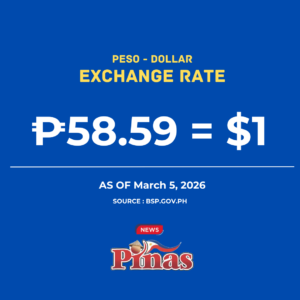
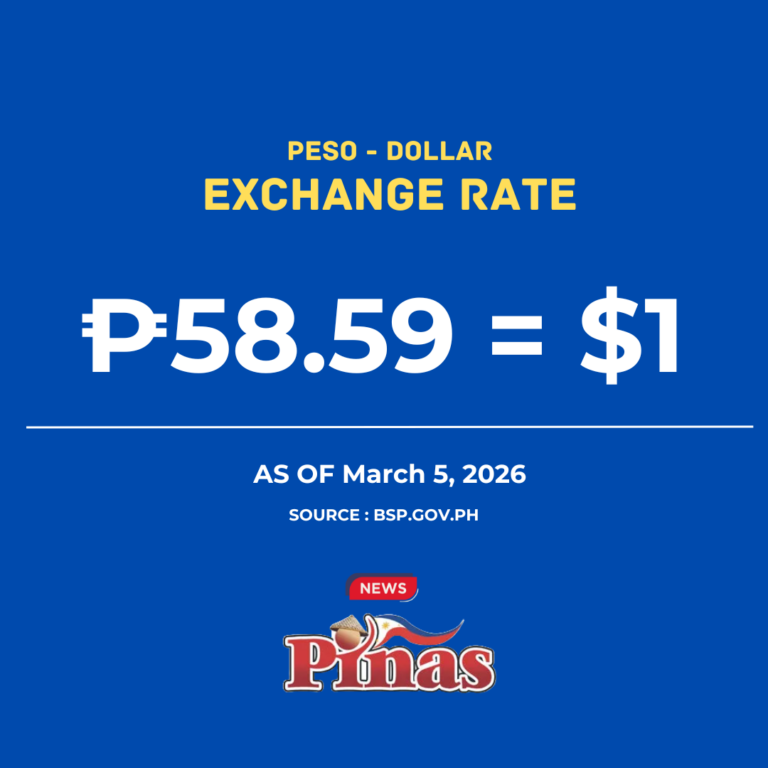

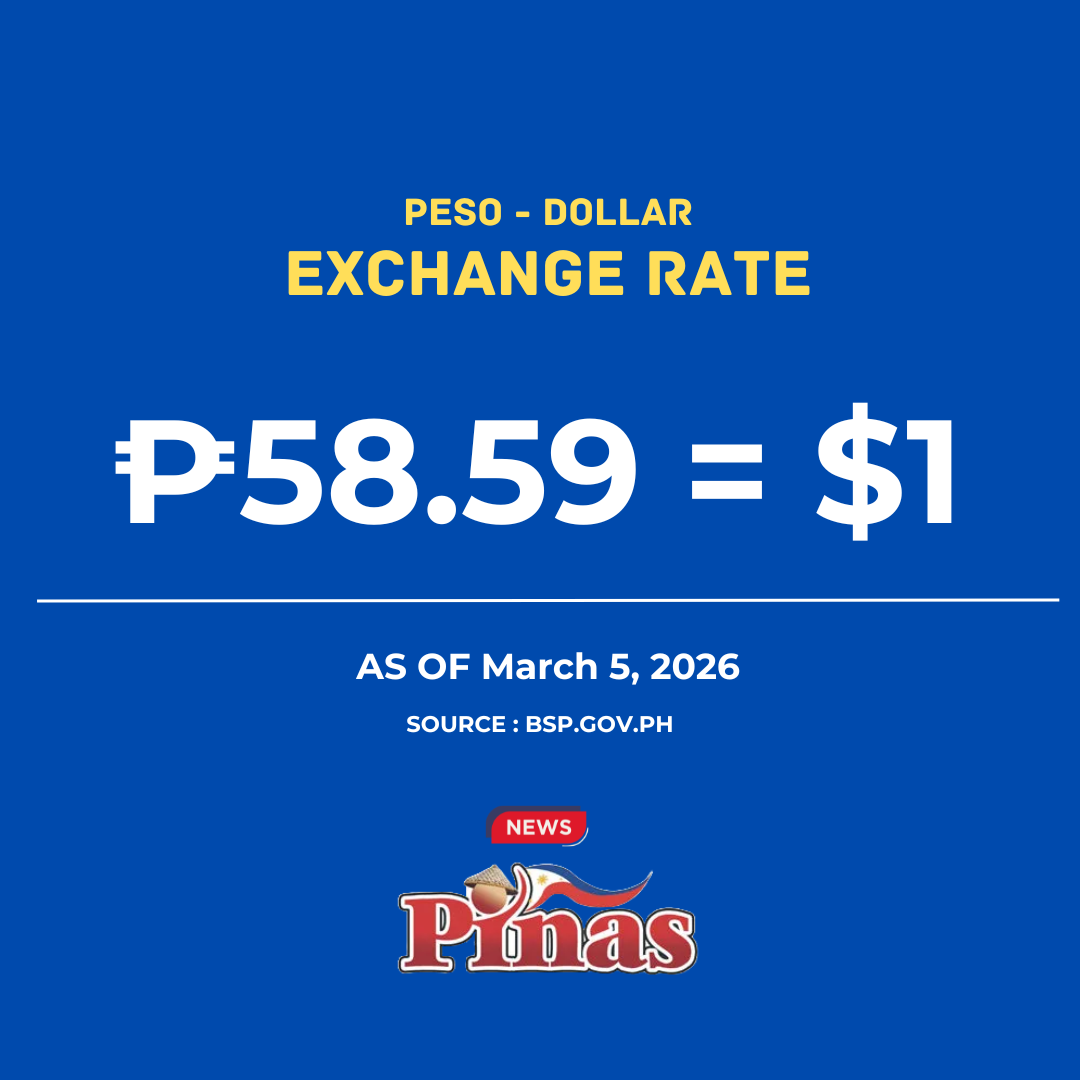
As of March 6, 2026, the Philippine peso continues to trade near the ₱58.60 level against the U.S. dollar, based on the latest Bangko Sentral ng Pilipinas (BSP) reference exchange rate bulletin.
For millions of Filipinos — especially OFWs, travelers, importers, and investors — currency movements are more than just numbers.
They affect remittances, travel costs, fuel prices, and even everyday goods.
So where exactly does the Philippine peso stand today against the world’s most important currencies?
Let’s break it down.
Peso vs. the World’s Top 15 Currencies
(Based on BSP Reference Rates – March 5, 2026)
🇺🇸 US Dollar (USD)
$1 = ₱58.599
The U.S. dollar remains the global benchmark currency and the most watched pair for the Philippine peso.
A weaker peso means higher import costs, but it also boosts OFW remittances.
🇬🇧 British Pound (GBP)
£1 = ₱78.41
The British pound remains one of the strongest currencies globally, significantly stronger than the peso.
For Filipinos sending money to or from the UK, the exchange difference can be substantial.
🇪🇺 Euro (EUR)
€1 = ₱68.17
The euro continues to trade well above the peso, reflecting the economic strength of the European Monetary Union.
European imports remain relatively expensive for Philippine buyers.
🇨🇭 Swiss Franc (CHF)
1 CHF = ₱75.23
Known as a safe-haven currency, the Swiss franc stays strong during global uncertainty.
Investors often turn to it during geopolitical tensions.
🇨🇦 Canadian Dollar (CAD)
1 CAD = ₱42.96
The Canadian dollar remains a key currency for Filipino migrants in Canada.
Exchange rate shifts directly affect remittance values sent home to the Philippines.
🇸🇬 Singapore Dollar (SGD)
1 SGD = ₱45.96
The Singapore dollar remains strong due to Singapore’s stable financial system and strong trade economy.
Many Filipino professionals in Singapore closely monitor this rate.
🇦🇺 Australian Dollar (AUD)
1 AUD = ₱41.45
Australia remains one of the top destinations for Filipino migrants.
Currency shifts impact tuition payments, remittances, and tourism spending.
🇭🇰 Hong Kong Dollar (HKD)
1 HKD = ₱7.50
Hong Kong remains a major hub for Filipino workers.
Even small exchange changes can affect domestic helpers and overseas workers sending money home.
🇸🇦 Saudi Riyal (SAR)
1 SAR = ₱15.61
Saudi Arabia remains one of the largest employers of OFWs, making the riyal-peso exchange especially important for many families.
🇦🇪 UAE Dirham (AED)
1 AED = ₱15.95
The UAE is another major OFW destination.
Currency stability helps keep remittance values relatively predictable.
🇯🇵 Japanese Yen (JPY)
¥1 = ₱0.373
The yen remains significantly weaker compared to other major currencies, reflecting Japan’s long-running ultra-low interest rate environment.
🇨🇳 Chinese Yuan (CNY)
1 CNY = ₱8.50
China remains one of the Philippines’ largest trading partners, making this exchange rate critical for trade and imports.
🇹🇭 Thai Baht (THB)
1 THB = ₱1.86
The baht closely reflects Southeast Asian economic movements and tourism flows.
🇲🇾 Malaysian Ringgit (MYR)
1 MYR = ₱14.88
Malaysia remains a key trading partner within ASEAN.
Currency changes influence regional trade and business transactions.
🇮🇳 Indian Rupee (INR)
1 INR = ₱0.636
India’s rapidly growing economy continues to expand its influence across Asian markets.
What’s Driving Currency Movements?
Several global factors continue to influence currency markets:
• Rising geopolitical tensions in the Middle East
• Global interest rate policies
• Oil price movements
• International trade demand
When global uncertainty rises, currencies like the U.S. dollar and Swiss franc often strengthen, while emerging market currencies like the peso may weaken slightly.
BSP Rates Snapshot
-
BSP Reference Rate: ₱58.55 per USD
-
BSP Buying Rate: ₱58.30
-
BSP Selling Rate: ₱58.80
-
PDS Closing Rate (March 4): ₱58.57
Precious Metals
Global markets also saw strong precious metal prices:
-
Gold: $5,164.50
-
Silver: $84.00
These commodities often rise when investors seek safe-haven assets during uncertain times.
The Bottom Line
For now, the Philippine peso remains relatively stable near the ₱58-per-dollar level.
But in a world shaped by conflicts, interest rate shifts, and economic uncertainty, currency markets can change quickly.
And when they do, the impact reaches far beyond financial charts — affecting millions of Filipino families, OFWs, and businesses worldwide.