
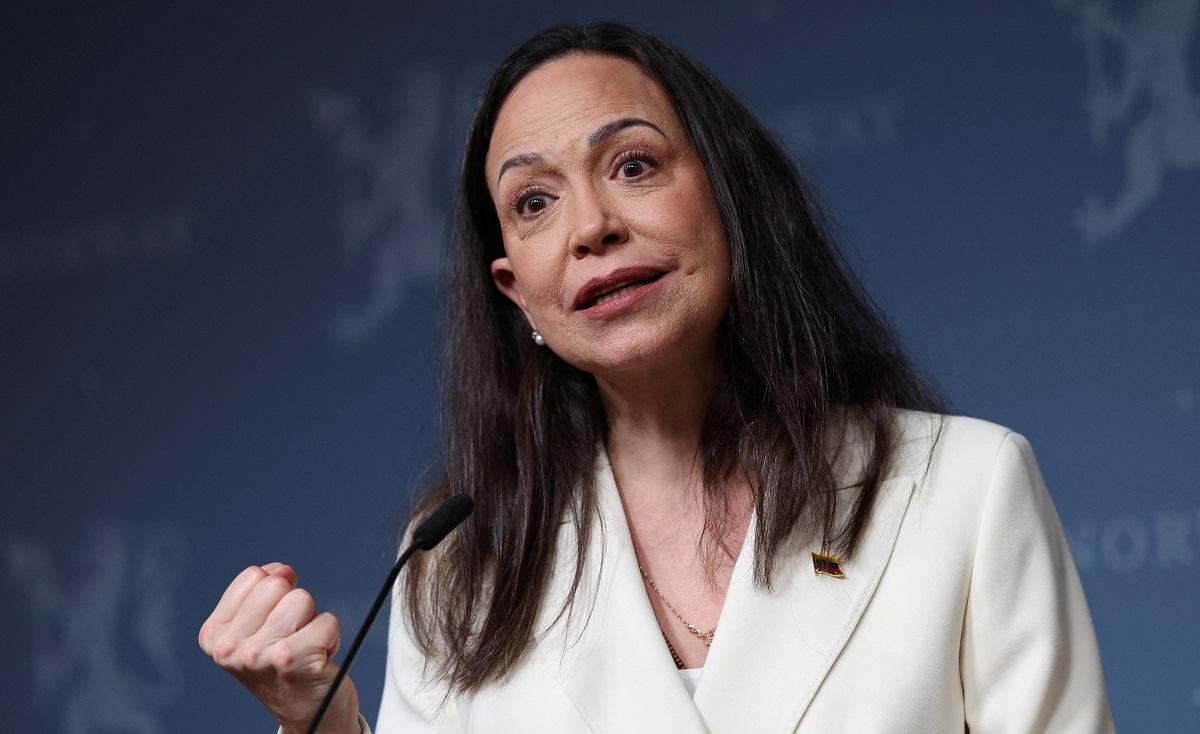
WASHINGTON — After years in exile and months in hiding, Venezuela’s leading opposition figure Maria Corina Machado says she is ready to go home.
And she says she is ready to win.
In her first interview since the dramatic capture of President Nicolas Maduro, Machado vowed to return to Venezuela “as soon as possible,” declaring that her movement is prepared to lead the country into a free and fair election.
“We believe this transition must move forward,” Machado told Fox News. “We already won once—despite fraud. In a real election, we will win by more than 90 percent.”
At 58, Machado is no stranger to danger. An industrial engineer and mother of three, she fled Venezuela in October—disguised—to receive a Nobel Peace Prize, which she dedicated to former US President Donald Trump.
She praised Trump openly, calling his actions decisive and historic.
“January 3 will be remembered as the day justice defeated tyranny,” she said.
But the road ahead remains uncertain.
While Machado celebrates Maduro’s fall, Trump has signaled that the United States may work—at least temporarily—with interim President Delcy Rodriguez, a longtime Maduro ally. That position has disappointed Venezuela’s opposition and unsettled millions of Venezuelans watching from abroad.
Trump himself has poured cold water on the idea of an immediate election.
“We have to fix the country first,” he said. “You can’t just vote when everything is broken.”
Inside Venezuela, power has not fully shifted.
Socialist Party loyalists still control key institutions. Machado remains under investigation for allegedly inciting the military, and she has not revealed where she is or how she plans to return.
For many Venezuelans—especially the millions who fled the country during the economic collapse—Trump’s claim that Machado lacks support stings deeply. Opposition leaders and international observers insist the 2024 election was stolen, noting Machado was banned from running and forced to campaign through an ally.
Machado has been blunt about her concerns.
She described Rodriguez as “one of the main architects of torture, persecution, corruption, and narco-trafficking,” accusing her of deep ties to Russia, China, and Iran.
Despite the tension, Machado remains defiant—and hopeful.
With Venezuela’s vast oil reserves, she believes the country could once again thrive—restoring the rule of law, reopening markets, and welcoming exiles home.
But events on the ground remain volatile.
Security forces have taken to the streets. Arrest orders have been issued for those accused of aiding Maduro’s capture. Journalists were briefly detained. Shots rang out over Caracas—officials say, fired into the air to deter drones.
Authorities insist the country is calm.
Human rights groups say otherwise.
Nearly 900 political prisoners remain behind bars, and Machado’s movement is demanding their immediate release as a first step toward democracy.
Meanwhile, Maduro—now in US custody—has pleaded not guilty to narcotics charges, insisting he is still Venezuela’s rightful president.
Global reaction has been swift and divided.
Russia, China, and Venezuela’s allies have condemned the US action, while international bodies warn of dangerous precedents.
“This sends the message that the powerful can do whatever they want,” the UN human rights office said.
Still, markets are already reacting. Venezuelan bonds have surged, fueled by optimism that a post-Maduro future may finally be within reach.
As the world watches, one thing is clear:
Maria Corina Machado is preparing to return—not quietly, not cautiously—but with a promise that Venezuela’s long night may finally be ending.