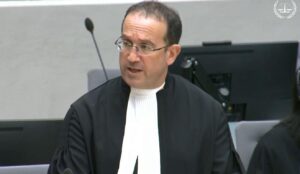



The courtroom in Lapu-Lapu City has once again become the center of attention.
This week, the Regional Trial Court (RTC) began hearing a motion filed by contractor Sara Discaya and nine other accused, all facing serious charges of graft and malversation of public funds.
At the heart of the case is an alleged ₱95.6-million ghost flood control project—a project that, according to prosecutors, existed only on paper.
But the defense pushed back.
During the hearing, Discaya’s camp argued that the Lapu-Lapu City RTC has no authority to try the case. Their reason?
The questioned flood control projects were supposedly located in Malita, Davao Occidental, not in Lapu-Lapu City.
A key point of contention emerged.
Earlier, the Supreme Court had explained that the case was transferred to Lapu-Lapu City following its guidelines. These rules state that corruption-related cases should be filed in the nearest designated anti-graft court within the same judicial region.
Still, the defense insisted the rule does not apply here.
They pointed out that none of the accused holds a government position with Salary Grade 27 or higher, a requirement they believe should determine where the case is heard.
As the legal debate unfolds, the accused remain behind bars, detained at the Lapu-Lapu City Jail’s male and female dormitories—waiting, watching, and hoping.
The tension is building.
The court is expected to decide on the motion any time up to a day before the scheduled arraignment on January 13.
Until then, all eyes remain on the courtroom—where a single ruling could change the direction of the case entirely.