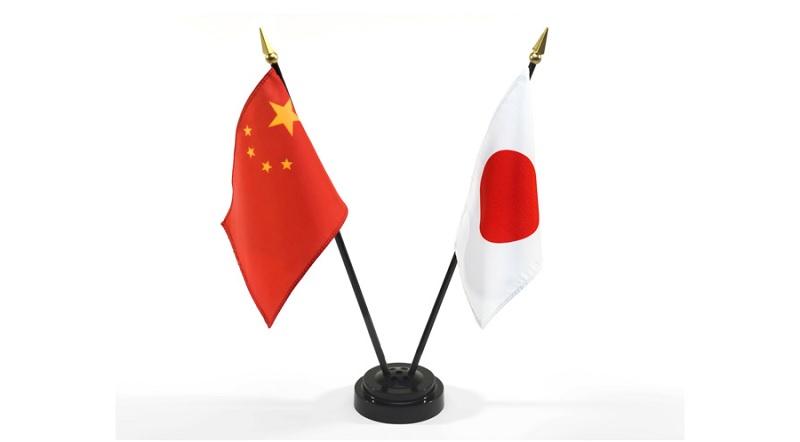
TOKYO/BEIJING — Japan stepped in on Monday to ease a growing diplomatic storm with China over Taiwan, a row that has already prompted Beijing to urge its citizens to halt travel to Japan.
The dispute erupted after Prime Minister Sanae Takaichi told Japanese lawmakers earlier this month that a Chinese attack on Taiwan threatening Japan’s survival could trigger a military response. Her comments broke decades of cautious silence from Japanese administrations, designed to avoid provoking Beijing, which claims the self-ruled island.
To cool tensions, Masaaki Kanai, Japan’s foreign ministry official overseeing Asia and Oceania affairs, arrived in Beijing to meet his Chinese counterpart, Liu Jinsong, as broadcast by Kyodo News. Kanai is expected to clarify that Japan’s security policy has not changed and to urge China to refrain from actions that could harm bilateral ties.
Taiwan lies just 110 km (68 miles) from Japan’s westernmost island, Yonaguni, near key sea lanes vital for Japan’s energy shipments. Japan also hosts the largest concentration of U.S. military power outside the United States.
“Various channels of communication are open,” Japan’s Chief Cabinet Secretary said, adding that the travel warning issued by China is incompatible with efforts to promote strategic, mutually beneficial ties.
China, however, shows no sign of backing down. Premier Li Qiang has no plans to meet Takaichi during this week’s G20 summit in South Africa. Instead, the Chinese foreign ministry called on Japan to retract what it called “wrongful” remarks.
Taiwan’s President Lai Ching-te described China’s actions as a “multifaceted attack” on Japan and called on the international community to pay close attention. “China must exercise restraint and act as a major power, rather than becoming a troublemaker for regional peace and stability,” he said.
Analysts warn the tension could last for months. Kenji Minemura, senior research fellow at the Canon Institute for Global Studies, said, “China knows Takaichi cannot retract her comment, so its call isn’t about resolving the issue — it’s about ramping up pressure on Japan.”
Rising Diplomatic Fire
The row intensified after Takaichi’s Nov. 7 comment, just a week after she met Chinese President Xi Jinping to discuss stable ties.
A day later, China’s consul general in Osaka posted a now-deleted message on X saying, “the dirty neck that sticks itself in must be cut off.” Japan summoned the Chinese ambassador to protest and several politicians demanded his expulsion.
The rift widened further when China summoned Japan’s ambassador — the first time in over two years — to make a “strong protest” over Takaichi’s remarks. On Friday, Beijing warned that Japan would face a “crushing” military defeat if it intervened over Taiwan and questioned Japan’s non-nuclear principles.
In August, a Reuters investigation revealed Japan’s growing willingness to reconsider its long-standing nuclear pledges — a highly sensitive topic for the only nation to suffer atomic bombings.
Military Posturing
Tensions spilled into the East China Sea. On Sunday, Chinese coast guard ships sailed near disputed islands controlled by Japan (Senkaku in Tokyo, Diaoyu in Beijing). Japan’s coast guard drove the ships away, while fighter jets scrambled on Saturday after a Chinese drone flew between Taiwan and Yonaguni.
The U.S. ambassador to Japan, George Glass, also criticized China’s consul general, saying, “Halloween has been and gone,” after the diplomat called Takaichi an “evil witch.” Chinese state-linked media, including the People’s Daily, labeled her remarks “strategic recklessness” and a “deliberate provocation.”
Economic Risks
Beyond politics, the dispute risks a serious economic hit. Tourism and retail have already felt pressure. Department store operator Isetan Mitsukoshi fell 11.3%, and Japan Airlines dropped 3.7%.
Analysts warn that a sharp drop in Chinese visitors — similar to the 25% decline during a 2012 island dispute — could dampen Japan’s growth by more than half a year.
As tensions simmer, Japan walks a delicate line: protecting its security, reassuring allies, and avoiding actions that could spiral into a full-blown crisis with its powerful neighbor.