

CAIRO/JERUSALEM — The Rafah border crossing between Gaza and Egypt — Gaza’s main lifeline to the outside world — will remain closed until further notice, Israeli Prime Minister Benjamin Netanyahu announced on Saturday.
He said the border will not reopen unless Hamas hands over the bodies of deceased Israeli hostages, deepening tensions as both sides continue to trade blame over alleged ceasefire violations.
Netanyahu’s announcement came just hours after the Palestinian Embassy in Egypt declared that Rafah would reopen Monday for entry into Gaza — a claim swiftly contradicted by Israel.
For days, Israel and Hamas have accused each other of breaching the fragile, US-brokered ceasefire. Late Saturday, the US State Department said it received “credible reports indicating an imminent ceasefire violation by Hamas against the people of Gaza.”
The department warned that any attack targeting civilians would be a “grave violation of the ceasefire agreement,” adding that Washington would take measures to protect Gaza’s population and uphold the truce.
Former US President Donald Trump, who mediated the peace deal, also stated he would allow Israel to resume military operations if Hamas failed to meet its obligations under the agreement.
Hamas has not yet issued an official response. However, reports suggest the militant group has launched a sweeping security crackdown in areas vacated by Israeli forces — marked by public executions and clashes with local armed clans.
Dispute Over Aid and Hostage Bodies
In a late-night statement, Hamas condemned Netanyahu’s move, calling it “a blatant violation of the ceasefire and a betrayal of commitments made to mediators.”
The group argued that keeping Rafah closed would block critical equipment needed to locate and recover the bodies of hostages still buried under rubble — delaying the process of handing them over to Israel.
On Saturday, Israel said it had received two more bodies, bringing the total to 12 out of 28 that were agreed upon under the US-brokered deal.
The ceasefire agreement, reached last week, was designed to ease Gaza’s humanitarian crisis, facilitate hostage exchanges, and restart aid deliveries to millions of displaced civilians.
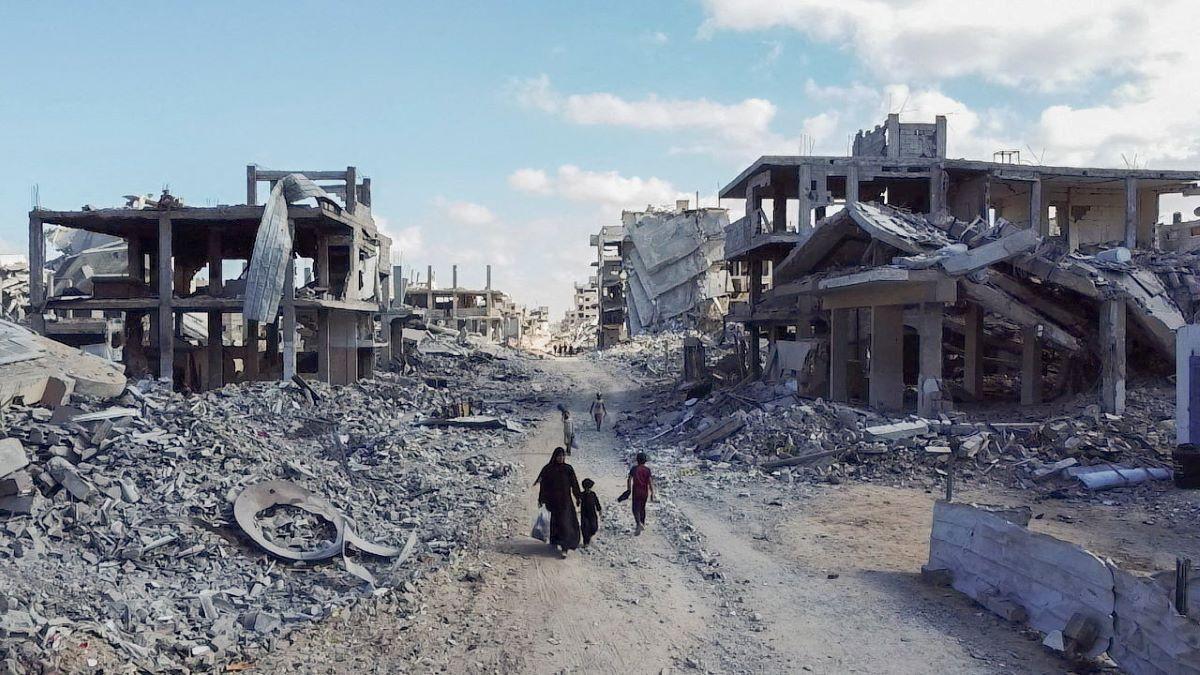
So far, the war has left nearly all Gazans homeless, with famine conditions confirmed by global hunger monitors and health systems collapsing under the weight of the crisis.
A Fragile Peace Under Trump’s 20-Point Plan
Under Trump’s 20-point peace plan, Hamas released 20 living Israeli hostages held for over two years in exchange for nearly 2,000 Palestinian detainees from Israeli prisons.
But tensions over the return of bodies — and disagreements about humanitarian aid distribution — now threaten to unravel the deal.
Israel accuses Hamas of delaying the handover of remaining hostages’ bodies, while Hamas insists the process is slow because many remains are buried deep beneath destroyed areas.
The agreement also requires Israel to return 360 Palestinian militant bodies in exchange for all deceased Israeli hostages. So far, 15 bodies have been returned per Israeli body received.
Rafah, closed since May 2024, was supposed to reopen under the deal to increase aid flow into Gaza. Yet, even with recent improvements, the UN World Food Programme says only 560 metric tons of food are entering Gaza daily — far below what’s needed to prevent widespread hunger.
Unanswered Questions
Despite the truce, key issues remain unresolved:
-
Will Hamas disarm as required?
-
Who will govern Gaza after the war?
-
How will an international stabilization force operate?
-
And will the deal eventually lead to a Palestinian state?
For now, the Rafah crossing remains shuttered — a symbol of both fragile hope and deep division.
While the guns may have fallen silent, peace in Gaza still feels heartbreakingly out of reach.