

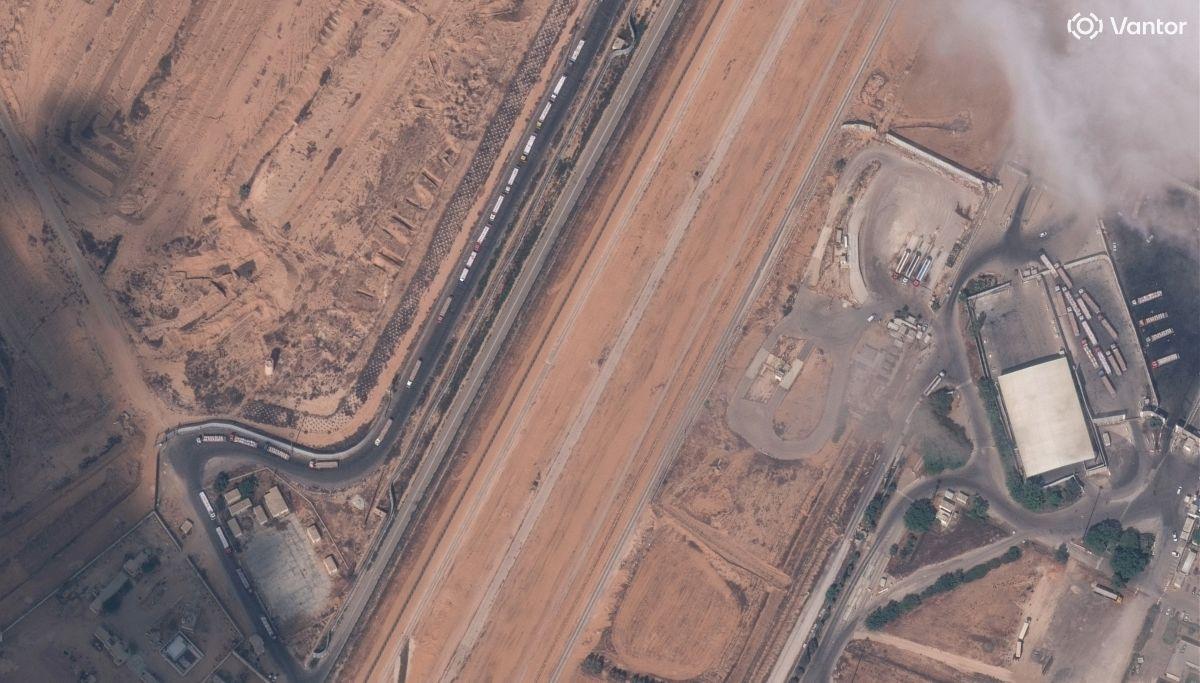
For the first time in days, aid trucks rumbled into Gaza on Wednesday, bringing a flicker of hope to a land scarred by war and loss. The long lines of trucks — some carrying food, others loaded with fuel — marked a rare moment of calm in a region still trembling from two years of devastating conflict.
The breakthrough came after Hamas returned more bodies of Israeli hostages, easing a tense dispute that had threatened to shatter the fragile ceasefire. Israel had earlier warned it would keep the Rafah border closed and restrict aid if Hamas continued to delay the return of bodies.
By Wednesday, Hamas handed over several Israeli bodies overnight, and two more coffins followed later that day. An Israeli security official confirmed that preparations were underway to reopen the Rafah crossing for Gazan citizens, with 600 aid trucks expected to enter the enclave.
“Israel will return to those streets as soon as I say the word,” U.S. President Donald Trump said in an interview with CNN. He warned that Israel could resume fighting if Hamas failed to honor the ceasefire deal he helped broker.
A Dispute That Could Break the Ceasefire
The return of hostage bodies has become a delicate and emotional issue. Hamas says locating the remaining victims is difficult because many are buried under rubble, the result of relentless bombings.
A senior U.S. adviser revealed that rewards might be offered to encourage Gazans to share information that could help recover the remaining 21 bodies still believed to be inside Gaza.
Israel, meanwhile, insists that Hamas must disarm and surrender control as part of the truce — a condition the militant group has firmly resisted. Defense Minister Israel Katz ordered the drafting of a new plan for the “total defeat” of Hamas should the ceasefire collapse.
Hamas’ armed wing, however, maintains it has fulfilled its obligations.
“We have handed over all living captives and all the bodies we could retrieve,” the group said. “The rest will require major efforts and special equipment.”
Israel, under the same deal, has begun returning the bodies of 360 Palestinians — the first batch of 45 already received and identified by Palestinian health authorities.
A Nation in Ruins
Inside Gaza, the humanitarian situation remains desperate. The war has displaced nearly the entire population, leaving cities in ruins and families without homes.
“We went back to our homes in al-Tuffah and found there are no homes at all,” said Moemen Hassanein, standing beside tents and shanties in Gaza City. “There is no shelter. Nothing.”
The United Nations estimates that at least 600 trucks of aid per day are needed to meet Gaza’s basic needs — a number still far from being met.
Officials confirmed that the Rafah crossing is expected to open Thursday for civilians, with a European Union mission assisting operations. The Palestinian Authority has also begun preparations to help manage the border.
Despite these steps, tensions remain high. Far-right Israeli leaders criticized the delivery of aid, calling it a “disgrace,” while Hamas continues to clash with local clans in Gaza, executing individuals accused of collaborating with Israel.
A Ceasefire on the Edge
As the trucks rolled through the dawn at Rafah, the sound of engines offered both relief and warning — a reminder that this fragile peace hangs by a thread.
The ceasefire has brought temporary calm, but the road to lasting peace remains uncertain, shadowed by politics, grief, and a shared exhaustion from years of war.
For now, aid is moving, guns are silent, and hope — however faint — still flickers in Gaza.