
The Philippine peso is holding its ground — but the pressure is real.
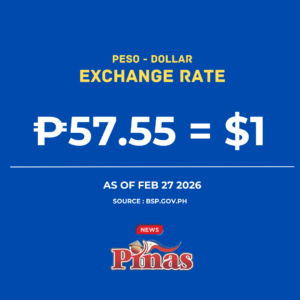
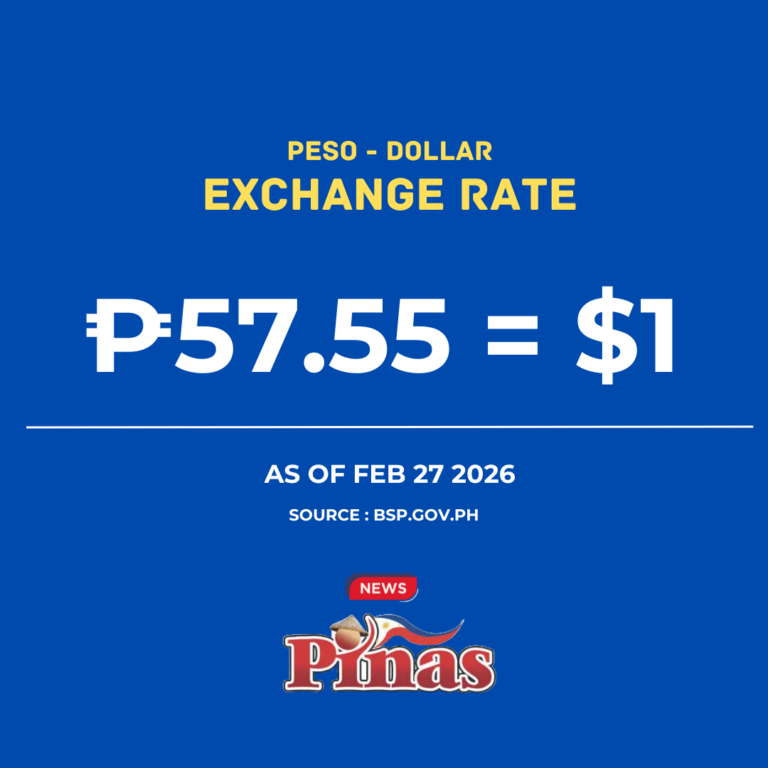
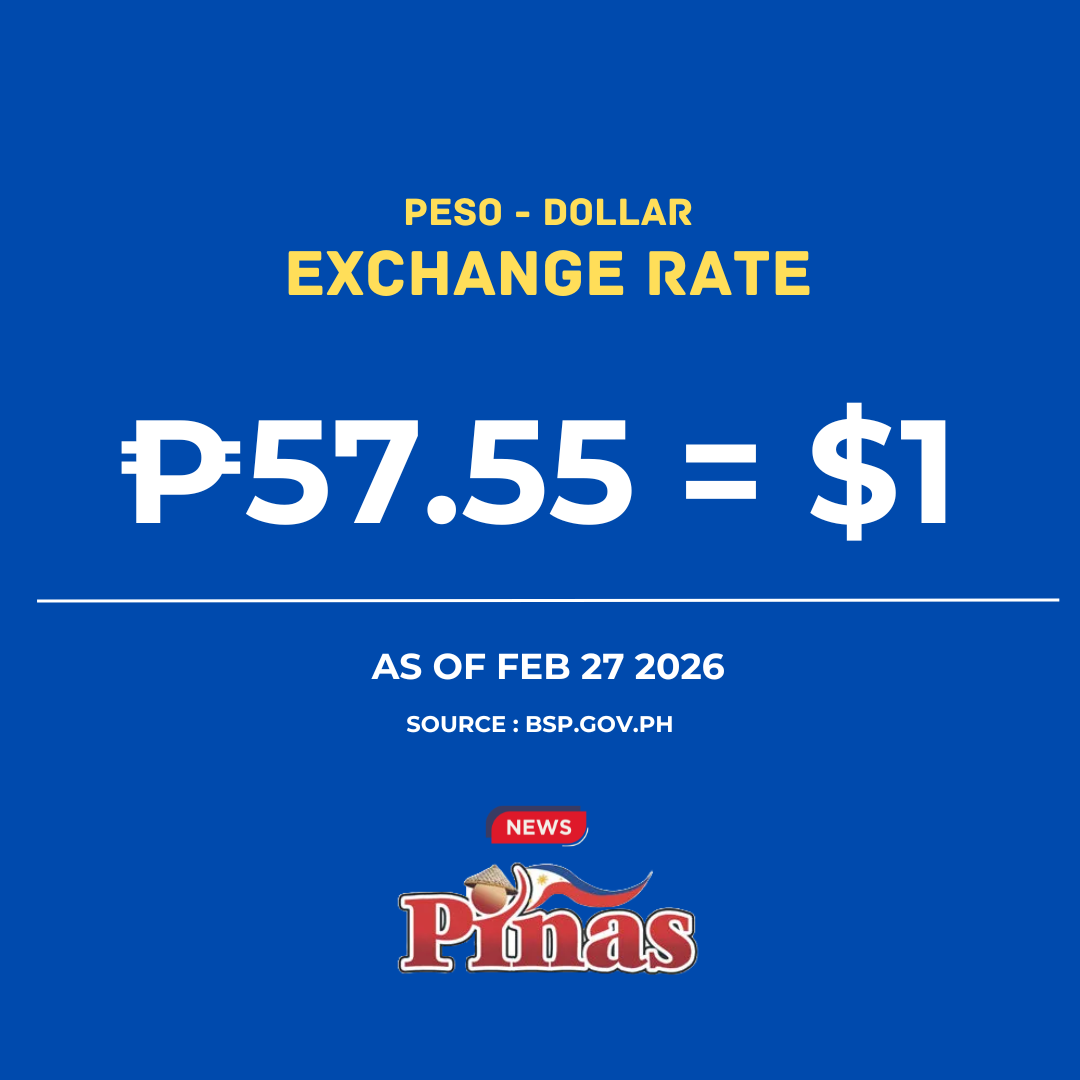
As of the latest Bangko Sentral ng Pilipinas (BSP) Reference Exchange Rate Bulletin dated February 27, 2026, the peso stands at:
₱57.60 per US dollar.
That number may look simple.
But behind it is a story of global movement, economic tension, and shifting power among the world’s strongest currencies.
Let’s break it down.
🇺🇸 Peso vs US Dollar
$1 = ₱57.60
The dollar remains firm.
With the BSP buying rate at ₱57.35 and selling rate at ₱57.85, the peso is trading within a controlled but sensitive range.
Every small move matters — especially for imports, fuel prices, and remittances.
🇬🇧 Peso vs British Pound
£1 = ₱77.60
The pound remains significantly stronger than the peso.
For Filipinos sending money to or studying in the UK, this gap is costly.
For OFWs receiving pounds? It’s an advantage.
🇪🇺 Peso vs Euro
€1 = ₱67.90
The euro continues to trade well above the dollar equivalent in peso terms.
With Europe stabilizing inflation, the euro maintains strength — putting pressure on countries importing from the region.
🇨🇭 Peso vs Swiss Franc
₣1 = ₱74.38
The Swiss franc — often considered a safe-haven currency — remains powerful.
In uncertain global times, investors run to safety.
And that safety comes at a premium.
🇧🇭 Peso vs Bahrain Dinar
1 BHD = ₱152.66
This is one of the strongest currencies in the world.
For Filipino workers in Bahrain, remittances stretch far when converted to peso.
🇸🇦 Peso vs Saudi Riyal
1 SAR = ₱15.35
Saudi Arabia remains one of the largest employers of Filipino workers.
With the riyal steady, remittance flows remain stable — a key support for the peso.
🇦🇪 Peso vs UAE Dirham
1 AED = ₱15.67
The UAE dirham mirrors the strength of Gulf currencies.
For OFWs in Dubai and Abu Dhabi, exchange rates remain favorable.
🇸🇬 Peso vs Singapore Dollar
1 SGD = ₱45.55
Singapore’s currency remains strong and resilient.
Trade ties between the Philippines and Singapore mean this rate matters for businesses and investors.
🇨🇦 Peso vs Canadian Dollar
1 CAD = ₱42.08
Canada’s dollar is steady.
With thousands of Filipinos migrating yearly, this rate impacts families, tuition, and remittances.
🇦🇺 Peso vs Australian Dollar
1 AUD = ₱40.89
Australia’s currency shows moderate strength.
Education and migration links make this exchange rate particularly sensitive for many Filipino families.
🇯🇵 Peso vs Japanese Yen
¥1 = ₱0.3687
The yen remains relatively weak compared to other major currencies.
For Philippine exporters to Japan, this dynamic matters.
For travelers? It makes Japan slightly more affordable.
🇨🇳 Peso vs Chinese Yuan
1 CNY = ₱8.40
China remains a major trading partner.
Any movement here affects imports, infrastructure, and regional trade flows.
🇰🇷 Peso vs Korean Won
1 KRW = ₱0.0402
The won remains stable.
With strong tourism and business ties, this rate influences both travel and electronics imports.
🇮🇳 Peso vs Indian Rupee
1 INR = ₱0.63
India’s growing economy keeps the rupee active in emerging market conversations.
🇧🇷 Peso vs Brazilian Real
1 BRL = ₱11.20
Brazil’s real reflects broader emerging market movements.
Commodity-linked currencies like the real often move with global demand shifts.
What Does This Mean for Filipinos?
At ₱57.60 per dollar, the peso is stable — but vulnerable.
A stronger dollar means:
-
Higher import costs
-
Possible fuel price pressure
-
More expensive foreign goods
But it also means:
-
Stronger remittance value
-
Boosted BPO dollar revenues
Meanwhile, gold is trading at $5,185.50, and silver at $88.45 — signaling that investors are still seeking protection amid global uncertainty.
The currency market is not just numbers on a screen.
It affects grocery prices.
Tuition fees.
Plane tickets.
Remittances.
And as February closes, one thing is clear:
The peso is standing —
but the world around it is constantly moving.