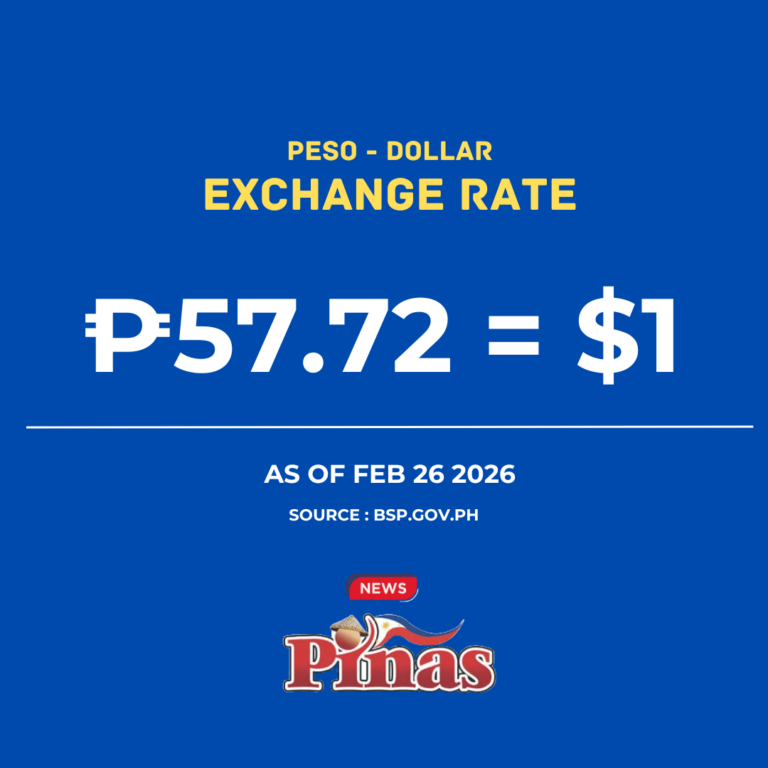

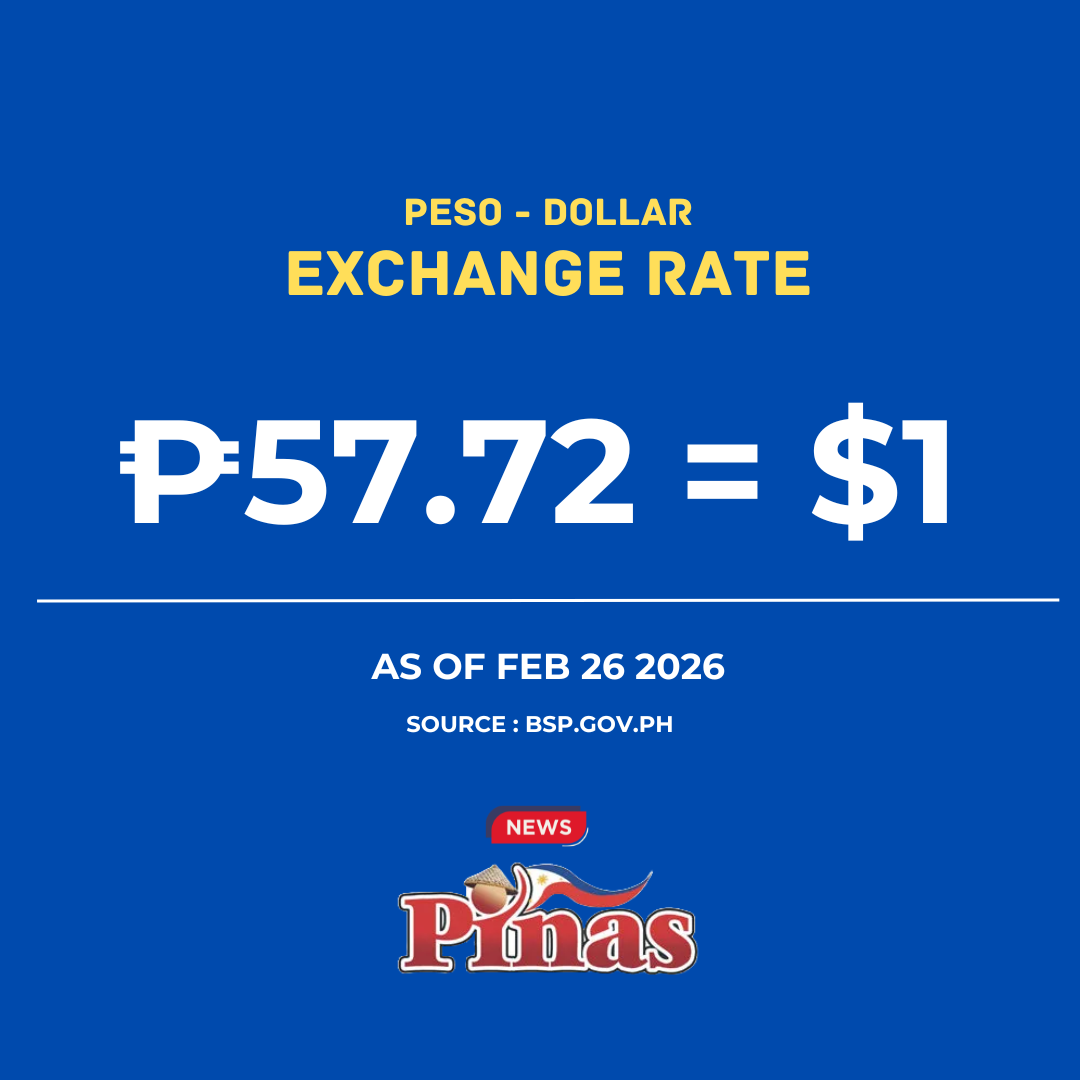
Today, the Philippine peso wakes up at ₱57.721 to $1.
That number may look ordinary.
But behind it is a story — of global pressure, regional competition, and how the peso stacks up against the world’s strongest currencies.
Here’s what’s happening right now.
🇵🇭 PHP vs 🇺🇸 US Dollar
$1 = ₱57.721
The dollar remains firm.
With the BSP reference rate at ₱57.750, the peso is trading in a tight range.
Buying rate: ₱57.500
Selling rate: ₱58.000
This tells us one thing: the dollar is still king in global trade — and the peso continues to feel its weight.
The Top 15 Currencies: How the Peso Compares
Let’s look at how much one unit of the world’s strongest currencies is worth in Philippine pesos today.
🇪🇺 Euro (EUR)
€1 = ₱67.9607
The euro is stronger than the dollar — and significantly stronger than the peso.
Europe’s shared currency continues to hold ground, keeping the PHP under pressure.
🇬🇧 British Pound (GBP)
£1 = ₱77.8714
The pound remains one of the most powerful currencies globally.
At nearly ₱78 per pound, it’s a reminder of the UK’s enduring financial strength.
🇨🇭 Swiss Franc (CHF)
1 CHF = ₱74.6135
Safe-haven currency.
Investors run to the Swiss franc during uncertainty — and today, it stands firm.
🇧🇭 Bahrain Dinar (BHD)
1 BHD = ₱153.1386
Yes — ₱153 for one dinar.
Among the strongest currencies in the world, driven by oil wealth and a dollar peg.
🇸🇦 Saudi Riyal (SAR)
1 SAR = ₱15.3869
Tied closely to oil markets and the US dollar, the riyal remains stable — important for millions of OFWs sending money home.
🇦🇪 UAE Dirham (AED)
1 AED = ₱15.7192
Another key OFW currency.
Steady. Reliable. Pegged to the dollar.
🇨🇳 Chinese Yuan (CNY)
1 CNY = ₱8.3882
China remains a major trading partner of the Philippines.
The yuan’s movement directly impacts imports, exports, and regional trade.
🇯🇵 Japanese Yen (JPY)
1 JPY = ₱0.3703
The yen remains weak compared to its historic highs.
A softer yen often signals Japan’s prolonged economic adjustments.
🇸🇬 Singapore Dollar (SGD)
1 SGD = ₱45.5788
One of Asia’s strongest currencies.
Singapore’s financial stability keeps its dollar resilient against the peso.
🇨🇦 Canadian Dollar (CAD)
1 CAD = ₱42.1352
Commodity-driven. Oil-sensitive.
The CAD remains moderately strong.
🇦🇺 Australian Dollar (AUD)
1 AUD = ₱40.7222
Often tied to global commodity demand, the Aussie dollar stays competitive.
🇧🇳 Brunei Dollar (BND)
1 BND = ₱45.3996
Nearly identical to the Singapore dollar due to their currency agreement.
🇹🇭 Thai Baht (THB)
1 THB = ₱1.8584
A key ASEAN comparison.
The baht remains relatively stable in the region.
🇰🇷 South Korean Won (KRW)
1 KRW = ₱0.0401
Small in unit value — but powerful in trade influence, especially in electronics and manufacturing.
🇮🇳 Indian Rupee (INR)
1 INR = ₱0.6350
India’s fast-growing economy continues to expand its global role, though its currency remains modest versus the peso.
What Does This Mean for Filipinos?
For OFWs, exchange rates are everything.
A stronger dollar means bigger remittances when converted to pesos.
For importers, however, it means higher costs — fuel, goods, raw materials.
For travelers?
Europe and the UK remain expensive destinations.
For investors?
Gold is currently at $5,141.05
Silver at $87.05
Safe-haven assets remain elevated, reflecting cautious global sentiment.
The Bigger Picture
The peso at ₱57.721 per dollar signals relative stability — but still on the weaker side compared to past decades.
Globally, currencies tied to oil economies remain strong.
Safe-haven currencies like the Swiss franc hold firm.
Asian currencies show mixed signals.
And through it all, the Philippine peso stands resilient — navigating global currents, trade shifts, and economic transitions.
The numbers may change tomorrow.
But today — February 25, 2026 — this is where the peso stands against the world.