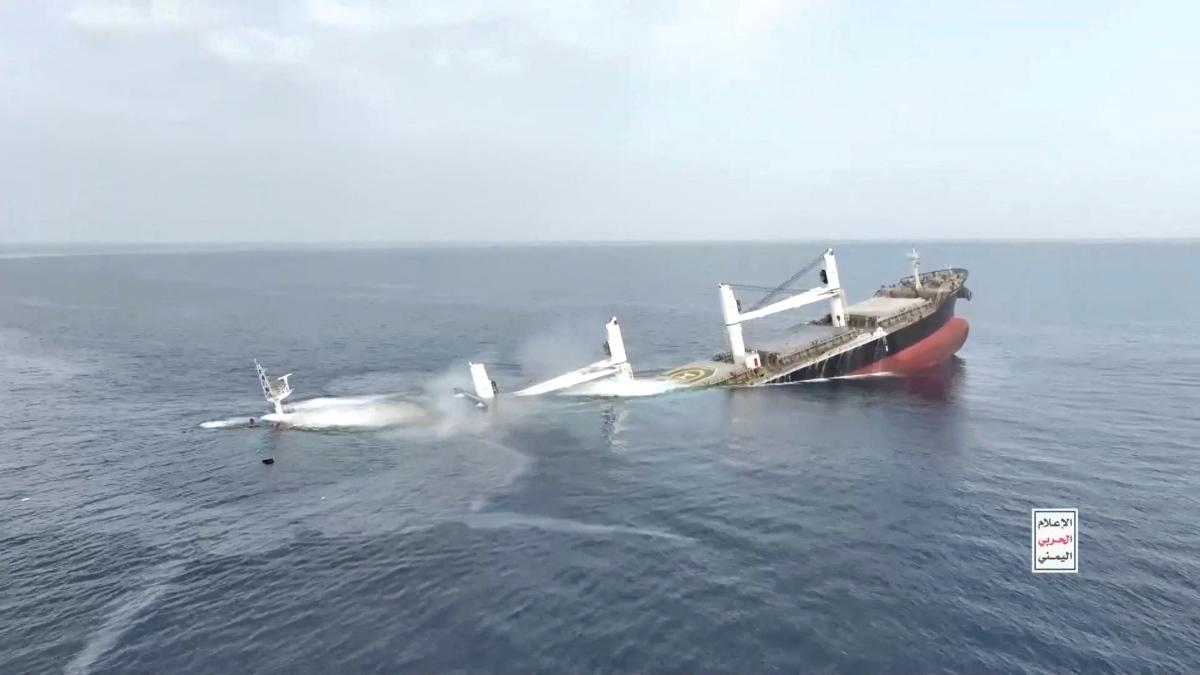
After more than five long months of fear, silence, and uncertainty, nine Filipino seafarers from the ill-fated M/V Eternity C are finally going home.
On Tuesday, the Department of Foreign Affairs (DFA) announced that the sailors—who were held hostage by the Houthis in the Red Sea—are set to be released at last.
It’s the kind of news families have been praying for.
The kind that makes your chest loosen… even if only a little.
From Yemen to Oman: The First Step to Freedom
In a statement, the DFA said the breakthrough was confirmed by the authorities of the Sultanate of Oman.
The plan: the sailors will be transferred from Sana’a, Yemen to Muscat, Oman’s capital—an important step toward their safe return.
And behind that transfer is months of quiet, persistent diplomacy.
According to the DFA, Oman helped make the release possible, working closely with the Philippine government. DFA Secretary Ma. Theresa Lazaro personally raised the sailors’ situation with her counterpart, Omani Foreign Minister Sayed Badr bin Hamad El-Busaidi, during a bilateral meeting in July, and again in a phone call in November.
In moments like this, the paperwork isn’t just paperwork.
It’s pressure. It’s pleading. It’s pushing doors open—again and again—until someone finally answers.
“The Philippines expresses its sincerest appreciation to the Sultanate of Oman,” the DFA said.
Embassy Teams Ready to Bring Them Home
A report on “Saksi” on Tuesday said officials from the Philippine Embassy and the Migrant Workers office in Muscat will arrange the sailors’ safe and immediate return to the Philippines.
Because being “released” is only part of the journey.
They still need to be guided, protected, and brought home—alive, safe, and finally back in the arms of the people who never stopped waiting.
A Tragedy That Already Took Lives
But even as hope rises, the pain remains.
Earlier, the Department of Migrant Workers (DMW) confirmed that the July 7 attack on the M/V Eternity C left three Filipino seafarers dead, while one remains missing.
So this moment—this release—comes with mixed emotions.
Relief, yes.
But also grief.
And anger.
And the heavy question families always carry after tragedy:
Why did this have to happen in the first place?
Why Ships Are Being Targeted
The Houthis have repeatedly attacked ships they claim are linked to Israel, and they have vowed to continue escalating attacks until Israel ends its aggression in Gaza.
The Red Sea—one of the world’s most important trade routes—has become dangerously unpredictable.
And in the middle of it all are seafarers. Workers. Breadwinners. People just trying to do a job.
Filipino Seafarers: Essential to the World, Exposed to Danger
For the Philippines, this isn’t a distant issue.
Filipino seafarers keep global shipping moving. The country is one of the world’s largest suppliers of maritime manpower. More than 20% of the world’s roughly 1.2 million sailors are Filipinos—manning oil tankers, cargo vessels, luxury liners, and passenger ships worldwide.
That also means they are constantly exposed.
To conflict zones.
To attacks.
To hostage threats.
To piracy and ransom kidnappings—especially in waters off Africa—an ongoing problem the Philippine government has struggled to fully monitor at sea.
Renewed Warning: Avoid the Red Sea
Manila has repeatedly urged Filipino seafarers to avoid sailing to the Red Sea, especially after back-to-back deadly attacks in July.
Two ships were hit a day apart: MV Magic Seas and MV Eternity C—both with Filipino crew aboard. Both later sank in the Red Sea.
It’s a terrifying reminder: for many Filipino sailors, danger isn’t a headline.
It’s a route.
The Bottom Line
Nine Filipino seafarers are finally being released after months in captivity—and that news carries real emotion: relief, gratitude, and a deep ache for those who didn’t make it.
Now, the focus shifts to what matters most:
Getting them home. Fast. Safe. And whole.