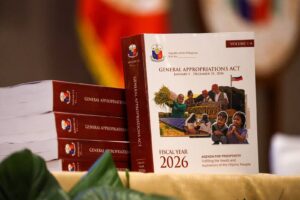

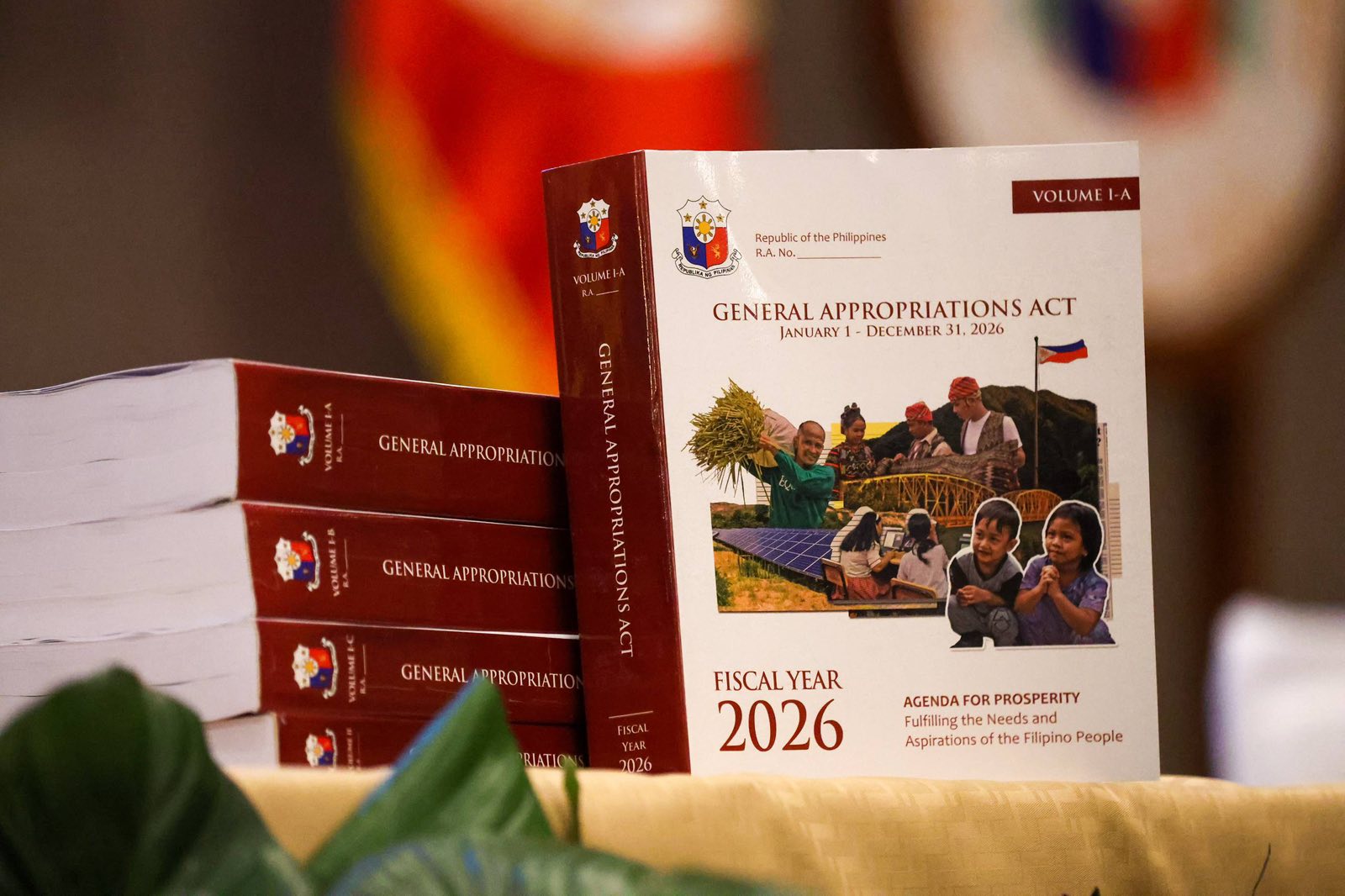
The battle over the 2026 national budget has reached the Supreme Court.
On Tuesday, the Philippine Councilors League (PCL) took a bold step. It formally asked the High Court to declare unconstitutional the inclusion of the National Tax Allotment (NTA) in the 2026 General Appropriations Act (GAA).
At the center of the dispute is a staggering P1.19 trillion.
According to the PCL, that money does not belong inside the national budget.
It belongs to the local government units (LGUs). Automatically. Unconditionally. By constitutional mandate.
“This Violates Local Autonomy”
In a 32-page petition, the group argued that treating the NTA as part of the GAA is illegal.
Why?
Because the NTA is not a national expenditure that Congress can adjust, delay, or veto. It is the LGUs’ rightful share in national taxes — a share that must be released automatically under the Constitution and the Local Government Code.
The petition did not mince words.
It warned that classifying the NTA as an appropriation exposes it to executive veto, budget reenactment, and other layers of control.
And that, the PCL said, defeats the very purpose of local autonomy.
The Constitution, they stressed, intended the release of these funds to be “mechanical, perfunctory, and unconditional.”
No politics.
No discretion.
No interference.
Who Are Named in the Petition?
The PCL named several top government officials as respondents:
-
Executive Secretary Ralph Recto
-
Finance Secretary Frederick Go
-
Budget Acting Secretary Rolando Toledo
-
National Treasurer Sharon Almanza
-
Economy and Planning Secretary Arsenio Balisacan
GMA News Online has reached out to them for comment and will publish their responses once available.
In a brief message, Recto said:
“It is automatically appropriated.”
But for the PCL, that explanation is not enough.
A Question of Control
The councilors are asking the Supreme Court to declare null and void all actions, policies, and mechanisms that treat the NTA as part of the national budget process.
They argue that the LGUs’ share in national taxes does not even accrue to the national treasury.
It should not be received, recorded, held, or managed as national government funds.
To do so, they claim, is to take control over money that legally and constitutionally belongs to local governments.
And that, they say, crosses the line.
“Grave Abuse of Discretion”
The petition goes further — accusing officials of grave abuse of discretion.
By subjecting the NTA to appropriations and national budget rules, the respondents allegedly gave themselves the power to suspend, condition, or even diminish funds that should flow automatically to LGUs.
Funds meant to strengthen provinces, cities, and municipalities.
Funds meant for services on the ground.
Funds meant for the people.
The PCL insists that applying national budget controls to the NTA ignores both constitutional and statutory limits.
Now, the Supreme Court will decide.
At stake is not just P1.19 trillion.
It is the meaning of local autonomy — and who truly controls the resources meant for local communities.