

For countless Filipinos, a scam begins with a single message.
A fake link.
A stolen password.
A drained bank account.
And just like that — hard-earned money disappears.
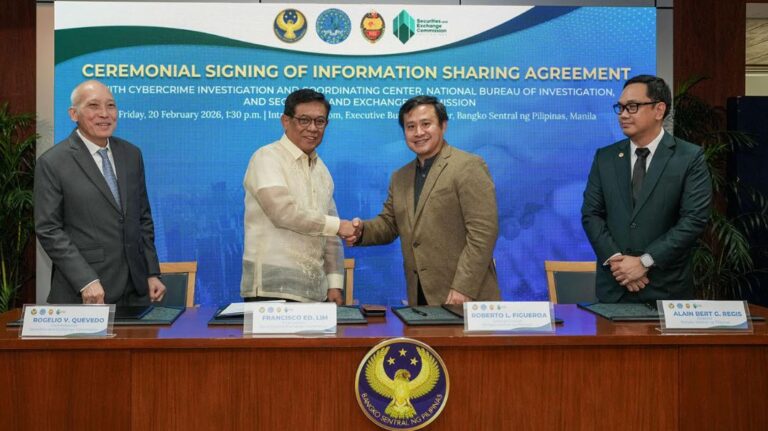
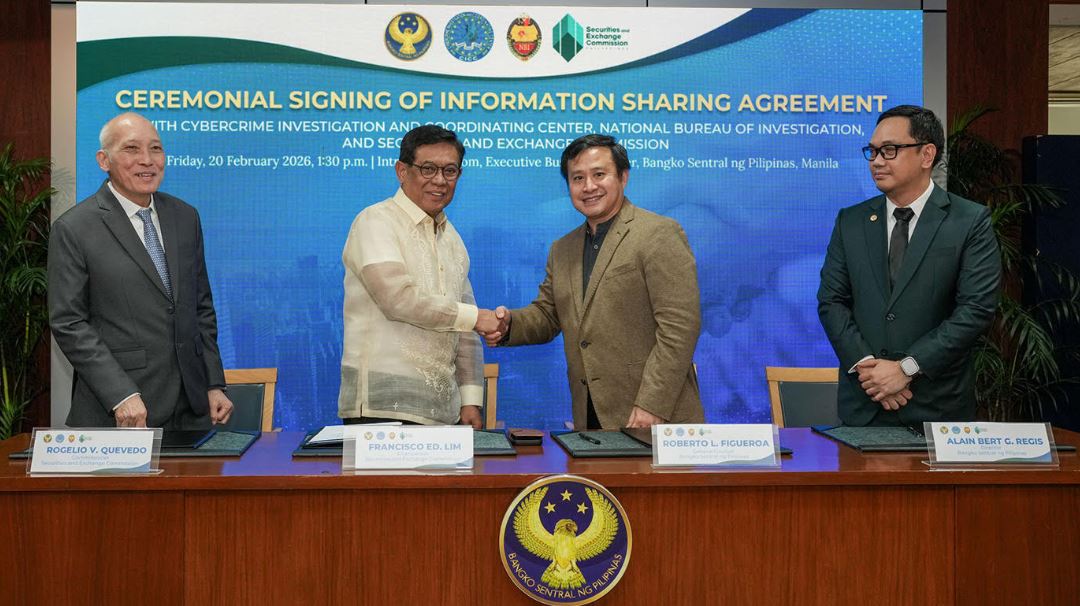
On Friday, the Bangko Sentral ng Pilipinas (BSP) took a firm step to fight back.
The central bank signed separate information-sharing agreements with three key government agencies: the National Bureau of Investigation (NBI), the Cybercrime Investigation and Coordinating Center (CICC), and the Securities and Exchange Commission (SEC).
The goal is simple.
Make it harder for scammers to hide.
Sharing Information — Lawfully
Under the new agreements, confidential financial account information can now be lawfully shared to support investigations involving scams.
The coordination falls under the Anti-Financial Account Scamming Act (AFASA), a law designed to clamp down on financial fraud.
The agreements lay out clear procedures for securing information from the BSP’s Consumer Account Protection office — particularly data tied to accounts suspected of being used in scams.
But officials were clear: safeguards remain.
Bank secrecy and data privacy protections will still be strictly observed.
This is not about exposing innocent account holders.
It’s about tracking down criminals.
“Execution Is What Matters”
BSP General Counsel Roberto Figueroa emphasized that signing the agreements is only the beginning.
“Its success will not be measured by the document itself,” he said, “but by its execution — by investigations strengthened, cases resolved, risks mitigated, and harm prevented.”
Those words carry weight.
Because behind every scam case is a victim.
A family.
A life disrupted.
Stronger Cases, Faster Action
The BSP said the agreements will help the NBI and the CICC build stronger cases involving violations of AFASA.
For the SEC, the shared information will support its regulatory duties — including handling financial consumer complaints and enforcing accountability.
BSP Deputy Governor Elmore Capule reaffirmed the bank’s commitment.
“The BSP remains firmly committed to working with the CICC, NBI, and SEC to ensure that AFASA is implemented with discipline, integrity, and fidelity to the law,” he said.
Through coordination and trust, he added, the country can strengthen its financial system — and better protect Filipinos from those who seek to exploit it.
A Law With Teeth
President Ferdinand “Bongbong” Marcos Jr. signed AFASA, or Republic Act 12010, on July 20, 2024. The measure had been designated a priority bill by the Legislative Executive Development Advisory Council.
The law does more than allow information-sharing.
Its implementing rules require BSP-supervised financial institutions to reduce reliance on one-time passwords (OTPs) sent via SMS or email — a method often exploited by scammers.
By June 2026, banks must adopt stronger multi-factor authentication systems.
Layer by layer, the defenses are being rebuilt.
Protecting the Public
Scams have become more sophisticated.
Faster. Smarter. Harder to trace.
But this latest move signals something important:
The government is tightening its net.
And while no system is foolproof, the message is clear — those who prey on Filipino consumers will face stronger resistance.
Because in the end, this fight is not just about data.
It’s about trust.
And the right of every Filipino to feel safe when they open their bank account.