

Navigating Economic Turbulence: The Impact of Global Crises on the Philippines
In a landscape constantly shaped by global events, the Philippines finds itself at a crossroads. As the world grapples with the unfolding crisis in the Middle East and a sharp rise in fuel prices, the Marcos administration’s economic team is bracing for impact.
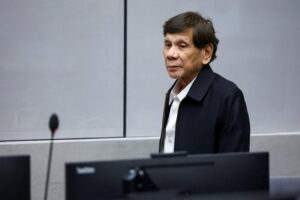
During a recent press conference, Arsenio Balisacan, the Secretary of the Department of Economy, Planning and Development (DEPDev), candidly acknowledged that the nation’s economic growth targets would need to be revised downward. The urgency in his voice was palpable as he shared insights about the impending global slowdowns.
A Weighty Decision
The Development Budget Coordination Committee (DBCC) is set to meet next week to reassess the current economic landscape. “We definitely will move our growth targets lower given the situation… Global uncertainty,” Balisacan stated, reflecting the gravity of the moment. This adjustment follows a concerning trend—the country’s Gross Domestic Product (GDP) slowed significantly in the first quarter of 2026, plummeting to its lowest rate since early 2021, a period marked by the harsh realities of the COVID-19 pandemic.
Setting sights on the future, Balisacan and the DBCC had previously established ambitious GDP growth targets: 5% to 6% for 2026, 5.5% to 6.5% for 2027, and a hopeful 6% to 7% for 2028. However, now these goals seem increasingly elusive.
The Shadows of Conflict
Balisacan did not shy away from the sobering implications of the ongoing conflict in the Middle East. “The shock… associated with the Middle East was so profound,” he said, clearly understanding its far-reaching consequences. The reality is stark; as circumstances shift, so too must our expectations. “You can’t keep persisting and insisting on something that’s no longer attainable. The world has changed so much since last year,” he added.
Reassessing Our Path
Next week’s discussions will center on adjusting growth assumptions, weighing heavily on the developments in the Middle East. Balisacan shared a troubling scenario with the Senate: GDP growth could lessen by 1.47 to 1.95 percentage points, potentially bringing the economy’s full-year growth down to a modest 3.5% to 4%. Such grim forecasts are often accompanied by rising inflation, which could soar between 11.4% to 14.3% if crude prices reach $200 per barrel.
The implications of this muted economic growth are profound. A stagnant economy often leads to higher unemployment and a greater incidence of poverty, stark reminders of how interconnected our world truly is. Under a hypothetical “Scenario 5,” the DEPDev anticipates higher unemployment rates—ranging from 5.67% to 5.84%—and increased poverty levels of 12.39% to 12.55%.
A Call to Resilience
As we navigate through these uncertain waters, the words of Secretary Balisacan resonate deeply. The change is daunting, but it also offers a chance to reassess priorities and adapt strategies to meet the evolving challenges ahead. The future may be murky, but there is hope in our ability to respond, regroup, and rise.
For the people of the Philippines, the next few months will require patience and resilience. Together, as a nation, we can weather this storm and emerge stronger, ready to embrace new opportunities that lie on the horizon.