

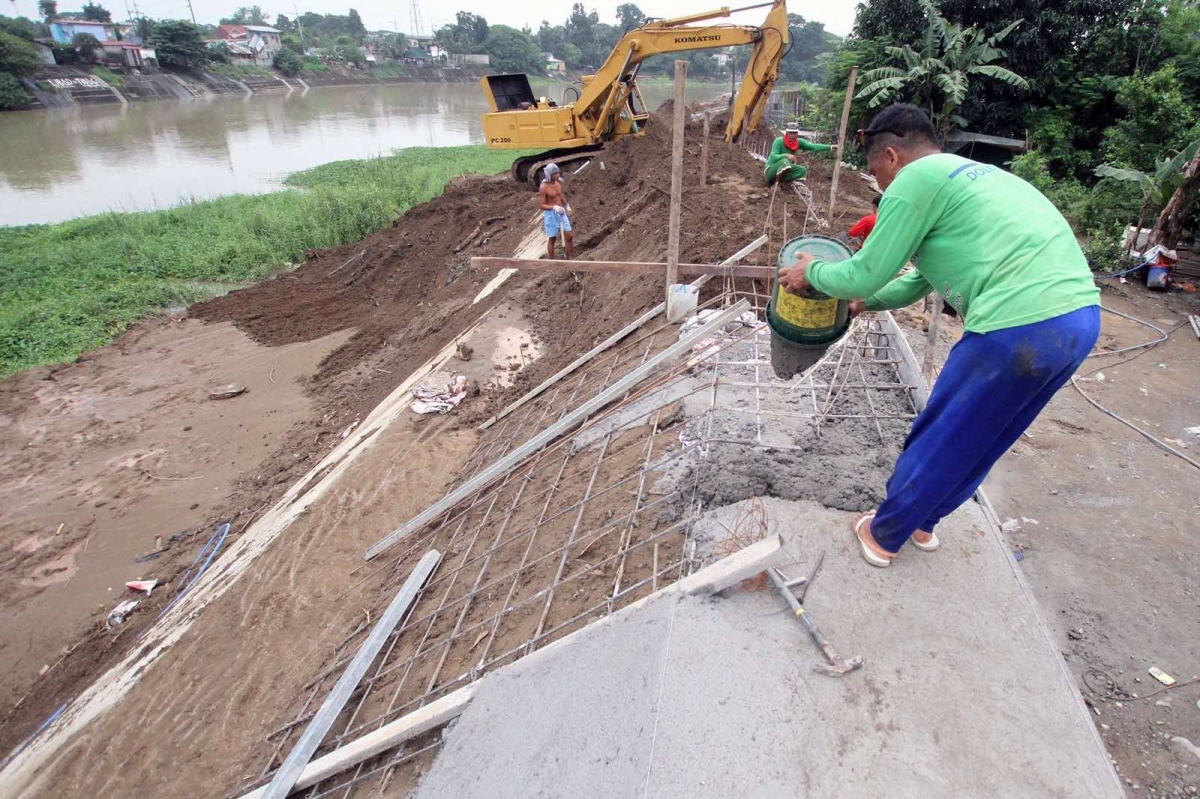
FLOOD control allocations have ballooned nearly sixfold in the last decade — from P42.28 billion in 2015 to P254.3 billion in 2025 — with related projects pushing the total to almost P496.3 billion, according to a study released Monday by the Ateneo School of Government (ASOG).
The institution warned that this surge in funding has been marred by systemic corruption that is corroding governance and undermining public trust.
Based on data from the General Appropriations Act (GAA) and the Department of Public Works and Highways (DPWH), ASOG found that the share of flood control projects in the national budget rose from just over 1.6 percent in 2015 to more than 4 percent in 2025, peaking at 4.24 percent in 2024.
The report showed a steady climb in spending: P64.2 billion was set aside in 2016, rising to P72.93 billion in 2017, before breaching the P127.73-billion mark in 2018.
The figure dipped slightly in 2019 and 2020 at P90.72 billion and P90.12 billion, respectively, before climbing again to P101.81 billion in 2021 and P128.97 billion in 2022.
By 2023, the budget had grown to P182.99 billion and further expanded to P244.58 billion in 2024 before settling at P254.3 billion this year.
ASOG clarified that the P254.3-billion allocation for 2025 under the National Expenditure Program and GAA does not reflect the full picture.
When insertions and other flood-control-like projects totaling P242 billion are factored in, the actual budget swells to P496.3 billion.
The school also noted discrepancies in public statements made by President Ferdinand Marcos Jr., who earlier cited a P350-billion allocation for flood control.
ASOG said the amount appears to be only a subset of the larger total reflected in official documents.
The institution expressed alarm at how this massive buildup of resources has been accompanied by irregularities.
“The scandal involving ghost projects, misallocation of funds, collusion between contractors and government officials, conflicts of interest, and monopolies of contractors involving billions of pesos makes one’s head spin,” ASOG said in its statement.
The statement, titled “ASOG Condemns Perverse Level of Greed,” minced no words in describing the scale of abuse: “We are appalled by the gravity of human greed that we are witnessing. We are horrified by the blatant disregard for the rule of law. We are stunned by the complicity of leaders in flagrant corrupt practices.”
ASOG warned that the “deepening crisis of corruption is systematically eroding the integrity of public institutions and corroding the moral fabric of public service.” It called the magnitude of resources siphoned through these schemes “not only alarming but profoundly disturbing.”
The Ateneo School of Government said it was releasing its findings to “contribute to finding greater clarity and deepening the level of discourse” on corruption in infrastructure spending, as legislative and independent inquiries into the issue continue.
The Senate and the newly formed Independent Commission for Infrastructure are holding hearings into alleged anomalies in flood control projects, which critics have described as one of the biggest breeding grounds for corruption in the government.