


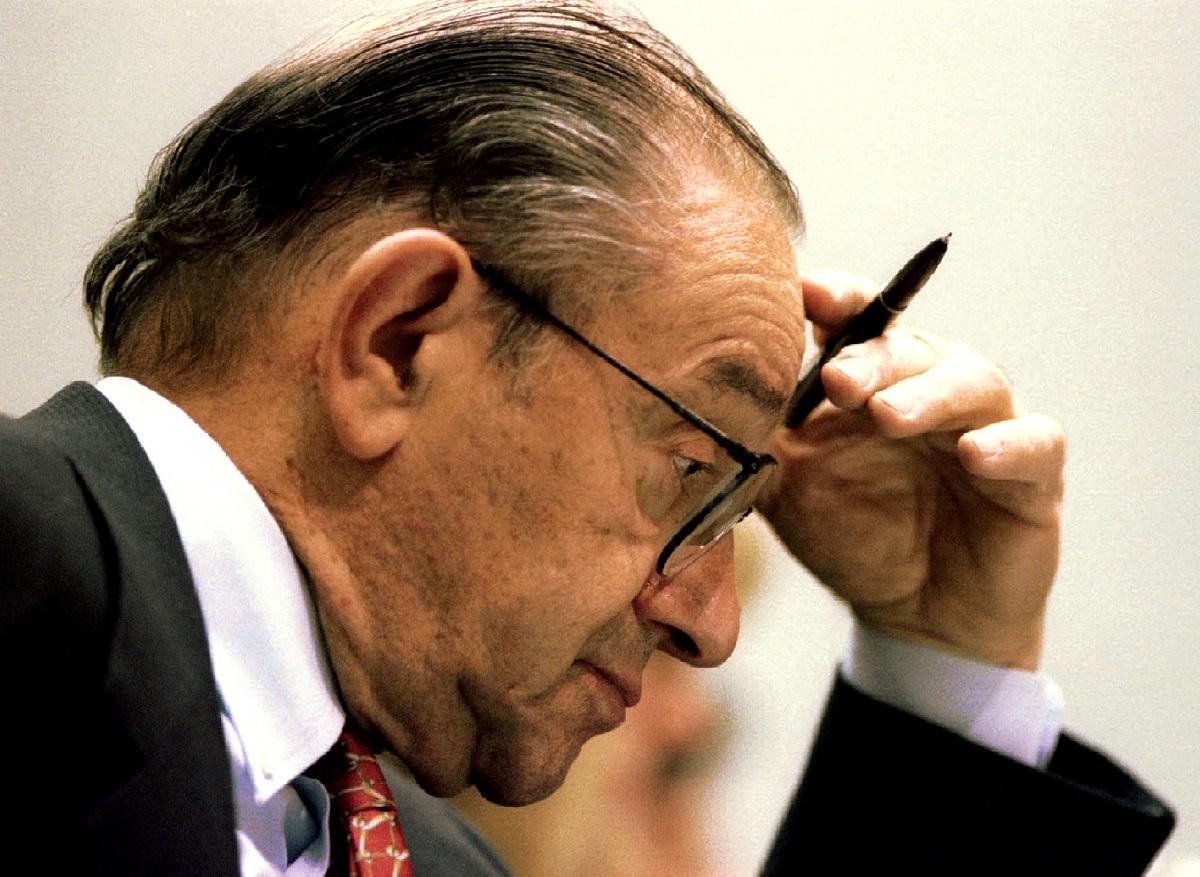
Remembering Alan Greenspan: A Life of Influence and Complexity
Alan Greenspan, often hailed as the greatest Federal Reserve chairman of our time, left an indelible mark on the American economy. He passed away recently at the age of 100, leaving behind a legacy interwoven with both triumph and criticism.
His wife, Andrea Mitchell, shared the heartbreaking news, stating that he died at home due to complications from Parkinson’s Disease. “He was a giant of a man,” she reflected. “He shaped the U.S. economy for decades, and he was always honest about his mistakes.” Her words echoed the complexities of a man who was, at once, brilliant yet deeply human.
The Maestro of Economic Growth
Alan Greenspan served as the Federal Reserve chairman from August 1987 to January 2006. His tenure was marked by extraordinary economic expansion, particularly during the 1990s. Under his guidance, the U.S. experienced the second-longest economic growth in history, spanning an uninterrupted decade from March 1991 to March 2001.
His choice to allow the economy to flourish, resisting pressures to raise interest rates in the face of inflation fears that never materialized, was pivotal. This decision earned him the nickname “maestro,” and he became a rock star in the world of economics.
Yet, as we know, with great power comes great challenges. Critics later pointed to his policies as a catalyst for asset bubbles that contributed to the devastating financial crisis of 2007-2009. As one former Fed official described, his reputation shifted dramatically—from revered to scorned—after the bubbles burst.
A Life of Complexity
Alan’s journey began in New York City on March 6, 1926. Raised by strong women in a modest home, he was the only child of Rose and Herbert Greenspan. Music was his first love; he studied the clarinet at Juilliard and toured briefly with a swing band as a saxophone player before finding his passion in economics.
His insights into the economy weren’t just rooted in numbers—they were influenced by a childhood friendship with novelist Ayn Rand, who advocated for free markets and individualism. This early exposure shaped Greenspan’s views, bridging the worlds of art and analysis.
Throughout his career, Greenspan handled multiple financial crises. His quick response to the 1987 stock market crash was nothing short of masterful, setting a precedent for future economic handling.
A Dual Legacy
Despite his successes, Greenspan’s later years were marked by criticism. Many wondered if his faith in self-regulation had been misplaced as he faced harsh scrutiny for allowing reckless banking practices. “I think the deification that came just before the financial crisis was never really deserved,” reflected Stephen Oliner, a former senior Fed official.
Greenspan himself expressed disbelief at the decisions made by banks, admitting, “I was shocked.” This moment of vulnerability painted a more human portrait of a man often seen as a giant.
With his distinctive style of communicating in “Fed speak,” Greenspan was both enigmatic and strategic. “If I seem unduly clear to you,” he quipped, “you must have misunderstood what I said.” His unique approach to communication became a hallmark of his public persona—one that even puzzled his wife, who humorously recalled how she didn’t quite grasp his proposals for marriage initially.
A Final Reflection
Though he left office in 2006, Greenspan remained active as an advisor and consultant. His insights continued to shape discussions around economic policy, even as the Federal Reserve evolved in response to past crises and changed its methods of communication.
As we reflect on the life and legacy of Alan Greenspan, we honor not just a giant of the financial world but the complexities of his character. His impact, both positive and negative, will resonate in economic policy discussions for years to come.
In the words of his wife, he will be remembered for his brilliance and kindness, attributes that made him not just a leading mind in economics but a beloved partner in life. Thank you, Alan, for your service to the nation—you have certainly left your mark.