


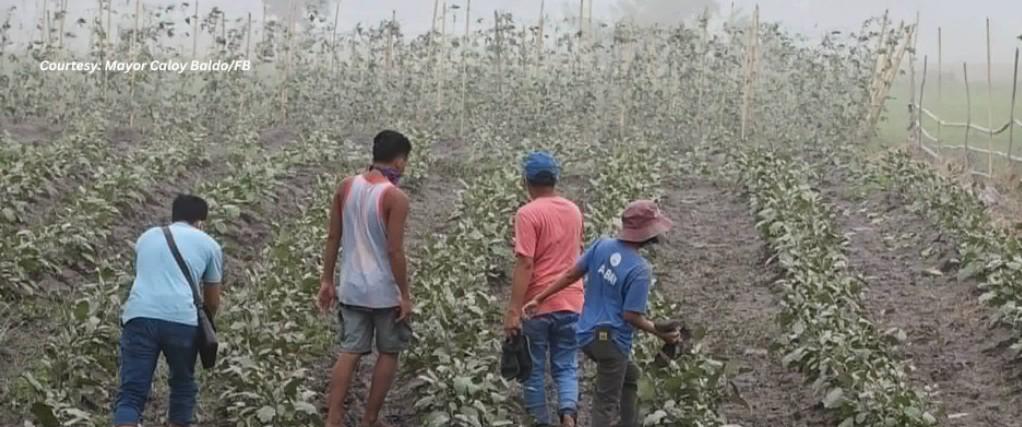
Agriculture in Crisis: Mayon Volcano’s Impact on the Bicol Region
The serene beauty of the Bicol Region, often celebrated for its lush landscapes and fertile fields, is now overshadowed by the unsettling rumblings of Mayon Volcano. Recent reports from the Department of Agriculture (DA) reveal that the unrest has led to a staggering P13.02 million in damages and losses to local agriculture.
According to the DA’s Regional Field Office V, this heartbreaking situation has affected 228 farmers across 102 hectares of agricultural land. The ripple effects are deeply felt, with losses amounting to 364 metric tons of produce – most notably rice, high-value crops, and even livestock. Tragically, 33 heads of livestock have also perished due to the ongoing volcanic activity.
But these figures, though alarming, are not final. The DA has noted that additional losses may surface as assessments continue in the areas impacted by the volcanic ash. The situation remains fluid, with officials working hard to gather as much information as possible.
Beyond the immediate danger zones, the agriculture community is bracing for further evaluations. 534.39 hectares within the six-kilometer radius of the volcano remains off-limits for thorough inspection. This includes vital crops like corn, which occupies 335.26 hectares, and various fruits, totaling 19.62 hectares.
Taking Action: DA’s Response
In the shadow of this crisis, the Department of Agriculture is stepping up with a multi-faceted response to support affected farmers. Their Regional Field Office V is diligently:
– Pooling and evacuating livestock while ensuring animals remain healthy through collaborative efforts with local government units and veterinary offices.
– Distributing crucial resources, including ropes, masks, medicine, and feeds, and providing trucks for hauling needs.
– Setting up 27 Animal Evacuation Sites, currently housing 1,032 livestock belonging to 507 farmers.
– Offering 20 sacks of cattle feeds in the towns of Camalig and Guinobatan, Albay.
– Continuously monitoring prices and agricultural commodity movements to safeguard market stability.
– Coordinating closely with national disaster response agencies and local governments to enhance support strategies.
Assistance for Affected Farmers
The DA recognizes that immediate support is paramount for the farmers grappling with these unprecedented challenges. Among the assistance programs rolled out are:
– P49 million worth of agricultural inputs, including seeds, fertilizers, and essential farming tools.
– P648,000 in fingerlings provided by the Bureau of Fisheries and Aquatic Resources (BFAR) V.
– P151,000 in feeds and supplements for livestock and poultry.
– 18,470 metric tons of milled rice from the National Food Authority (NFA), designated for local government distribution to those in need.
– Access to loans of up to P25,000 through the Survival and Recovery (SURE) Loan Program, which boasts an impressive zero percent interest over three years.
– Support for insured farmers through indemnification by the Philippine Crop Insurance Corporation (PCIC).
A Community in Resilience
Through this turbulent time, the spirit of the Bicolano community remains resilient. The farmers, though battered by nature’s fury, are not alone. With the DA and local agencies rallying around them, there is hope that they will rise from the ashes – quite literally – to restore the beauty and bounty of their agricultural heritage.
As we keep our eyes on Mayon, let’s also keep our hearts with the farmers who face an uncertain future. Their courage and determination remind us of the profound connection we all share with the land. Together, we can weather this storm.