


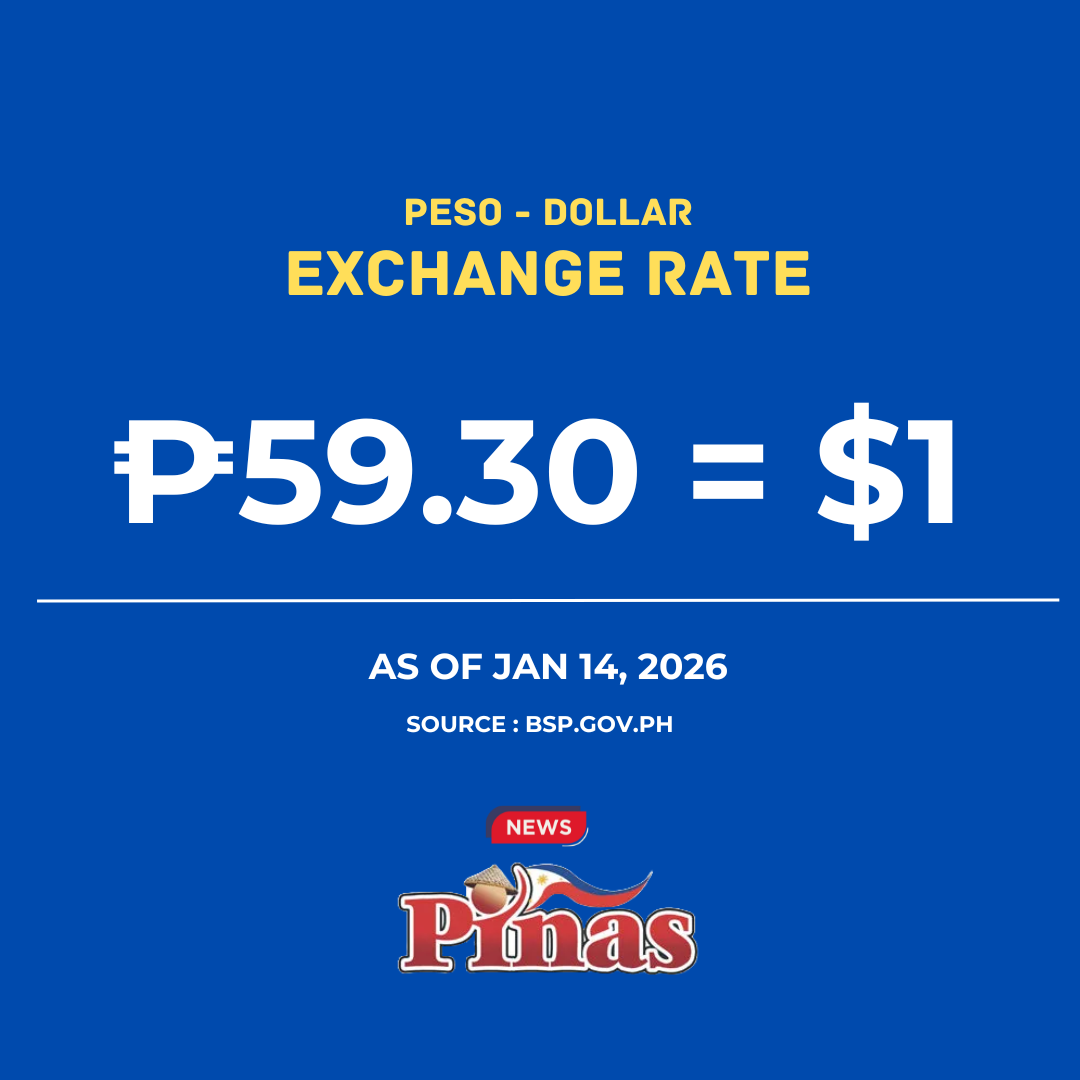
The Philippine peso woke up today facing a familiar opponent—the US dollar—and the numbers show just how much the global currency landscape is shifting.
Based on the Bangko Sentral ng Pilipinas (BSP) Reference Exchange Rate Bulletin dated January 14, 2026, here’s what’s happening to the peso against the world’s top currencies, and what it means in plain terms.
Let’s slow it down.
One currency at a time.
🇺🇸 US Dollar (USD): The Main Benchmark
The peso is trading at ₱59.31 per US dollar.
This remains the most watched rate. A stronger dollar continues to pressure the peso, making imports more expensive but boosting the value of dollar remittances from overseas Filipinos.
🇬🇧 British Pound (GBP): Still Heavy
One British pound now equals ₱79.62.
That’s a steep exchange rate—showing the pound’s continued strength against the peso, especially for Filipinos dealing with UK-based expenses or income.
🇪🇺 Euro (EUR): Holding Strong
The euro stands at ₱69.06.
Despite economic challenges across Europe, the euro remains firm, staying well above the peso and reinforcing its position as one of the world’s strongest currencies.
🇨🇭 Swiss Franc (CHF): A Safe-Haven Giant
At ₱74.06, the Swiss franc continues to outperform many major currencies.
Investors still see it as a safe bet—and the peso feels the weight of that confidence.
🇯🇵 Japanese Yen (JPY): Still Affordable
One yen is worth just ₱0.37.
The yen remains weak, which benefits Philippine importers of Japanese goods but highlights Japan’s ongoing struggle to lift its currency.
🇸🇬 Singapore Dollar (SGD): ASEAN’s Strongest
The Singapore dollar trades at ₱46.05.
It remains one of the strongest currencies in Asia, reflecting Singapore’s stable economy and tight monetary policy.
🇨🇦 Canadian Dollar (CAD): Steady Performer
At ₱42.71, the Canadian dollar holds its ground, supported by energy prices and economic resilience.
🇦🇺 Australian Dollar (AUD): Slightly Softer
The Aussie dollar sits at ₱39.62.
It’s weaker compared to previous years but still stronger than most regional currencies.
🇭🇰 Hong Kong Dollar (HKD): Pegged and Predictable
The Hong Kong dollar is at ₱7.60.
Its US dollar peg keeps movements controlled—steady, but closely tied to US monetary policy.
🇸🇦 Saudi Riyal (SAR): OFW-Relevant
The riyal is valued at ₱15.82.
Good news for OFWs in the Middle East—peso conversions remain favorable.
🇦🇪 UAE Dirham (AED): Still Strong
At ₱16.15, the dirham mirrors the dollar’s strength, continuing to support remittance values.
🇧🇭 Bahrain Dinar (BHD): The Heavyweight
One of the strongest globally, the dinar stands at ₱157.36.
It remains the most powerful currency against the peso among the top list.
🇧🇳 Brunei Dollar (BND): Quietly Strong
The Brunei dollar trades at ₱45.87, closely tracking the Singapore dollar.
🇹🇭 Thai Baht (THB): Regional Rival
The baht sits at ₱1.88, reflecting regional currency pressures but relative stability.
🇮🇩 Indonesian Rupiah (IDR): Small Units, Big Impact
At ₱0.0035 per rupiah, the value looks tiny—but small shifts still matter for trade.
What This Means for Filipinos
-
Import costs remain high due to a strong dollar
-
OFW remittances stay valuable in peso terms
-
Travel and overseas education remain expensive
-
Exports stay competitive, thanks to a weaker peso
As of today, January 15, 2026, the peso continues to walk a tightrope—pressured by global forces, yet supported by remittances and steady policy moves from the BSP.
In the world of currencies, every decimal tells a story.
And today, the peso’s story is one of resilience—under pressure, but still standing.