
There’s a silent battle happening today.
No headlines.
No noise.
But it affects everything—your food, your fuel, your future.
The Philippine peso is standing face-to-face with the world’s strongest currencies…
And today’s numbers tell a powerful story.
The Big Picture: Peso vs US Dollar
Let’s start with what matters most.
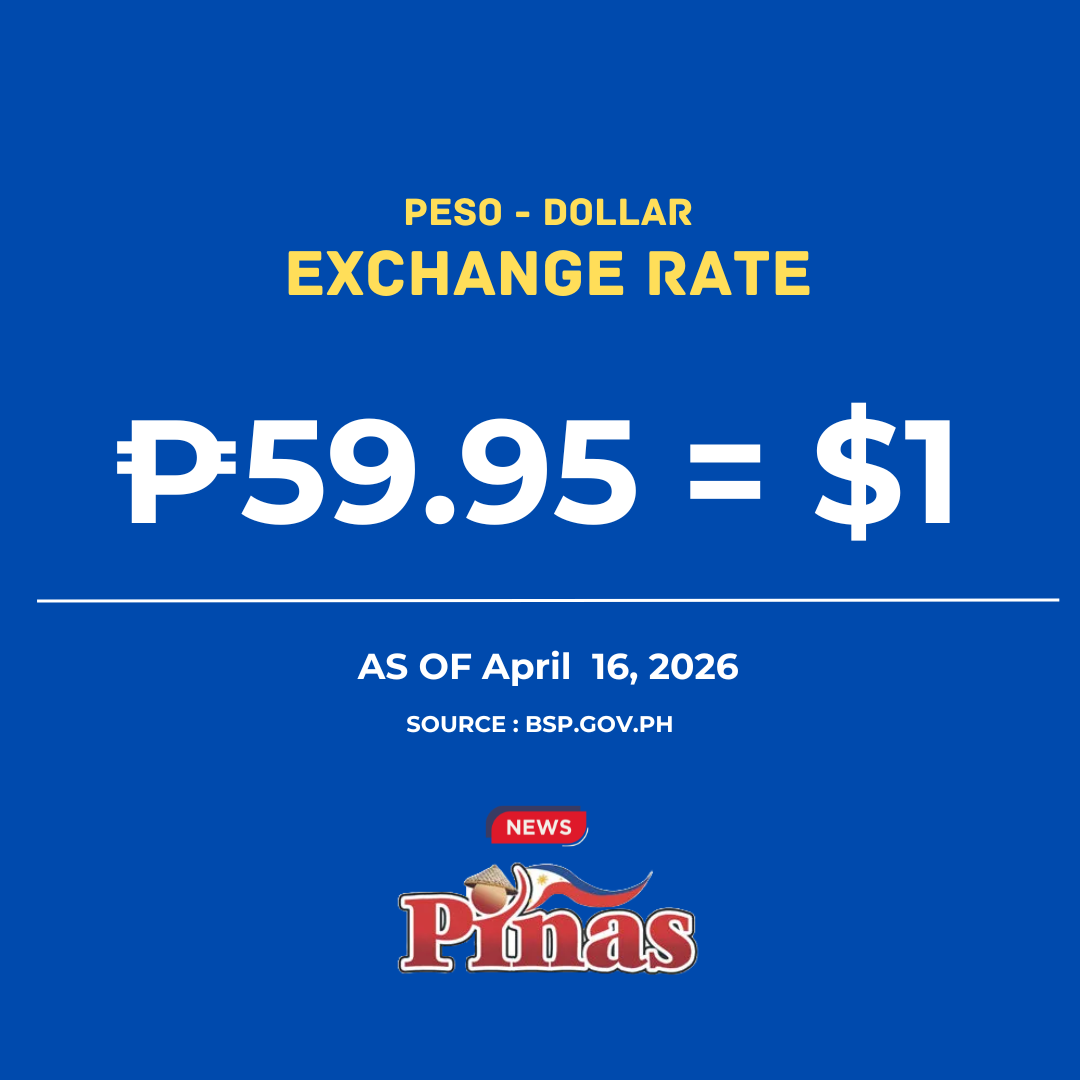
As of today, ₱59.96 = $1.
That means the peso is still under pressure… hovering near the ₱60 mark.
In recent days, the dollar has stayed strong, moving within the ₱59.5 to ₱60.4 range.
It may look stable…
But underneath, it’s a tug-of-war.
Every centavo matters.
The Top 15 Currencies vs Peso (What’s Really Happening)
Now let’s zoom out.
Here’s how the peso compares to the world’s most powerful currencies—and what it means.
💵 1. US Dollar (USD)
₱59.96
The king of global trade.
When the dollar rises… everything imported becomes more expensive.
💷 2. British Pound (GBP)
₱81.34
Stronger than the dollar.
Meaning UK goods, travel, and services cost significantly more.
💶 3. Euro (EUR)
₱70.75
Europe’s currency remains powerful—keeping imports from EU countries expensive.
💲 4. Swiss Franc (CHF)
₱76.69
A “safe haven” currency.
When global uncertainty rises, this gets stronger—and the peso feels it.
💲 5. Bahrain Dinar (BHD)
₱158.99
Yes… over ₱150 for just one dinar.
One of the strongest currencies in the world.
💲 6. Singapore Dollar (SGD)
₱47.20
A key regional competitor.
Stronger than the peso—reflecting Singapore’s economic edge.
💲 7. Canadian Dollar (CAD)
₱43.65
Closely tied to oil prices.
Still stronger than the peso… but more stable.
💲 8. Australian Dollar (AUD)
₱42.98
Driven by commodities.
The peso trails behind, especially during global demand surges.
💲 9. Brunei Dollar (BND)
₱47.01
Almost equal to SGD.
Shows how smaller economies can still hold stronger currencies.
💲 10. UAE Dirham (AED)
₱16.32
Critical for OFWs.
A stronger dirham means higher remittance value back home.
💲 11. Saudi Riyal (SAR)
₱15.98
Another key OFW currency.
Stable… but still significantly ahead of the peso.
💲 12. Chinese Yuan (CNY)
₱8.79
China’s influence is massive.
Even small movements here ripple into Philippine trade.
💲 13. Japanese Yen (JPY)
₱0.38
Weaker than usual.
But still vital for trade and investments.
💲 14. Thai Baht (THB)
₱1.87
Closer competition.
The peso and baht often move side by side in Southeast Asia.
💲 15. South Korean Won (KRW)
₱0.04
Small value—but big impact in trade, tech, and exports.
What It All Means
Take a step back…
And you’ll see the truth.
The peso isn’t collapsing.
But it’s under pressure.
It’s holding its ground—but barely.
Over the past months, it has stayed near ₱58 to ₱60 per dollar, showing stability… but also vulnerability.
Why You Should Care
Because this isn’t just numbers.
It’s your daily life.
When the peso weakens:
- Imported goods get more expensive
- Fuel prices rise
- Travel costs increase
- Inflation creeps in
But when OFWs send money?
A stronger dollar means more pesos for families.
So it cuts both ways.
The Bottom Line
Right now, the peso is in a delicate position.
Not crashing.
Not soaring.
Just… holding on.
And in a world where currencies shift overnight…
That balance can change anytime.