

Fear travels fast.
And for many Filipinos in Dubai, the growing tension in the Middle East has become impossible to ignore.
Between 80 and 100 Filipinos have already expressed their desire to return home, according to the Department of Migrant Workers (DMW).
They want to be back in the Philippines.
Back with their families.
Back where they feel safe.
But there’s one problem — the airspace remains closed.
Government Steps In
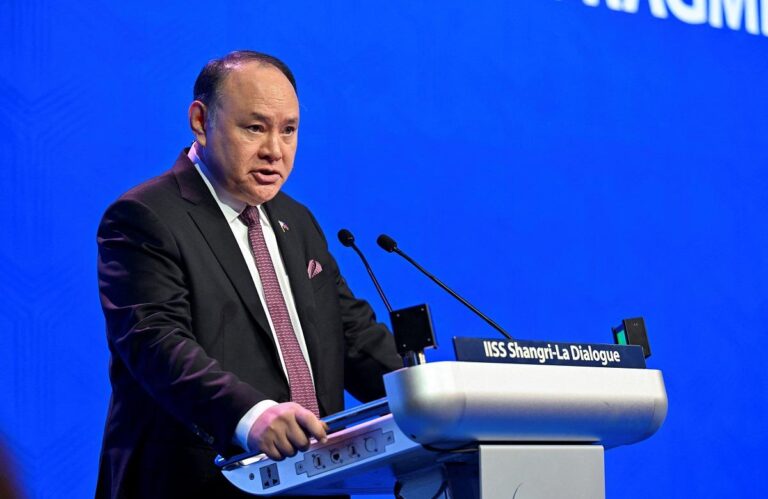
DMW Secretary Hans Leo Cacdac assured the public that help is already on the ground.
“Those 80 in Dubai who requested repatriation, since it is not yet possible, have been transported to safer ground,” Cacdac said during a Palace briefing.
For now, evacuation flights cannot operate. Airports are not fully functional. Exit routes are limited.
So the government is doing what it can.
Filipinos who asked to go home have been moved to safer areas. They are being provided with food, water, and other basic needs while waiting for travel routes to reopen.
No one is being left behind.
Millions of Filipinos in the Region
The Department of Foreign Affairs estimates that around 2.5 million Filipinos are in the Middle East — most of them in the United Arab Emirates, Saudi Arabia, and Qatar. Around 800 are in Iran.
Over the weekend, tensions escalated after joint military operations by the United States and Israel against Iran.
The situation remains tense. Uncertain. Fragile.
Still, Cacdac clarified that there is no mass repatriation yet.
But the government is ready.
“We are prepared for such an eventuality,” he said, adding that both public and private resources are on standby — by air, sea, or land — should large-scale evacuation become necessary.
A Life Lost
Amid the uncertainty, tragedy struck.
Mary Ann Velasquez De Vera, a Filipina caregiver, was killed in an Iranian airstrike in Tel Aviv.
The DMW has reached out to her husband and is coordinating closely with Israeli authorities.
The Philippine government has pledged financial assistance, burial support, and help in bringing her remains home.
“We will wait for the appropriate time to bring OFW Mary Ann home,” Cacdac said. “In due time, OFW Mary Ann will be home safely.”
Behind every headline is a family grieving. Waiting.
Alert Levels Raised
In response to the growing tension, the Overseas Workers Welfare Administration (OWWA) raised Alert Level 2 in the UAE, Bahrain, Qatar, Kuwait, and Israel.
This means a deployment ban for newly hired overseas Filipino workers.
Lebanon is now under Alert Level 3, which allows voluntary repatriation. Jordan remains under Alert Level 1.
Under Alert Level 2, Filipinos are advised to limit non-essential movement, avoid protests, and prepare for possible evacuation.
If the situation worsens, higher alert levels could mean mandatory evacuation.
President Monitoring Situation
Malacañang confirmed that President Ferdinand R. Marcos Jr. is closely monitoring developments.
He has directed government agencies to provide full assistance to Filipinos affected by the conflict.
For those in need of help, OWWA emergency hotlines are open:
-
Metro Manila: 1348
-
Regional: 02-1348
-
Viber (Globe): +63-915-079-5005
-
Viber (Smart): +63-969-169-7068
-
Viber (Globe): +63-966-473-9543
For now, families wait.
Workers hold onto hope.
And somewhere in Dubai, dozens of Filipinos are quietly praying for one thing —
A safe trip home.