
Spain has drawn a clear line.
And this time, it’s standing firm.
On Wednesday, Spanish leaders openly pushed back against threats from US President Donald Trump, declaring that Spain will not bow to pressure over its position on the escalating conflict involving Iran.
“We will not be vassals to anyone.”
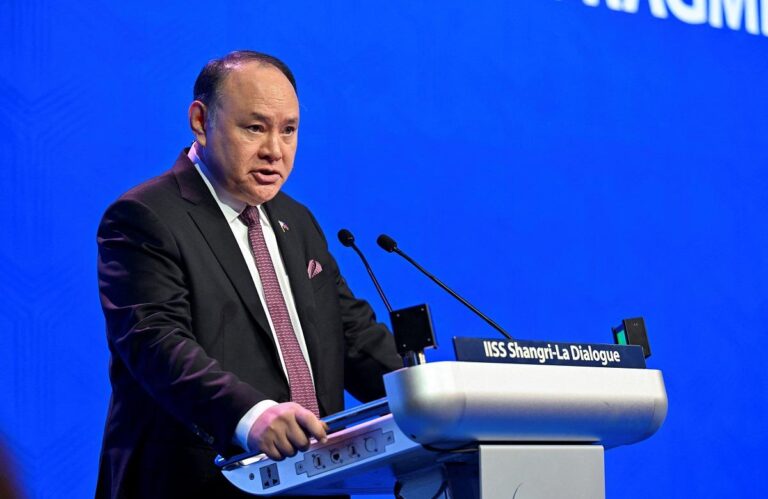
That was the strong message delivered by Deputy Prime Minister Maria Jesus Montero, as tensions between Washington and Madrid intensified.
Spain refuses to be pressured
Speaking to reporters in Madrid, Montero made it clear that Spain will not allow intimidation to dictate its foreign policy.
“We are certainly not going to be anybody’s vassals,” she said.
“We won’t tolerate any threats, and we will defend our values.”
Her statement came after Trump floated the idea of cutting trade with Spain, angered by Madrid’s refusal to allow US aircraft to use joint naval and air bases in southern Spain for military operations linked to strikes on Iran.
Spain has openly condemned the US and Israeli attacks on Iran, calling them reckless and illegal.
This stance has made Spain one of the few European nations willing to publicly criticize the strikes, while many others have chosen to remain cautious.
Still, Spain says its decision is rooted in principle.
And it will not back down.
European Union shows support
Spain’s position has not gone unnoticed in Europe.
The European Commission expressed solidarity with member states and reminded Washington that the United States must respect its trade agreements with the European Union.
The EU functions as a single customs bloc, meaning trade disputes with one member country could have wider consequences.
While the Commission did not directly mention Spain, the message was clear: Europe expects its trade partners to respect existing agreements.
For Spain, that support from the EU adds weight to its stance.
A warning about war
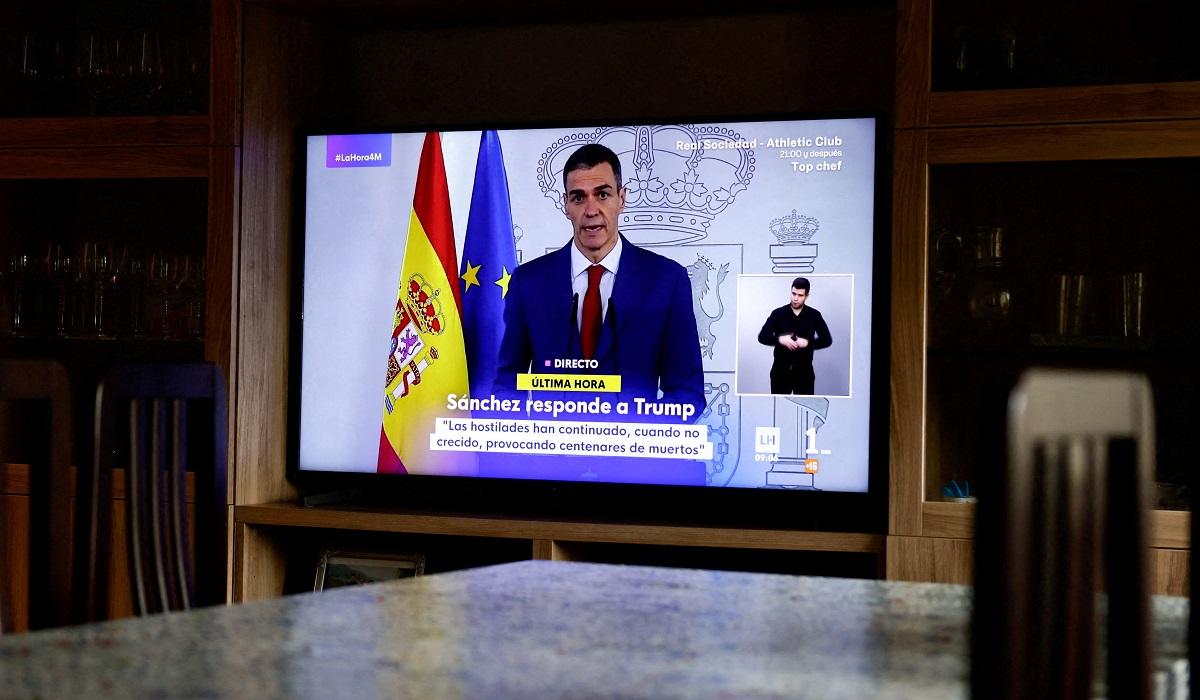
Earlier the same day, Spanish Prime Minister Pedro Sanchez addressed the nation, doubling down on the country’s anti-war position.
His message was emotional and urgent.
Sanchez warned that escalating military conflict in the region could lead to a global disaster.
“We’re not going to be complicit in something that’s bad for the world,” he said.
“And we will not do something that goes against our values simply to avoid reprisals from someone.”
Sanchez has been one of the most outspoken critics of both Trump and Israeli Prime Minister Benjamin Netanyahu.
In his speech, he criticized leaders who, he said, use war to distract from problems at home.
“This is how humanity’s great disasters start,” Sanchez warned.
“You cannot play Russian roulette with the destiny of millions.”
He pointed to the aftermath of the Iraq war, reminding the world how conflicts can unleash unpredictable consequences — from rising terrorism to global energy crises.
To Sanchez, the current situation carries the same dangerous uncertainty.
Spain stays out of military operations
While tensions rise across the region, Spain has chosen not to participate in military operations.
Other European countries have taken a different path.
Britain, France, and Greece have already sent weapons and military support to Cyprus, which was recently hit by a drone attack.
Meanwhile, British Prime Minister Keir Starmer has authorized the use of UK bases for defensive operations linked to the crisis.
Spain, however, has held its ground.
That decision has drawn criticism from Israel, which accused Sanchez of “standing with tyrants.”
But Madrid insists its position is about preventing a wider war.
Trump raises trade threats
Adding to the tension, Trump claimed this week that he has the authority to impose a trade embargo on Spain.
He pointed to a US Supreme Court ruling earlier this year, which he said allows him to impose embargoes under certain conditions.
But legal experts are skeptical.
According to NYU law professor Peter Shane, imposing such sanctions would require proving that Spain’s actions pose an extraordinary threat to US national security.
And that argument may be difficult to make.
“It’s hard to see how Spain denying us the use of air bases for an unprovoked attack on Iran poses an extraordinary threat,” Shane said.
Economic worries at home
While political tensions dominate headlines, businesses in Spain are quietly watching the situation with concern.
Spain actually exports more to the United States than it imports, making some industries vulnerable if trade restrictions were imposed.
One of those sectors is olive oil, one of Spain’s most famous exports.
At Spanish olive oil producer Dcoop, there are growing worries about what sanctions could mean.
“We are farmers who want to market our products without obstacles,” a company source said.
For many producers, the fear is simple:
Politics could suddenly put their livelihoods at risk.
A nation standing by its values
Despite the pressure, Spain’s leaders say their decision will not change.
For them, the issue goes beyond politics or trade.
It is about principle.
Spain believes the world is standing at a dangerous crossroads — and its leaders insist they will not be dragged into a conflict they believe could spiral into something far worse.
As Montero put it clearly:
Spain will defend its values.
And it will do so without becoming anyone’s vassal.