

he Philippine peso continues to move with the pulse of the global economy.
Every day, currencies around the world rise and fall—shaped by trade, geopolitics, and investor confidence. And for Filipinos, one number matters most:
How strong is the peso against the U.S. dollar?
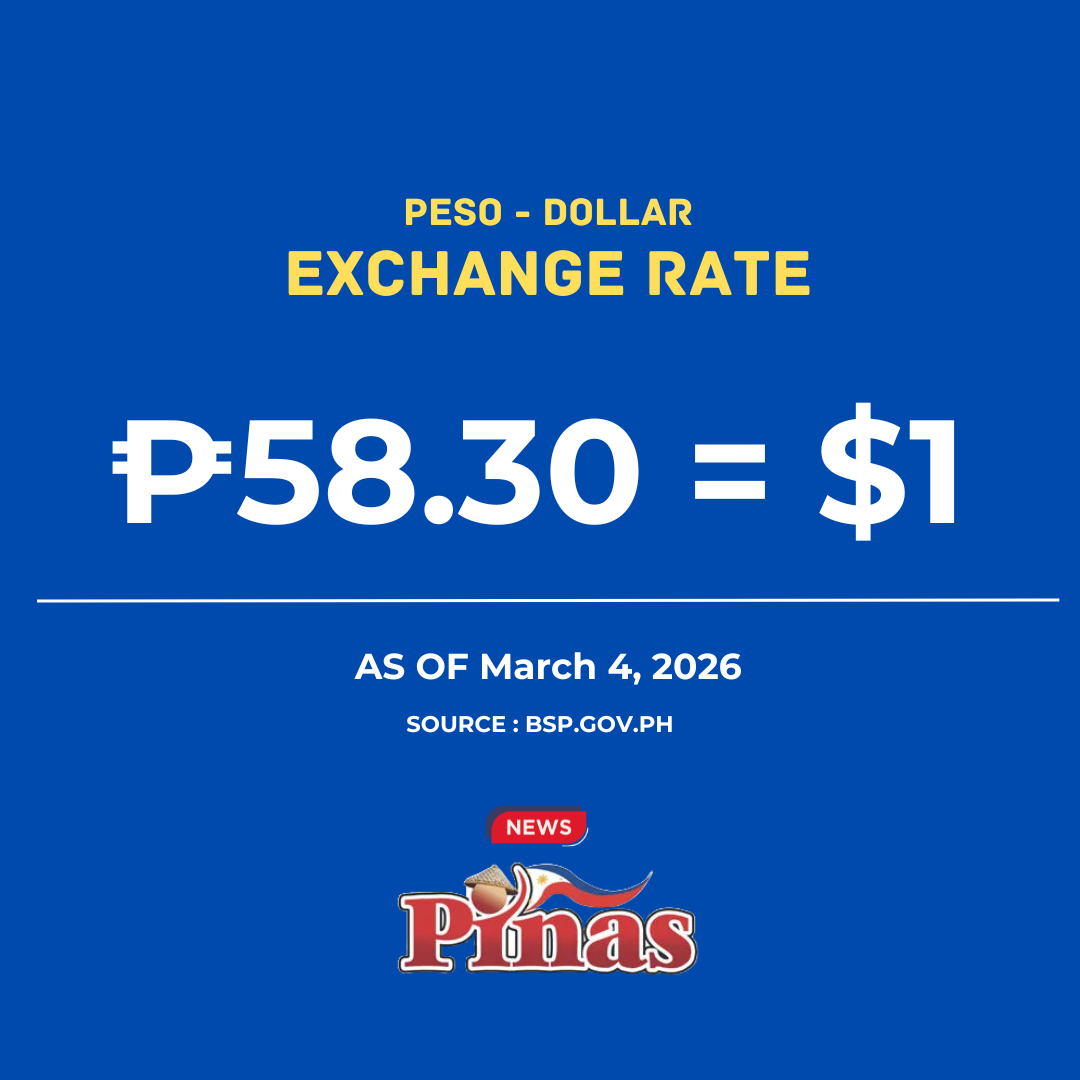
As of the latest reference from the Bangko Sentral ng Pilipinas (BSP), the exchange rate shows that $1 US dollar equals ₱58.309.
It’s a number that affects everything—from remittances and travel costs to fuel prices and imported goods.
But the peso’s story doesn’t end with the dollar. Across the world, other major currencies are also shifting, creating a constantly changing global financial landscape.
Here’s how the Philippine peso compares with the world’s top currencies today.
🇵🇭 Philippine Peso vs US Dollar
The U.S. dollar remains the strongest global benchmark, widely used in trade, investments, and international reserves.
Today’s reference rate shows:
-
$1 USD = ₱58.309
For OFWs sending money home, exporters selling products abroad, and businesses importing goods, even small changes in this number can make a big difference.
💱 Top 15 Currencies vs Philippine Peso
Here’s how the Philippine peso compares with other major global currencies based on the BSP reference exchange rate.
🇬🇧 British Pound (GBP)
-
₱77.895 per £1
The British pound remains one of the strongest currencies in the world. Its value reflects the UK’s powerful financial sector and global trade influence.
🇪🇺 Euro (EUR)
-
₱67.7317 per €1
The euro, used across many European countries, remains one of the most important currencies in international markets.
🇨🇭 Swiss Franc (CHF)
-
₱74.6117 per CHF1
Often seen as a safe-haven currency, the Swiss franc tends to strengthen during times of global uncertainty.
🇧🇭 Bahrain Dinar (BHD)
-
₱154.6658 per BHD1
The Bahraini dinar is currently one of the strongest currencies in the world, largely due to the country’s oil-driven economy.
🇨🇦 Canadian Dollar (CAD)
-
₱42.6329 per CAD1
Canada’s currency moves closely with global oil prices and trade with the United States.
🇸🇬 Singapore Dollar (SGD)
-
₱45.6538 per SGD1
Singapore’s dollar reflects the strength of one of Asia’s biggest financial hubs.
🇦🇺 Australian Dollar (AUD)
-
₱41.0087 per AUD1
Australia’s currency often rises and falls with demand for minerals and commodities.
🇭🇰 Hong Kong Dollar (HKD)
-
₱7.4715 per HKD1
The Hong Kong dollar is tightly linked to the U.S. dollar, keeping its value relatively stable.
🇸🇦 Saudi Riyal (SAR)
-
₱15.5379 per SAR1
With millions of OFWs working in Saudi Arabia, this currency plays a major role in remittances to the Philippines.
🇦🇪 UAE Dirham (AED)
-
₱15.8776 per AED1
Another important currency for Filipino workers abroad, especially those based in Dubai and Abu Dhabi.
🇯🇵 Japanese Yen (JPY)
-
₱0.3697 per ¥1
Although the yen appears small in value per unit, Japan’s massive economy makes it one of the most influential currencies globally.
🇨🇳 Chinese Yuan (CNY)
-
₱8.4270 per ¥1
China remains one of the Philippines’ biggest trading partners, making the yuan increasingly significant in regional trade.
🇹🇭 Thai Baht (THB)
-
₱1.8452 per ฿1
Thailand’s currency reflects the country’s strong tourism and manufacturing industries.
🇮🇩 Indonesian Rupiah (IDR)
-
₱0.0034 per Rp1
Because of the rupiah’s large denomination, individual units are very small in peso value.
🇮🇳 Indian Rupee (INR)
-
₱0.6336 per ₹1
India’s fast-growing economy continues to increase the global relevance of the rupee.
📊 Other Key Market Indicators
The BSP also released additional financial benchmarks:
-
BSP Reference Rate: ₱58.450 per US dollar
-
BSP Buying Rate: ₱58.200
-
BSP Selling Rate: ₱58.700
-
PDS Closing Rate (March 3, 2026): ₱58.435
Meanwhile, global commodities continue to surge:
-
Gold: $5,115.35
-
Silver: $82.55
These precious metals often rise when investors seek safer assets during economic uncertainty.
🌍 Why exchange rates matter
Currency values might seem like distant numbers on financial screens.
But their impact is felt every day.
They influence:
-
OFW remittances
-
Fuel prices
-
Imported goods
-
Travel expenses
-
Business investments
When the peso weakens against the dollar, imports become more expensive.
But when the peso strengthens, Filipinos abroad may send home slightly less in converted pesos.
It’s a delicate balance—one shaped by global events far beyond the country’s borders.