


The Philippine peso opened the week under pressure.
Based on the Bangko Sentral ng Pilipinas (BSP) Reference Exchange Rate Bulletin, the peso continues to trade weak against the world’s major currencies, led by the U.S. dollar, as global markets remain cautious and volatile.
Let’s break down what’s happening — simply, clearly, and in real terms.
Peso vs US Dollar: Still Holding Near ₱59
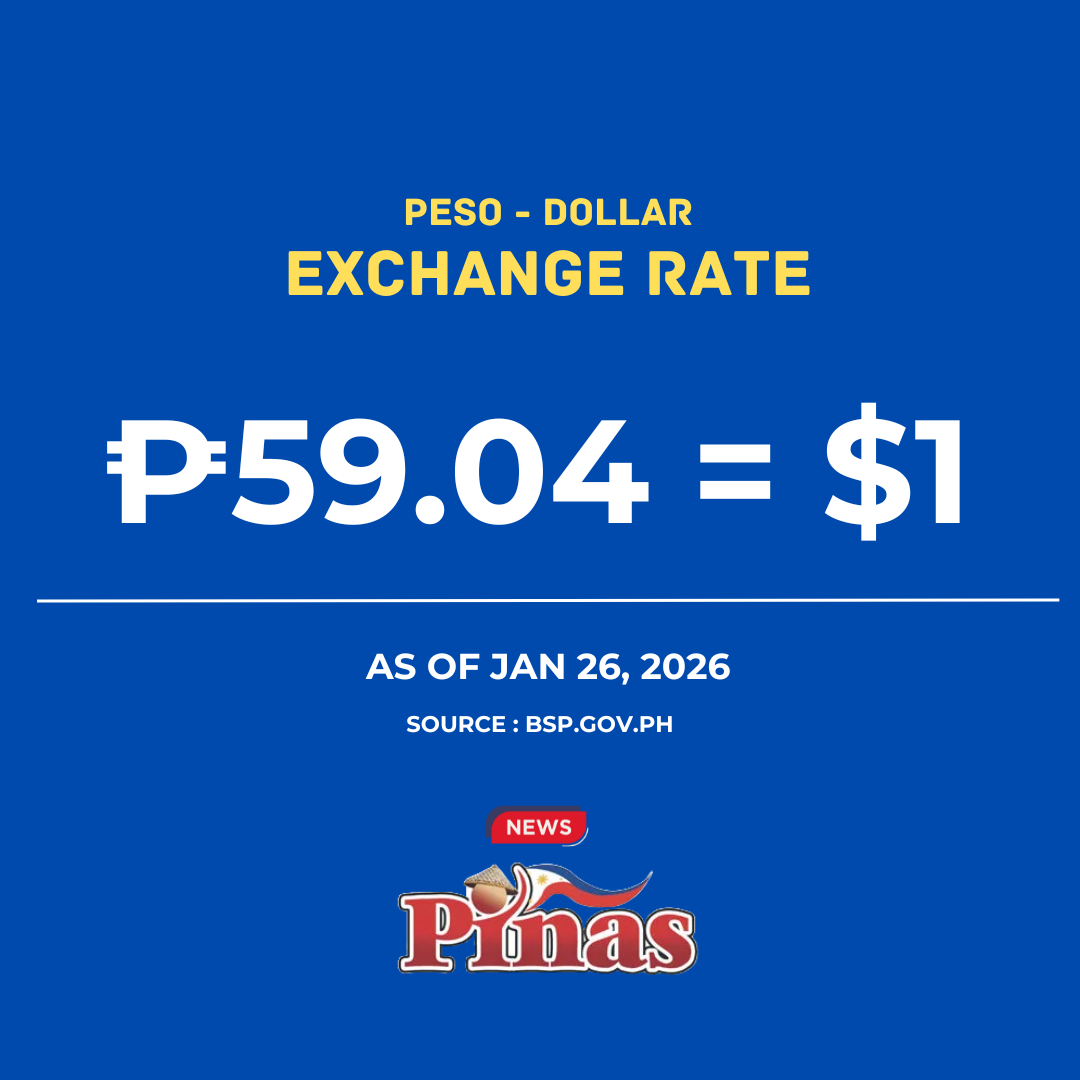
As of January 26, 2026, the US dollar is valued at ₱59.04.
That means Filipinos need almost ₱60 for every $1, a level that reflects strong demand for the dollar amid global uncertainty. The BSP’s reference rate stands at ₱59.10, with buying and selling rates ranging between ₱58.85 and ₱59.35.
For importers, travelers, and overseas remittances, this matters — every centavo move adds up.
How the Peso Stacks Up Against the Top 15 Currencies
Here’s how the Philippine peso (PHP) is performing against the world’s most followed currencies today:
-
British Pound (GBP): ₱80.72
Still one of the strongest — heavy and expensive. -
Euro (EUR): ₱70.07
The euro remains firm, keeping European travel costly. -
Swiss Franc (CHF): ₱76.19
A classic safe-haven currency, still commanding a premium. -
Bahrain Dinar (BHD): ₱156.61
The strongest among the group — one dinar goes a very long way. -
Singapore Dollar (SGD): ₱46.49
Stable and strong, reflecting Singapore’s solid economy. -
Canadian Dollar (CAD): ₱43.11
Slightly softer, but still well above the peso. -
Australian Dollar (AUD): ₱40.87
Lower than past highs, but still costly for Filipinos. -
Hong Kong Dollar (HKD): ₱7.57
Pegged to the US dollar, moving closely with it. -
Saudi Riyal (SAR): ₱15.75
Important for OFWs — still steady and predictable. -
UAE Dirham (AED): ₱16.08
Another key OFW currency, holding firm. -
Japanese Yen (JPY): ₱0.38
The yen remains weak — making Japan cheaper for travelers. -
Thai Baht (THB): ₱1.91
Regional currencies continue to trade within a tight range. -
Chinese Yuan (CNY): ₱8.48
Stable but closely watched due to China’s economic moves. -
Brunei Dollar (BND): ₱46.30
Moves closely with the Singapore dollar. -
Indonesian Rupiah (IDR): ₱0.0035
Low in value, but stable in regional terms.
What This Means for Filipinos
A weaker peso means imports cost more, fuel prices stay sensitive, and overseas travel becomes more expensive. But there’s a silver lining — OFW remittances stretch further, helping families back home.
Meanwhile, gold prices remain elevated at $5,036.85, while silver trades at $105.55, signaling continued investor caution worldwide.
The Big Picture
The peso isn’t collapsing — but it’s clearly under strain.
Against the dollar and most major currencies, the message is the same: global uncertainty is keeping safe-haven currencies strong and emerging market currencies, like the peso, on the defensive.
For now, the market waits.
For clarity.
For stability.