

Take a moment… and look at your wallet.
Every peso you hold tells a story—not just of your daily life, but of how the Philippines stands against the rest of the world.
As of April 2, 2026, the numbers are in.
And they reveal something important.
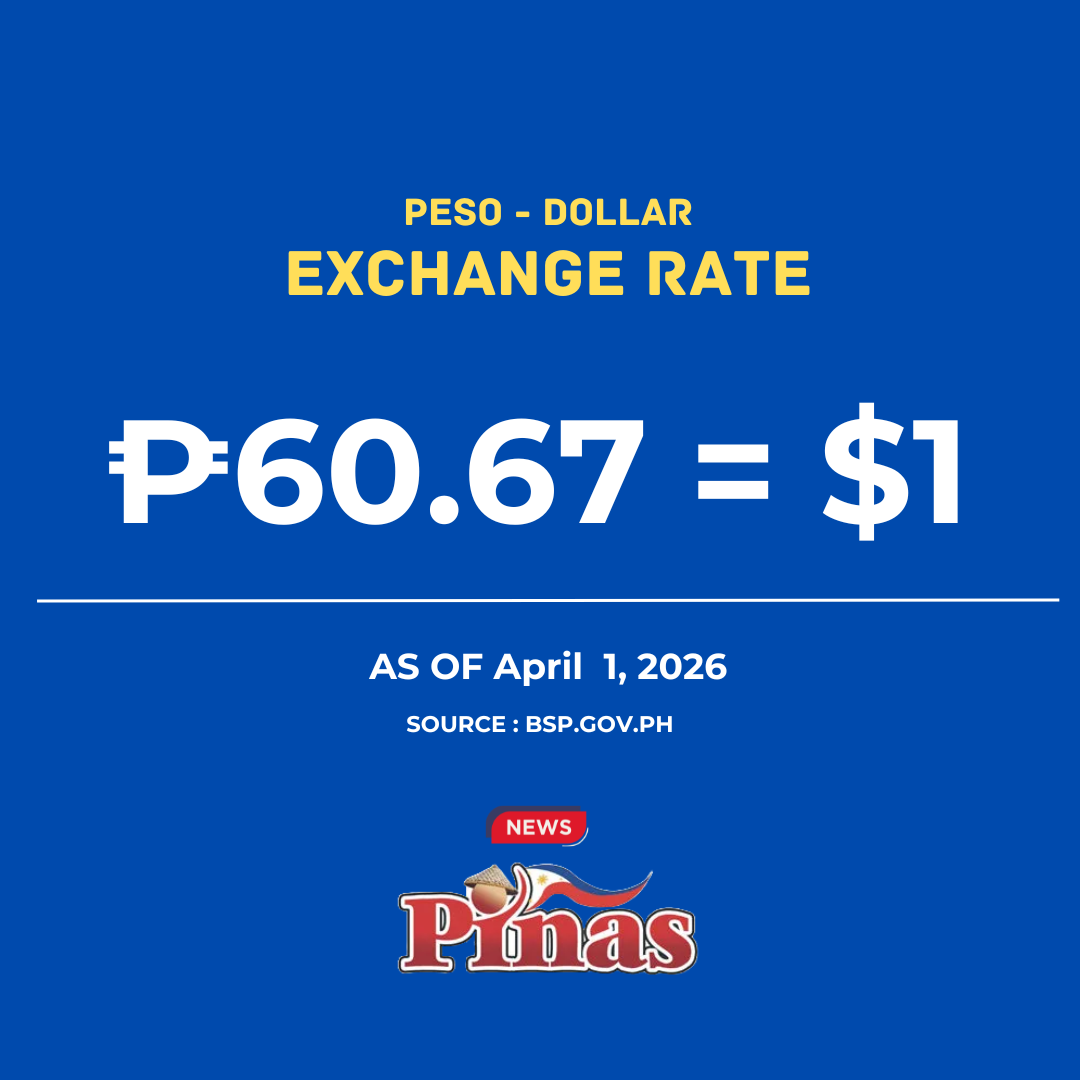
The Philippine peso is currently at around ₱60.68 against the US dollar.
Pause there.
Because that single number affects everything—fuel prices, groceries, travel, even the cost of your next online purchase.
The Dollar Still Leads
The US dollar remains the benchmark.
1 USD = ₱60.68
When the dollar strengthens… the peso feels it.
Imported goods become more expensive.
Fuel prices rise.
Daily expenses quietly creep up.
Strong Currencies That Outpace the Peso
Some currencies stand significantly stronger—meaning your peso stretches less when compared to them.
- British Pound (GBP) — ₱80.27
- Swiss Franc (CHF) — ₱75.92
- Euro (EUR) — ₱70.13
These are heavyweights.
If you’re earning in pesos and spending in these currencies… the gap is real.
Travel feels pricier.
Savings feel smaller.
Middle Ground: Still Strong, But Closer
Then come currencies that are strong—but not as overwhelming.
- Singapore Dollar (SGD) — ₱47.19
- Canadian Dollar (CAD) — ₱43.63
- Australian Dollar (AUD) — ₱41.87
These are common for OFWs and travelers.
Still higher than the peso… but more manageable.
Asian Neighbors: A Mixed Picture
Closer to home, the story changes.
- Chinese Yuan (CNY) — ₱8.81
- Thai Baht (THB) — ₱1.86
- Malaysian Ringgit (MYR) — ₱14.99
- Indonesian Rupiah (IDR) — ₱0.0036
Here, the peso holds its ground better.
In some cases, it even feels stronger.
Middle East Currencies: Surprisingly Powerful
Now here’s where things get interesting.
- Bahraini Dinar (BHD) — ₱160.82
- UAE Dirham (AED) — ₱16.52
- Saudi Riyal (SAR) — ₱16.17
The Bahraini dinar stands out—extremely strong.
For Filipinos working in these regions, earnings can go a long way when converted back home.
Japan and Korea: Lower Values, Different Impact
- Japanese Yen (JPY) — ₱0.38
- Korean Won (KRW) — ₱0.040
These may look “cheap,” but don’t be fooled.
Cost of living in these countries balances things out.
So… What Does This Mean for You?
These numbers aren’t just for economists.
They affect real life.
If you’re an OFW—this determines how much your remittance is worth.
If you travel—it shapes your budget.
If you run a business—it impacts your costs.
Even if you stay at home…
You still feel it.
At the gas station.
At the grocery.
At the checkout line.
The Bigger Picture
The BSP reference rate sits at around ₱60.75, with buying and selling rates slightly below and above.
Gold is soaring at $4,700.50.
Silver sits at $74.90.
Signals of a world still adjusting… still uncertain.
Final Thought
Currencies rise.
Currencies fall.
But behind every shift… are people adapting, adjusting, surviving.
So the next time you hear “₱60 to a dollar”…
Remember—
It’s not just a number.
It’s your money… measured against the world.