

Seoul stood still as the words were spoken.
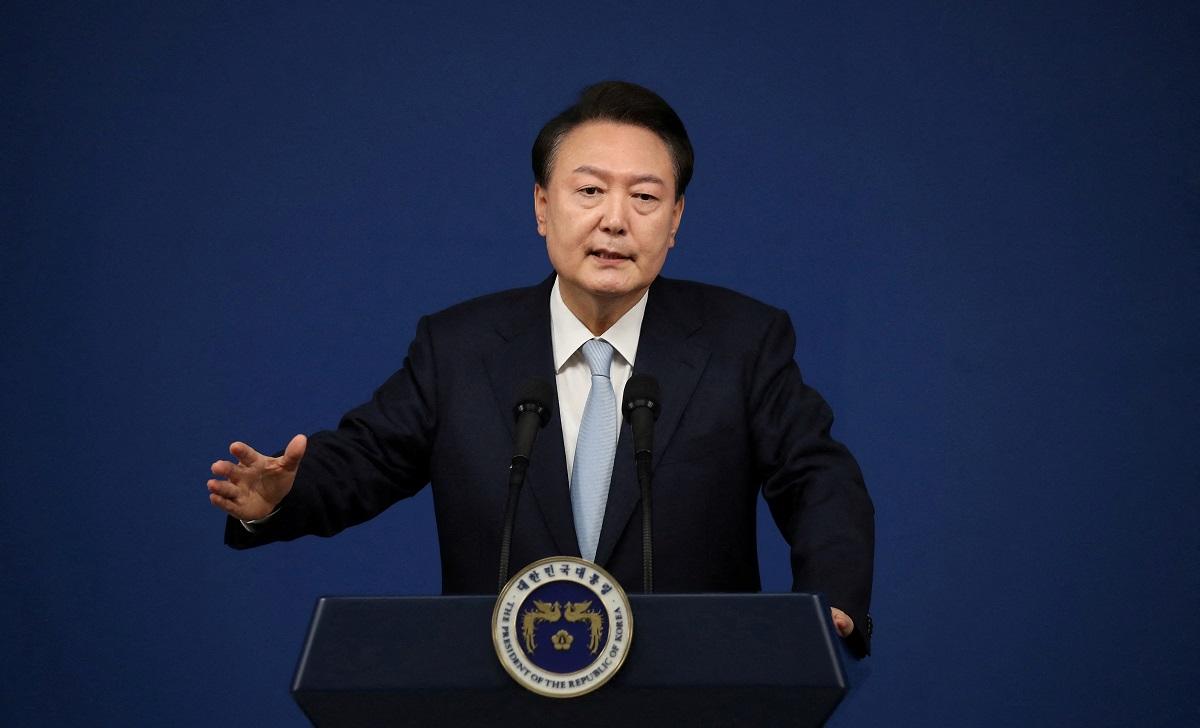
On Tuesday, South Korea’s special prosecutor formally asked the court to impose the death penalty on former president Yoon Suk Yeol, accusing him of leading an insurrection tied to his brief declaration of martial law in December 2024.
It was a stunning moment.
Prosecutors allege that Yoon was the mastermind behind the move—an act that, under South Korean law, carries the country’s harshest possible punishment.
Although South Korea has not carried out an execution in decades, the law remains clear: conviction for insurrection can still lead to death.
In closing arguments before the Seoul Central District Court, prosecutors laid out what they described as a long-running plan.
Investigators, they said, uncovered evidence of a scheme allegedly directed by Yoon and his former defense minister, Kim Yong-hyun, dating back to October 2023. The goal, prosecutors claim, was simple—and alarming: to keep Yoon in power.
Yoon, now 65, has firmly denied the charges.
He maintains that declaring martial law was within his constitutional authority as president. According to him, the move was not an attempt to seize power, but a warning—meant to draw attention to what he described as obstruction by opposition parties.
The courtroom listened.
The nation watched.
Now, the decision lies with the court.
The Seoul Central District Court is expected to deliver its ruling in February, a verdict that could mark one of the most consequential moments in South Korea’s political history.
And until then, the country waits—caught between law, power, and the weight of a former president’s fate.