
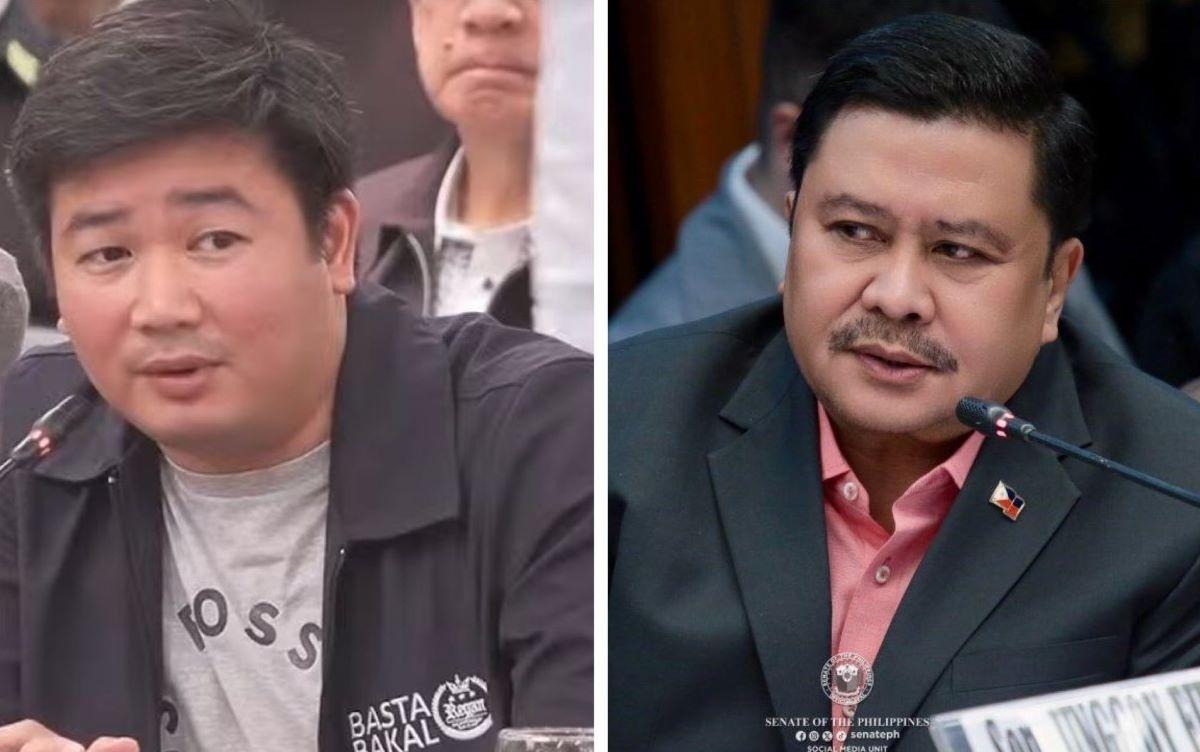
The Department of Justice (DOJ) has closed the door on a perjury complaint filed by Senator Jinggoy Estrada—and it did so firmly.
On Friday, prosecutors dismissed the case against former Department of Public Works and Highways (DPWH) engineer Brice Hernandez, citing one key reason: lack of evidence.
After reviewing the case, the DOJ said Estrada failed to prove that Hernandez deliberately lied when he accused the senator of receiving kickbacks from government flood control projects.
What the DOJ Found
In a detailed 12-page resolution, prosecutors explained that perjury is not just about making a wrong statement. It requires clear proof of intent to lie.
And in this case, they said, that proof simply wasn’t there.
Hernandez had claimed that his statements were based on what he personally knew and experienced while working inside the DPWH. He insisted he believed what he said was true at the time—information he said came from his superiors and from his role within the agency.
Prosecutors agreed that this explanation couldn’t be easily dismissed.
A Whistleblower, Not a Liar?
The DOJ said Hernandez’s claim of acting as a whistleblower remained believable.
Even though other witnesses denied the kickback allegations—and even though Estrada submitted his Statements of Assets, Liabilities, and Net Worth (SALNs)—prosecutors stressed that these alone do not prove Hernandez knowingly lied under oath.
In simple terms:
Being wrong is not the same as lying.
Statements That Backed Hernandez
The DOJ also pointed to sworn statements from Hernandez’s superior, who reportedly mentioned the same list of flood control projects Hernandez had identified.
Adding to that, former Public Works Undersecretary Roberto Bernardo allegedly made a statement in November confirming Estrada’s supposed receipt of kickbacks—something prosecutors said strengthened Hernandez’s claim that he relied on information he believed was credible.
Contradictions Aren’t Enough
Estrada argued that Hernandez changed his story, especially after contractor Sally Santos contradicted him.
But prosecutors weren’t convinced.
They explained that contradictory statements alone do not amount to perjury—unless there is independent proof showing which statement was intentionally false.
Hernandez, for his part, said his denials were specific. He denied personally demanding money, but admitted to acting under orders from a superior, with funds allegedly meant for others. That distinction, prosecutors said, introduced doubt—not certainty.
Final Word from the DOJ
The DOJ acknowledged that Hernandez’s motives could be questioned. But motive alone, they said, does not prove perjury.
To convict someone of perjury, there must be clear evidence of evil intent and legal malice. And that standard was not met.
Even if Hernandez was mistaken, reckless, or poorly motivated, prosecutors said the evidence still allows room for good faith belief—especially given his role as a cooperating witness inside an alleged corruption scheme.
Case Closed
In the end, the DOJ recommended the outright dismissal of the complaint.
The ruling concluded that there was no sufficient evidence to support a conviction with reasonable certainty.
For now, the perjury case is over—and the accusation against Brice Hernandez remains unproven.