
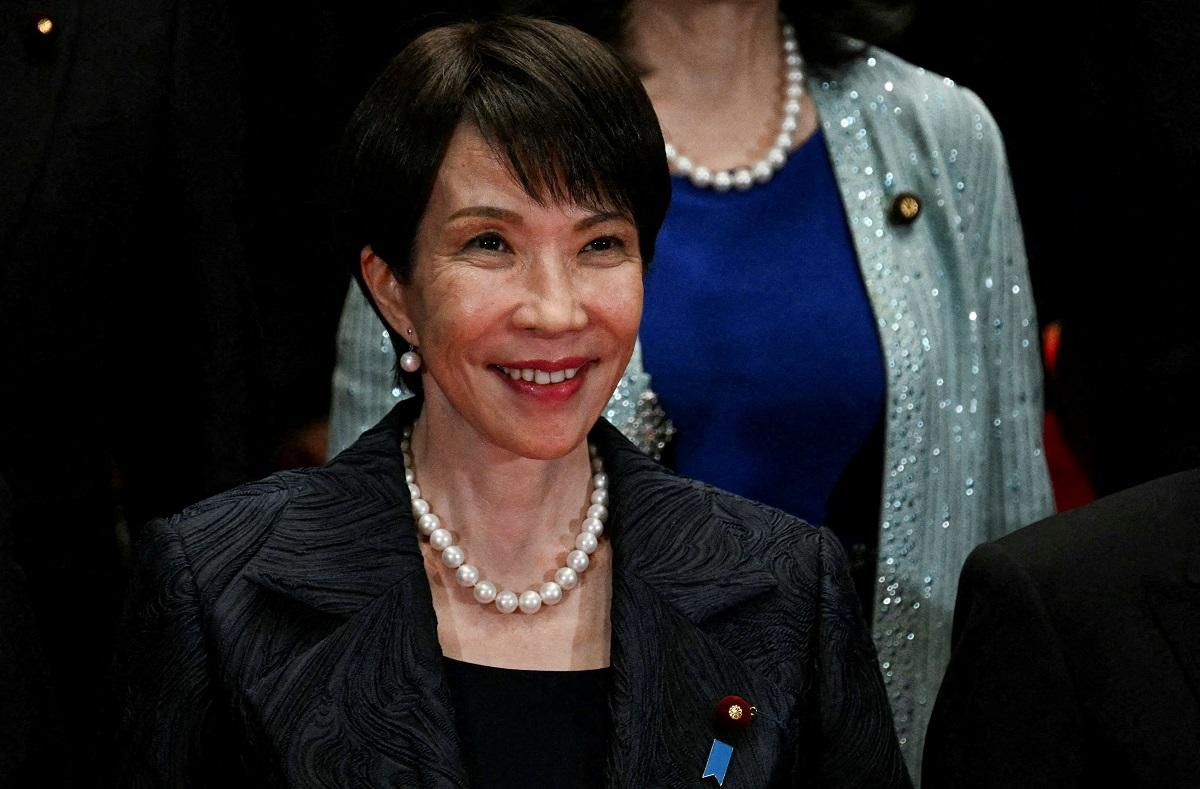
Japan’s Prime Minister Sanae Takaichi has issued a stark warning.
If Japan were to turn away from a crisis in Taiwan, she said, the country’s strategic alliance with the United States could collapse.
Speaking late Monday on a nationally broadcast television program, Takaichi addressed growing criticism over her earlier remarks, which had sparked tension with China and raised fears of military escalation in the region.
Opposition leaders accused her of inflaming relations with Beijing after she suggested in November that a Chinese attack on Taiwan could trigger a Japanese military response.
That comment sent shockwaves.
Relations between Japan and China quickly fell to their lowest point in years. Beijing responded with export restrictions, flight cancellations, and sharp public rebukes—repeatedly demanding that Japan retract the statement.
China claims sovereignty over the democratically governed island of Taiwan.
On Monday night, Takaichi moved to clarify her position.
“I want to make it absolutely clear,” she said, “this is not about Japan going out and taking military action if China and the United States come into conflict.”
Instead, she stressed a narrower—but still consequential—scenario.
If a serious crisis were to erupt, Japan could be compelled to rescue Japanese and American citizens in Taiwan, she said. In such cases, joint action with the United States may be unavoidable.
And if U.S. forces operating alongside Japan were attacked—while Tokyo chose to do nothing—the consequences would be severe.
“The Japan–US alliance would collapse,” Takaichi said.
She emphasized that any response would remain strictly within the limits of Japanese law, guided by events on the ground and a comprehensive assessment of the situation.
She did not provide further details.
Japan’s constitution, shaped by its pacifist post-war identity, prohibits direct military action. However, it allows the country to exercise collective self-defense—defending the United States or other allies if Japan’s own survival is threatened.
Despite mounting pressure, Takaichi has refused to retract her earlier remarks, insisting they are consistent with Japan’s long-standing security policy. She has also pushed back against China’s interpretation, saying it misrepresents her intent.
On Tuesday, China’s Foreign Ministry urged Japan to “reflect and correct its mistakes,” calling on Tokyo to stop what it described as reckless actions on the Taiwan issue.
The remarks come at a critical political moment.
Since taking office in October 2025, Takaichi has enjoyed strong approval ratings. With confidence in her leadership, she has called a snap election on February 8—hoping public support will carry her through an increasingly tense regional landscape.
For Japan, the stakes could not be higher.
Alliance. Law. Stability.
And a fragile peace hanging in the balance.