


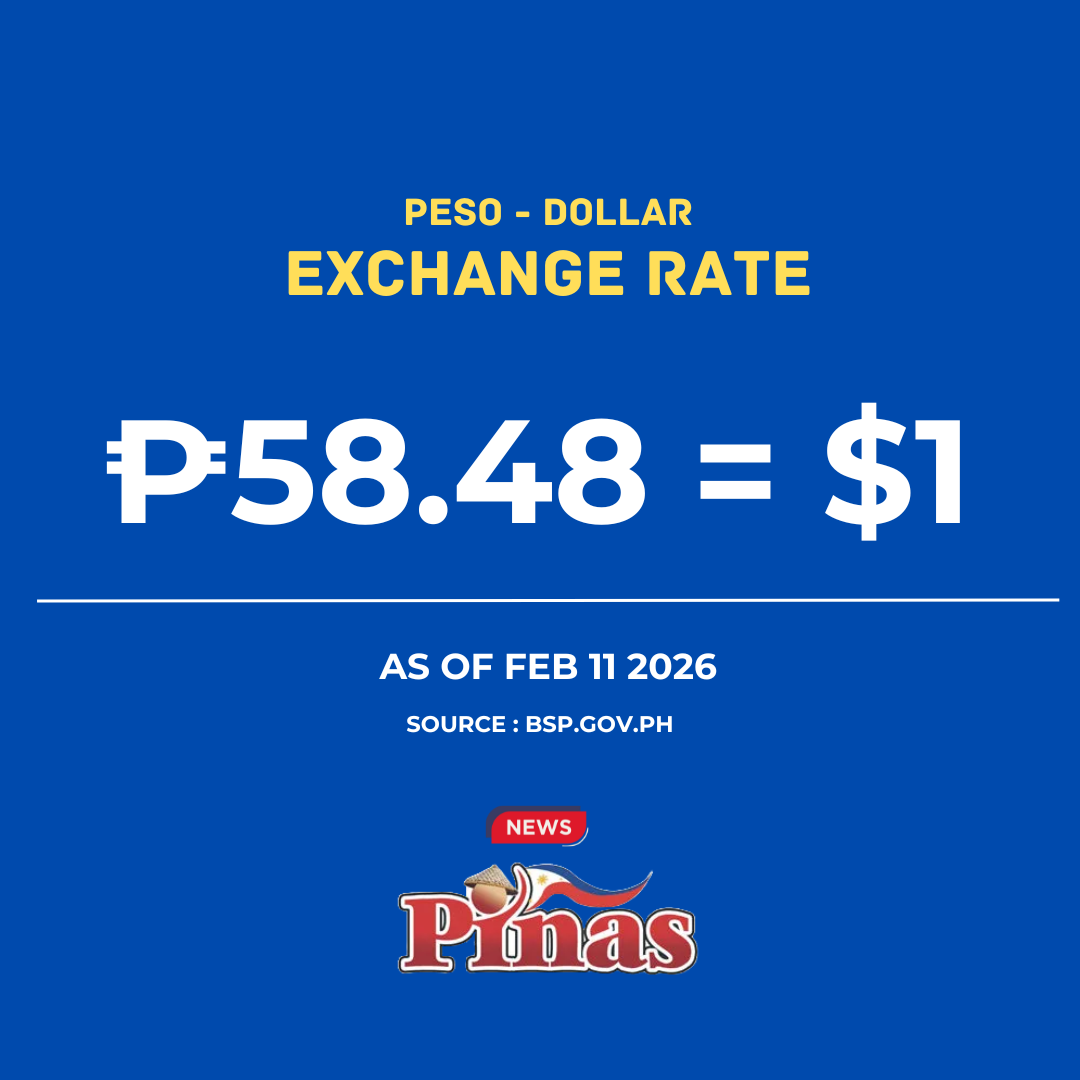
Here’s how the Philippine peso compares to today’s biggest global currencies:
🇪🇺 Euro (EUR)
€1 = ₱69.5690
The euro remains significantly stronger than the peso.
Traveling to Europe? Expect higher exchange costs.
🇬🇧 British Pound (GBP)
£1 = ₱79.8032
The pound continues to tower over the peso — nearly ₱80 for one pound.
The UK remains one of the strongest currencies globally.
🇨🇭 Swiss Franc (CHF)
1 CHF = ₱76.1571
Switzerland’s currency holds firm, reflecting its stable economy.
🇧🇭 Bahrain Dinar (BHD)
1 BHD = ₱155.1344
This is one of the strongest currencies in the world.
Just one dinar equals over ₱155.
For OFWs in Bahrain, remittances pack serious weight.
🇸🇦 Saudi Riyal (SAR)
1 SAR = ₱15.5916
With many Filipinos working in Saudi Arabia, this rate matters deeply.
The riyal remains steady.
🇦🇪 UAE Dirham (AED)
1 AED = ₱15.9258
Close to the Saudi rate — crucial for OFWs in Dubai and Abu Dhabi.
🇸🇬 Singapore Dollar (SGD)
1 SGD = ₱46.2593
Singapore’s currency remains strong and stable in Southeast Asia.
🇨🇦 Canadian Dollar (CAD)
1 CAD = ₱43.1594
Canada remains a top migration destination — and the exchange rate continues to favor remittances.
🇦🇺 Australian Dollar (AUD)
1 AUD = ₱41.3695
The Aussie dollar sits just above ₱41.
🇭🇰 Hong Kong Dollar (HKD)
1 HKD = ₱7.4806
Still one of the most closely watched currencies for Filipino workers abroad.
🇨🇳 Chinese Yuan (CNY)
1 CNY = ₱8.4583
China remains a key trading partner.
This rate influences imports and electronics pricing.
🇯🇵 Japanese Yen (JPY)
1 JPY = ₱0.3788
The yen remains relatively weak compared to pre-pandemic levels.
🇰🇷 Korean Won (KRW)
1 KRW = ₱0.0402
Korea’s currency stays modest — but vital for trade and employment ties.
🇮🇳 Indian Rupee (INR)
1 INR = ₱0.6458
India’s fast-growing economy continues to influence Asian markets.
🇲🇾 Malaysian Ringgit (MYR)
1 MYR = ₱14.9148
A key regional currency, especially for cross-border labor and trade.
🥇 Gold and Silver Prices
Beyond currencies, investors are watching commodities.
Gold Buying Price: $5,036.85
Silver Buying Price: $81.15
Gold remains elevated — often a sign that global investors are seeking safety.
What Does This Mean for Filipinos?
When the dollar stays near ₱58.50:
• Imported goods may remain expensive
• Fuel prices can feel pressure
• Tuition payments abroad cost more
• But remittances from overseas workers gain value
The peso today is stable — but the global market never sleeps.
Every movement in Washington, Brussels, Beijing, or Riyadh ripples back home.
Because in today’s world, exchange rates aren’t just numbers on a screen.
They shape salaries.
Savings.
Dreams.
And as of February 11, 2026, the peso stands at ₱58.48 per dollar — holding steady, watching the world move.